Your story is your life. As human beings, we continually tell ourselves stories — of success or failure; of power or victimhood; stories that endure for an hour, or a day, or an entire lifetime. We have stories about our work, our families and relationships, our health; about what we want and what we’re capable of achieving. Yet, while our stories profoundly affect how others see us and we see ourselves, too few of us even recognize that we’re telling stories, or what they are, or that we can change them — and, in turn, transform our very destinies.

The Power of Your Story: Walking the Path of the Divina Commedia
I find it endlessly compelling to return to Dante’s journey in the Divina Commedia. The opening lines alone—“Midway upon the journey of our life I found myself within a forest dark, for the straightforward pathway had been lost”—capture something universal. It is the moment we each face when the path ahead seems hidden, when certainty dissolves and we realize that the comfortable structures we relied on have failed us. This is the dark wood, the place where your story begins not with triumph but with being lost, uncertain, afraid.
Our stories rarely begin on a high note. Instead, they start in the messiness of confusion, the depths of despair, or the haze of numbness. Dante understood that before purpose can emerge, before meaning can find shape, we must first confront the wilderness within ourselves. The Divina Commedia becomes a sacred guide: a journey through the rawest parts of our being, leading to profound transformation.
As you read Dante’s voyage through the realms of Hell, Purgatory, and Paradise, you realize it is much more than a theological treatise. It reflects the power of your story—the story you live and tell inside your own heart. It reminds us that no part of ourselves is off limits, no shadow too dark to bring into the light. The first and most audacious step toward purpose is the willingness to walk through your own Inferno.
The Descent into Darkness: Power in Confrontation
Imagine Dante, the pilgrim, stepping into Hell—the Inferno—a realm where souls are trapped in eternal despair, punishment, and unfulfilled desire. This journey is terrifying and necessary. Here the power of your story unfolds when you dare to face your deepest wounds, your regrets, and your fears. The circles of Hell are not mere punishments but metaphorical mirrors reflecting human flaws and consequences—lust, greed, violence, betrayal, and more.
What Dante teaches us is that purpose does not thrive in denial. It profanes no truth, hides behind no half-truths. Your story gains power through honesty—through the courageous act of naming what holds you captive. Whether it is guilt that gnaws at your peace, a toxic relationship, addictions, or old failures, this arena of darkness, no matter how painful, is the crucible for awakening.
Every hero story, every transformational narrative begins here. Alongside Dante, you descend—not to be destroyed, but to be seen, fully and without illusion. The power in your story is how you meet this descent. Do you run? Do you drown? Or do you engage, learn, and emerge? In these fires, the story of your becoming begins.
The Ascent of Transformation: Power in Struggle and Renewal
After Hell comes Purgatory, but the journey changes tone. You climb. This realm bridges despair and grace, a place of hope and effort. Dante climbs terraces where souls purge their faults, slowly shedding attachments and aversions that bind them to suffering.
Here, your story’s power comes alive in the active work of transformation. Purpose is not a static state achieved with relief. It is a continuous process of learning, forgiving, and reforming. This part of Dante’s journey reflects what many of us experience differently: not dramatic encounters but the slow, persistent choosing toward growth.
Through this ascent, Dante is guided by Virgil—the symbol of reason and wisdom. The presence of reason in the journey signals another truth: purpose is not only inspired by feeling or inspiration but grounded by reflection, discipline, and intentionality. The narrative implores you to cultivate self-awareness, to face imperfections without despair, and nurture humility.
Your story finds power here in the daily decisions—choosing kindness over anger; patience over judgment; faith over cynicism. These moments of quiet struggle shape the contours of your life’s meaning. Transformation is hard work without guarantee. Sometimes it feels small or invisible. Yet it is precisely this steady forging that carries you upward, closer to wholeness.
The Embrace of Light: The Culmination of Purpose
At last, Dante reaches Paradise, where poetic language gives way to luminous mystery. The guide shifts—Virgil, bound to reason, cannot enter. Beatrice appears, embodying grace and divine love, leading Dante—now transformed—into realms beyond understanding. Words falter before the overwhelming presence of light, beauty, and unity.
This is where the power of your story opens into something transcendent. Purpose, in its fullest expression, is the reunion of your inner and outer selves, the merging of your personal narrative with a greater whole. It is the realization that meaning surpasses your individual striving, connecting you to the depth of existence.
Dante’s final vision teaches that purpose is not about control or mastery, but surrender—a glorious, liberating surrender to the flow of life and love. Here your story’s power is in openness—the willingness to be vulnerable, to receive mystery, and to trust that your unfolding journey is enough.
The Power of Your Story in Everyday Life
What Dante’s epic ultimately gives us is permission: permission to see the entirety of our stories as sacred. Not just the parts we call “successful” or “good,” but all of it—the joys and failures, the moments of courage and the times we hid. This holistic embrace empowers you to reclaim your purpose not as a distant goal but as a presence alive in the very story you already carry.
Your story matters because it is yours. It is shaped by your choices to walk through darkness, to climb toward growth, to open to love. Its power flows not from perfection, but from authenticity. Dante’s journey reminds us that true courage asks only that we keep moving forward—step by step, through hells and paradises, alongside guides and angels, but ultimately, through our own hearts.
Your story becomes a beacon—not just for yourself but for those who need to see that transformation is possible, that awakening waits on the other side of the dark wood. It is a story not just to be told but to be lived fully.
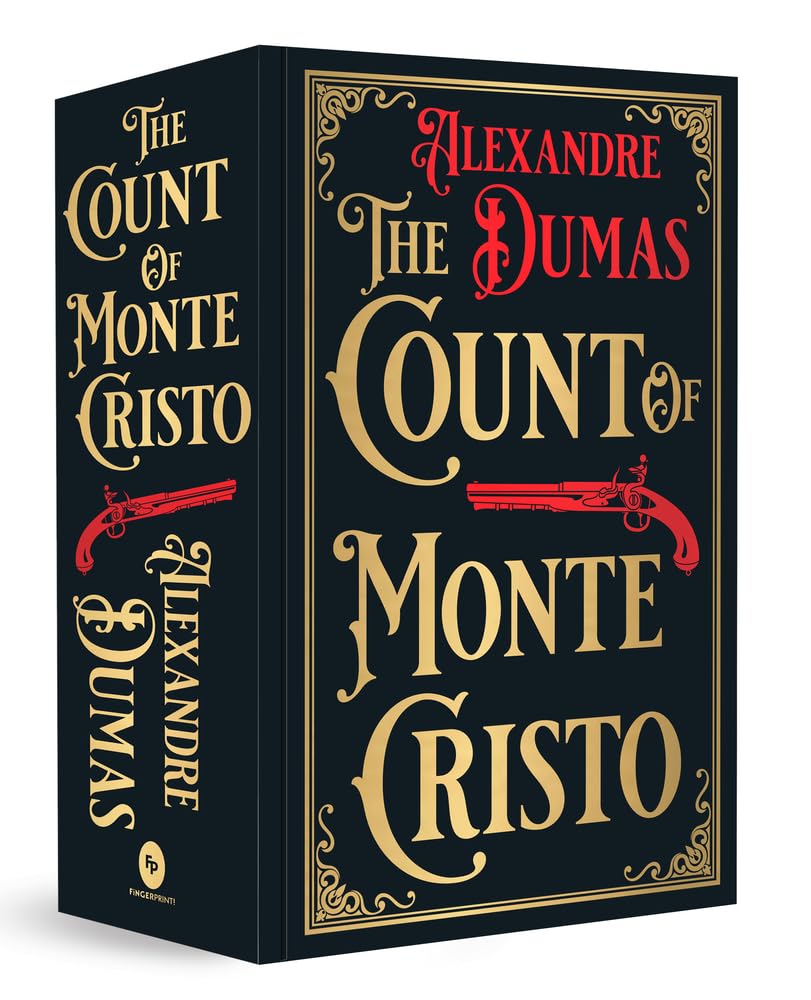
The Power of Your Story: The Journey of The Count of Monte Cristo
Your story begins not when you feel alive and strong, but often in the moment when life breaks you open. Edmond Dantès’s journey, immortalized in The Count of Monte Cristo, starts in betrayal and darkness—a young man full of promise, falsely accused, imprisoned, and abandoned. His story traces a descent into the void and an emergence transformed, reminding us that purpose does not spring from comfort, but from the courage to face your own collapse and rise anew.
Picture Edmond the sailor, youthful and devoted, returning home to a bright future. He carries hope to wed Mercédès, to lead a simple, honest life. Yet the tides turn suddenly. Envy, treachery, and hidden conspiracies strip him of everything: freedom, family, identity. Imprisoned in Château d’If, isolated in silence, his world contracts to stone walls and dark shadows. Life feels over. Yet this darkness holds the seed of his transformation—the moment in every hero’s tale when choosing to live begins, despite the night.
In prison, Edmond meets Abbé Faria, an old prisoner whose wisdom lights the way. Faria becomes not just mentor but mirror, reflecting the possibility of a new self built on knowledge, patience, and hope. Here the power of the story deepens. Edmond refuses despair by deepening into reflection. He studies languages, history, science, maps thousands of leagues—already charting his personal rebirth like a land not yet discovered. The power of your story unfolds in these quiet acts—when you sit with your pain, learn its language, and begin to see a path through it.
Decades pass. Faria’s death signals a new dawn. Using skills and cunning, Edmond escapes. He retrieves vast treasure hidden on Monte Cristo island, emerging not the man who was imprisoned, but the Count—a figure swathed in mystery, resources, power. This reinvention symbolizes one of the most radical gifts of your story: the chance to remake yourself.
Yet transformation challenges us with questions: who do you become once your chains fall away? Edmond’s purpose expands beyond mere survival or revenge. His mission to punish those who betrayed him seems righteous and inevitable, but his story reveals that vengeance can be a dark mirror, threatening to consume the seeker. You will see Edmond conquer enemies, orchestrate fate’s delicate balances, exposing hypocrisy, cruelty, and greed. But beneath it all lies a growing recognition: true power lies not in revenge, but in mercy and redemption.
The Count first delights in precise retribution—exposing the perfidious Fernand, the corrupt Villefort, the avaricious Danglars, and the miserable Caderousse. Each act is a sharp knot undone through patience and calculation. Yet revenge’s bitter taste forces Edmond to confront the emptiness it leaves behind. The joy of justice soon challenges the need for grace.
Edmond’s story reminds us that your purpose is not static but evolving. It urges seeing beyond the moment—to discern what nourishes the soul and what wounds it. This awareness is the turning point every story must face, when the quest shifts from outward conquest to inward transformation.
Alongside his retribution, Edmond nurtures clans of the innocent: the sweet Haydée, whose love reveals softness beneath steel; Maximilien Morrel, whose steadfast honor contrasts darkness around him; Valentine de Villefort, trapped in poisoning plots yet hopeful for love. These relationships illuminate that no man is an island; purpose thrives in connection. Your story finds meaning not in isolation but in compassion for others—those you protect, nurture, and inspire.
Edmond’s power grows when he forgives, freeing himself from carrying hatred’s heavy chain. In a world scarred by lies and cruelty, the capacity to forgive—even those who hurt you most—becomes radical freedom. It becomes peace.
He learns that redemption is not granted, it is born from choice—the choice to redefine your story every day with courage and grace. It’s a humble act requiring letting go of victimhood and embracing agency.
The ending reflects this wisdom. Edmond steps away from the stage of vengeance, passing mantle to the next generation. His final love, Mercédès—the past he once fled—symbolizes reconciliation with self and history. The Count teaches that no matter how far from home or hope you wander, your story’s power lies in bringing yourself back, healed and whole.
Your story is not your past mistakes, your darkness, or your scars. It is the light you carry forward—the Divina Commedia of your soul, illuminating the path for others. Like Edmond, you’re called not only to survive your trials but to craft from them a narrative of awakening.
So do not fear your darkness or your prison walls. They will not define you unless you let them. Your story, like Edmond’s, has the power to transform suffering into strength, despair into hope, and loss into legacy.
Live your story with intention. Walk through your own Château d’If, meet your Abbé Faria, discover your island of treasure. Then become not just a survivor but a beacon—for yourself, for those still lost in darkness, for the world hungry for stories of redemption.
Your story is your power. Carry it bravely.
Telling ourselves stories provides structure and direction as we navigate life’s challenges and opportunities, and helps us interpret our goals and skills. Stories make sense of chaos; they organize our many divergent experiences into a coherent thread; they shape our entire reality. And far too many of our stories are dysfunctional, in need of serious editing. First, we ask you to answer the question, “In which areas of my life is it clear that I cannot achieve my goals with the story I’ve got?” We then show you how to create new, reality-based stories that inspire you to action, and take you where you want to go both in your work and personal life.
For decades I have been examining the power of story to increase engagement and performance. Thousands of individuals from every walk of life have sought out and benefited from our life-altering stories.
Our capacity to tell stories is one of our profoundest gifts. My approach to creating deeply engaging stories will give you the tools to wield the power of storytelling and forever change your business and personal life.
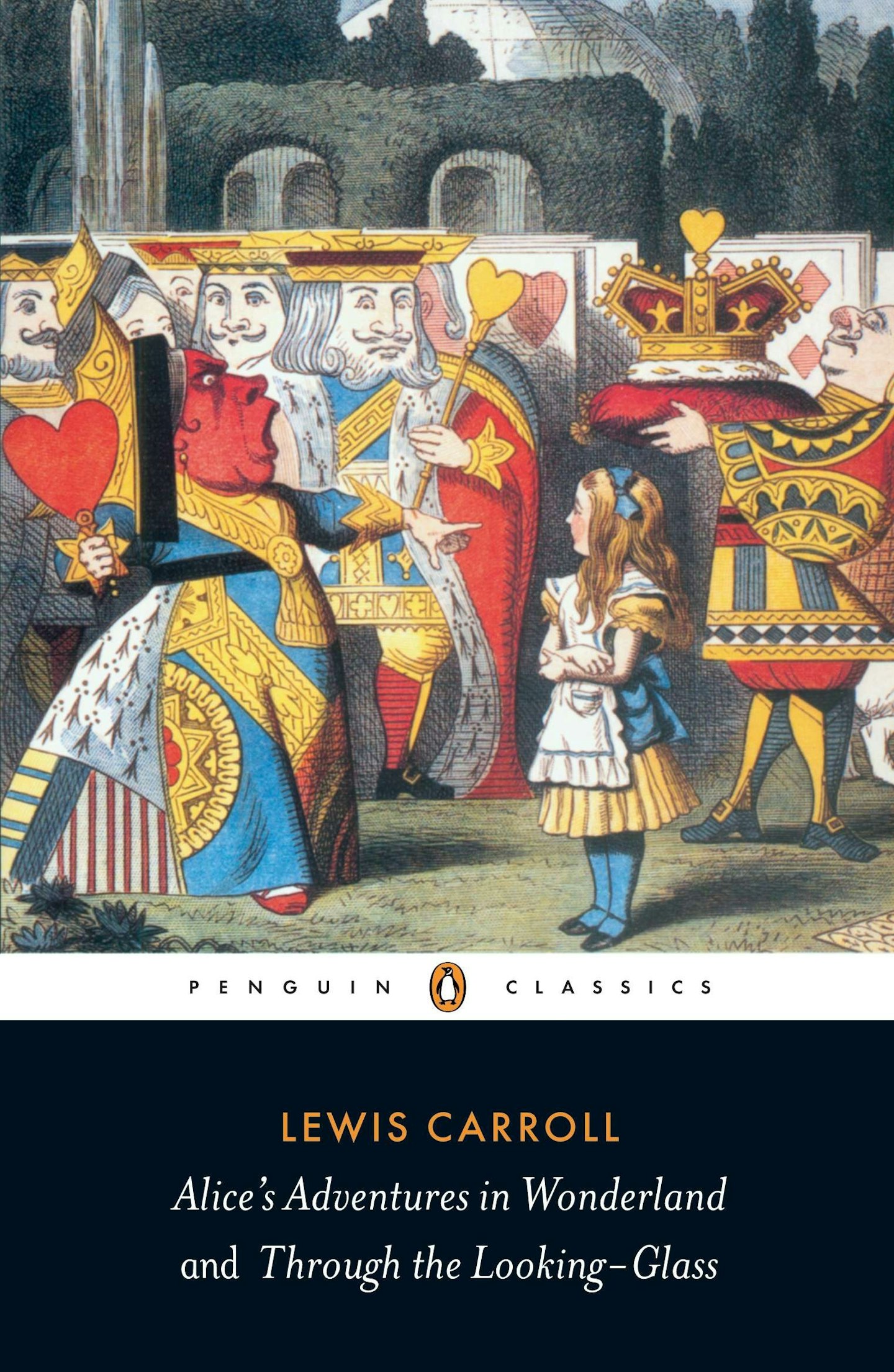
The Power of Your Story: Alice’s Journey Through Wonderland
Every great story begins in a moment of not knowing. For Alice, it is a lazy afternoon by the riverbank, when the mundane suddenly cracks open and a white rabbit with a pocket watch rushes by, speaking urgently about being late. She follows him, this spark of curiosity compelling her to step beyond the ordinary. Then, without warning, she falls down a rabbit hole—a tipping point where the familiar world dissolves, and the adventure begins.
This moment is common to all who seek purpose: the instant when the surface of our lives fractures, inviting us to plunge into uncertainty. Alice’s tumble into Wonderland is a metaphor for that leap—an entering into a realm of confusion, questions, and impossible possibilities. It is a place where logic tangles, time warps, and rules evaporate. Yet this is precisely where your story gains its power.
In Wonderland, nothing works the way it should. The flowers sing, the animals talk, the laws of physics bend, and the faces and voices of reality shift unpredictably. But Alice does not flee. Instead, she listens, watches, questions, and experiments. Her story’s power grows each time she embraces the unknown rather than resists it.
The Challenge of Identity: Shrinking and Growing
One of the first lessons Wonderland gives Alice—and us—is that identity is fluid. Early in her journey, Alice finds a key and a bottle labeled “Drink Me.” She shrinks small enough to enter a tiny door, then grows enormous after a bite of a cake. These physical changes unsettle her, but they also awaken a deeper understanding: who she thinks she is and who she actually is are two different things.
You find this lesson mirrored in your own life. As circumstances change—jobs, relationships, roles—you may feel yourself shrinking under expectations or swelling with new possibilities. The power of your story is the willingness to explore these changes without losing sight of your core self. Alice’s struggle to control her size symbolizes the human struggle for balance: to grow with confidence yet maintain intimacy, to find place without losing identity.
The whimsical puzzles and nonsensical rules Alice encounters further challenge her to define herself beyond labels. When the Caterpillar asks, “Who are you?” Alice struggles because identity is a moving target. Here lies the core of your story’s strength: your purpose is not fixed, nor dictated by others. It evolves as you answer that question with new experiences, insights, and courage.
The Encounters: Mirrors of Self and Society
Alice meets characters who represent parts of herself and the world she navigates. The grinning Cheshire Cat who vanishes leaving only his smile teaches her—and us—the importance of perspective. “We’re all mad here,” he says, normalizing the chaos and uncertainty we fear. The Mad Hatter’s eternal tea party, with its constant nonsense and confusion, is a metaphor for life’s absurdities and the patiently disruptive power of playfulness.
The Queen of Hearts—quick to anger and prone to shouting “Off with their heads!”—embodies tyranny and fear in the face of change. Alice’s encounters with her court’s bizarre trial lay bare the arbitrariness of authority and conventions that compound confusion. In these moments, your story’s power lies in questioning entrenched assumptions and refusing blind obedience. Alice stands up, challenges the madness, and claims her voice.
Like Alice, you face many “characters” in your life—some nurturing, others confusing or threatening. Each challenges or reflects your inner world. Your story gains richness as you examine these interactions, learning where to align, where to question, and where to set boundaries.
The Power of Curiosity and Playfulness
Alice’s journey is imbued with a childlike curiosity that never fully fades. She tries to solve riddles, follow clues, speak with creatures, and understand strange customs. Her playful approach allows her to navigate an unpredictable world where seriousness alone would lead to despair or rigidity.
Curiosity is the engine of your story’s power. It keeps you engaged with life’s mysteries, challenges assumptions, and opens doorways to innovation and creativity. The power of play, evident in Alice’s ever-changing sized adventures and tea parties, offers a vital lesson: in uncertainty, humor and lightness become survival tools.
Your purpose, like Alice’s, thrives when you allow curiosity to fuel learning and resilience. When you reframe problems as puzzles and setbacks as part of the game, you gain freedom to grow without fear.
The Journey Toward Maturity
Through Wonderland’s twists and turns, Alice matures. Her initial bewilderment turns to confidence. She learns to express her opinions, navigate contradictions, and stand firm amid chaos. This maturation is neither linear nor easy but is full of false starts and reversals.
Your story reflects this nonlinear growth. You may take wrong turns or feel lost, yet each step informs your becoming. Alice’s maturation reminds you that purpose is dynamic and lived through experience, not found in a single aha moment.
Returning to Reality: Carrying the Wonder
The story concludes with Alice waking from her dream, returning to the riverbank changed forever. The world seems familiar but is now alive with possibility and new eyes. This return embodies a profound truth: real transformation happens not through escape but through return—bringing back wisdom gathered in strange realms to enrich the ordinary.
Your story’s power becomes evident when you carry wonder—the capacity to see magic and meaning in everyday life. Like Alice, you can integrate insight from your “Wonderlands” into daily living, choosing openness over cynicism, curiosity over judgment.
The Power of Your Story: An Invitation
Alice’s journey teaches that your story is a sacred gift. It is made of pauses and plunges, laughter and tears, certainty and confusion. The power of your story is less about external achievement than the way you engage with each moment’s mystery.
Your story is unique. You will tumble down your own rabbit holes, shrinking and growing in your own rhythms, encountering your own characters and challenges. The Divina Commedia or The Count of Monte Cristo may feel distant, but Alice’s journey is close—reminding that purpose is an unfolding adventure inside your own experience.
Remember this: you are allowed to be lost. You are invited to be curious. And above all, your story has power when you live it fully—embracing both nonsense and meaning, chaos and calm. Like Alice, you are not only the dreamer but also the dream, the explorer and the homecoming.
Your story is your compass. Follow it bravely.

The Power of Your Story: Navigating the Vastness of Moby Dick
The story of Moby Dick starts simply and quietly—at least on the surface. Ishmael, a man restless with the weight of his own questions, signs up for a whaling voyage. What lies ahead is nothing like the calm, routine life he leaves behind. With a single sentence, Melville launches him—and us—into an odyssey of myth and meaning. A journey that is as much about the vast ocean as it is about the vastness within the human soul.
This, I believe, is the beginning of every powerful story: the moment we decide to cast off from the shore of familiarity, stepping into uncertainty with nothing but faith in ourselves and a hunger for something more. For Ishmael, purpose is both found and lost in the unpredictable waves of the sea, shared with a crew bound to a deadly quest—and a captain consumed by obsession.
Captain Ahab embodies this quest like no other. Ahab is a man driven by a singular purpose—to hunt and kill the white whale, Moby Dick, that once maimed him. His desire is so all-encompassing that it shapes the entire voyage, transforming the Pequod from a whaling ship into a vessel of fate, carrying a crew toward destiny and destruction.
Ahab’s obsession is the shadow side of purpose. It teaches us that purpose, when consumed by revenge and pride, becomes a destructive fire. It blinds and isolates. Your story may hold moments when your passion flares so bright it scorches everything around you and within you. Melville warns us against losing ourselves in our pursuits.
Yet, alongside Ahab’s storm, we find Ishmael’s calm eye. He narrates with a mixture of wonder, philosophical reflection, and practical insight. While Ahab chases the whale with all his fury, Ishmael observes and learns, offering perspective that tempers zeal with wisdom. Through Ishmael, Melville shows that part of purpose is the capacity to witness—to hold space for mystery instead of grasping for mastery.
The Pequod’s crew mirrors the diversity and complexity of the human experience. Men of many races and backgrounds, bound by a common purpose but each with his own story and destiny. Their lives weave together to form a tapestry that is richer and more profound than any one individual’s mission. Your story, too, exists in connection—interacting with others, growing through relationships, and finding meaning within community.
The elusive whale—the great white whale—is perhaps the most potent symbol in Melville’s narrative. It stands for the unknowable, the untamable forces that defy human understanding or control. Moby Dick is the mystery of life itself: majestic, terrifying, and eternal. Ahab’s battle with the whale is more than a physical fight—it is a confrontation with fate, nature, and the limits of human will.
Your story gains power when you recognize that meaning is not in controlling the whale or conquering the sea. Meaning lies in the courage to face the unknown, in embracing the paradox that some questions resist answers. Purpose calls you into this sacred uncertainty.
Ahab’s tragic downfall is the crescendo of the story: his obsession drives the Pequod to destruction and himself to death. It is the stark warning that unbalanced purpose leads to ruin. But from the wreckage rises Ishmael, the sole survivor, clinging to a coffin that becomes his life buoy. His survival testifies to resilience, hope, and the possibility of new beginnings.
What Melville offers us in Moby Dick is a profound meditation on the power of story itself—the narrative that carries us through the storms of life, that helps us make sense of chaos, and that shapes our understanding of who we are. Your story, like Ishmael’s, is an ocean teeming with mystery and meaning. It is both a challenge and a gift—a voyage that may toss you into tempests but also lead you through the most astonishing sunrises.
The power of your story lies not in the outcome, the catch, or the conquest. It lies in the willingness to embark on the journey, to confront your fears, and to navigate your depths with open eyes and a steady heart. Like the sea, your story is wide and deep; it holds both sorrow and joy, loss and discovery.
Your story is a vast ocean of possibility. It offers endless horizons to explore, endless truths to uncover. The power rests in your choice—to keep sailing, to keep asking questions, to keep believing in the possibility of meaning even when the waves rise high and the night is dark.
This is Moby Dick: a story that invites you to swim into the depths of yourself, to wrestle with the leviathans of your psyche, and to emerge transformed. It teaches that the whale you chase may never be caught, but the chase itself becomes your story—the power you carry forward.
So set sail bravely. Your story awaits.
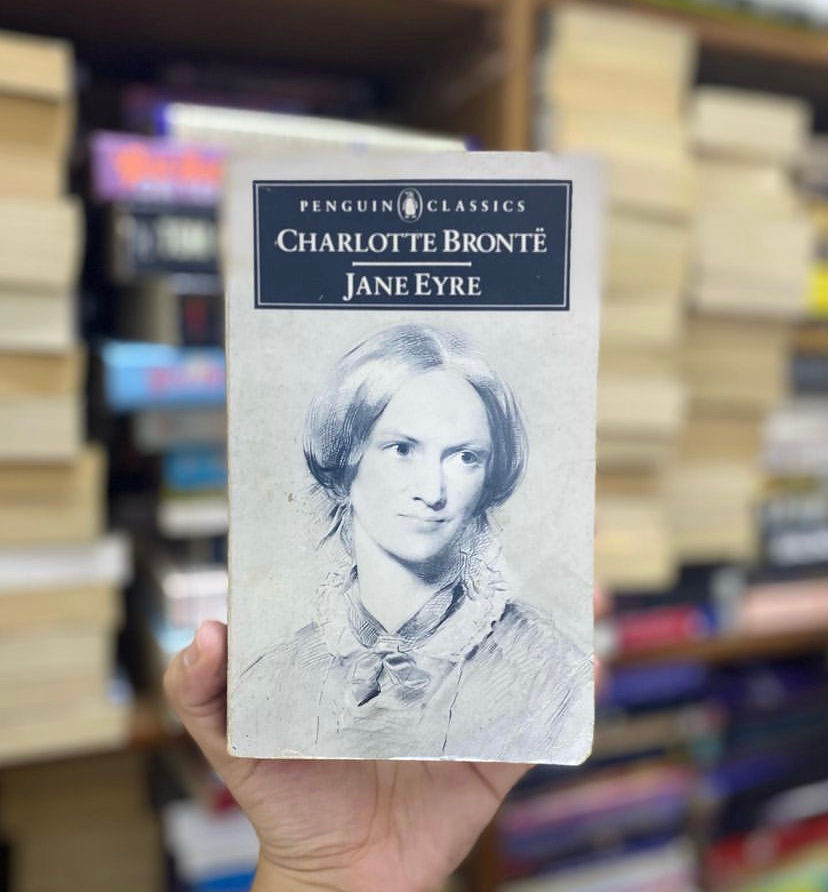
The Power of Your Story: The Journey of Jane Eyre
Jane Eyre’s story unfolds as a quiet rebellion against circumstance. From the start, she faces hardship—an orphaned child, abused and dismissed, shuffled from the cold hearth of Gateshead to the stern confines of Lowood School. Yet what makes Jane’s journey compelling is not just the difficulties she endures, but her unyielding insistence on being seen and loved for who she truly is. It’s a story about the power of your own voice—the courage to claim your place in the world despite the shadows cast by others.
Your story, like Jane’s, begins in a place of not belonging. Jane is marked early on as different—not affluent, not conventionally beautiful, and relentlessly questioned for her worth. But she refuses to accept invisibility or silence. Her strength lies in her inner life—in the quiet well of integrity, conscience, and clarity that guides her through suffering. This resilience is the root of her purpose.
The hallmark of Jane’s story is her unyielding quest for equality and dignity. This quest propels her beyond the narrow confines of oppression and into the broader, richer world of selfhood. Much like your story, it is a winding road marked by trials testing whether you have the courage to be true to yourself.
When Jane becomes governess at Thornfield Hall, she enters a new chapter where power dynamics swirl and boundaries blur. Here she meets Mr. Rochester—the enigmatic, aloof master with secrets of his own. Their evolving relationship reflects the tension of Jane’s story: the desire for love that honors her autonomy, against pressures that seek to diminish or define her.
Your story resonates with these tensions. You may find connections that challenge your sense of self, compelling you to stand firm or seek new ground. Jane teaches the power of discernment—love is not surrender but a meeting of equals, a union that embraces authenticity.
The revelation of Rochester’s hidden mad wife, Bertha Mason, forces Jane into exile. Here, alone and destitute, your story’s power deepens further. Jane’s integrity leads her to reject compromise that threatens her values, even at great cost. The path of purpose is rarely easy; it often demands leaving behind the familiar and venturing into uncertainty.
But in isolation, Jane also finds renewal. She discovers family, forms connections rooted in mutual respect, and inherits a legacy that grants her independence. This phase of her story shows the strength found in solitude and self-reliance, reminding us that purpose does not always lie in others but within the capacity to nurture and rebuild yourself.
Return to Thornfield, where disaster has struck, and Jane finds Rochester broken but redeemable, completes her transformative arc. Their reunion symbolizes the possibility of love when built on freedom, forgiveness, and mutual respect. It is the fulfillment of purpose, where the story becomes a testament to the power of choosing connection without losing self.
Jane’s tale reminds us that purpose is born in struggle but realized in grace. It is not about escaping hardship but moving through it with honesty and courage. Your story, like Jane’s, gains power with every step you take toward being whole—embracing your scars, your desires, your truths.
The power of your story is in your voice, your choices, and your refusal to settle for less than you deserve. Jane Eyre invites you to see your life as a narrative of resilience, transformation, and love—one that belongs wholly to you.
Remember, your story has the power to rewrite pain into strength, silence into song, loneliness into belonging. Like Jane, you are called to live fully, boldly, and with heart open.
Let your story be a beacon—for yourself and those who follow.
Day 1. That’s Your Story?
Day 2. The Premise of Your Story, the Purpose of Your Life
Day 3. How Faithful a Narrator Are You
Day 4. Is It Really Your Story You’re Living?
Day 5. The Private Voice
Day 6. The Three Rules of Storytelling
PART TWO
New Stories
Day 7. It is not about time
Day 8. Do You Have the Resources to Live Your Best Story?
Day 9. Indoctrinate Yourself
Day 10. Turning Story into Action: Training Mission and Rituals
Day 11. More than Mere Words; Finishing the Story, Completing the Mission
Day 12. Storyboarding the Transformation Process in Eight Steps
Introduction
I am Peter de Kuster, founder of The Hero’s Journey and The Heroine’s Journey, and for much of my life, I have believed in the transformative power of stories—especially the ones we tell ourselves. But it took a near-death experience to truly open my eyes to what I wanted to dedicate my life to: helping others discover, shape, and share their unique stories, and in doing so, to rewrite my own.

The Power of Your Story: Exploring Depths in 20,000 Leagues Under the Sea
Jules Verne’s 20,000 Leagues Under the Sea begins with an air of mystery—a sea creature terrorizing ships, defying explanation. This unknown sparks a voyage not only across vast oceans but across the hidden, uncharted inner worlds we all carry. Its greatest power lies not merely in adventure but in the metaphor of exploration: the call to dive beneath the surface of life and story, to confront the unknown within.
At the heart of this epic is Professor Pierre Aronnax—academic, observer, seeker—alongside his loyal servant Conseil and the skilled harpooner Ned Land. Together, they embark on the Nautilus, a fantastic submarine commanded by the enigmatic Captain Nemo—a man driven by grief, vengeance, and a complex relationship with the surface world. Their journey beneath the waves invites us to reflect on the personal depths from which purpose can emerge.
Your story often begins in curiosity or crisis—the unknown creatures of your life stirring unease or fascination. Like Aronnax, you may find yourself drawn to mysteries that challenge the limits of understanding. The power of your story rises in the willingness to plunge into these depths, even when the way is unclear and the horizon obscured.
The voyage through underwater realms—from glowing coral reefs to haunting sunken ships, from battles with giant squids to marvels of natural beauty—is a metaphor for the complexity of the human experience. Every strange creature, every breathtaking cavern is a symbol: fears confronted, dreams illuminated, truths discovered.
Your story gains richness by embracing this multidimensional adventure. Life is not a flat sea but a vast ocean of wonders and terrors waiting to be explored. It invites you to move beyond superficial safety into the vast unknown of selfhood and purpose.
Captain Nemo’s figure embodies the paradox of purpose. He is both visionary and prisoner, free beneath the waves yet estranged from the surface world. His motives are intertwined with loss—a man who has chosen exile from society in a quest for meaning and justice on his own terms. His story warns that purpose pursued in isolation or anger can become a prison.
Yet Nemo also reveals the transformative power of knowledge and stewardship. He is a guardian of the sea’s wonders, harnessing technology to explore and protect. Purpose becomes a dance between seeking and safeguarding; between vengeance and care; between isolation and connection.
Through the eyes of Aronnax, your story shows the power of observation and reflection. Even as he marvels at wonders, he questions moral complexities. This tension reflects our own journeys—balancing wonder with discernment, awe with responsibility.
Ned Land’s impatience and desire for freedom inject urgency into the voyage. His story represents the human hunger for agency and change—the restless spirit that refuses complacency. Purpose requires movement, action, and sometimes rebellion. Your story carries this energy when it calls you to leave comfort behind and pursue truth and justice.
The task of reconciling these voices—Nemo’s mystery, Aronnax’s inquiry, Ned’s resolve—mirrors the inner dialogue each story must navigate. It is the tension between surrender and action, intellect and instinct, solitude and community.
The climax, the battle with the monstrous squid, is a vivid symbol of confronting overwhelming challenges—those dark forces in life that threaten to engulf us. The struggle is chaotic, terrifying, yet it galvanizes unity, courage, and resilience. Your story’s power is in these crucibles, where fear meets strength, and meaning emerges from conflict.
In the journey’s end, the fate of the Nautilus lingers unresolved. Nemo’s story fades into legend—as all stories do—reminding us that purpose is not a perfect resolution but a continuing mystery. Your story will evolve, cast new shadows and lights upon the sea of life.
20,000 Leagues Under the Sea teaches that your story’s power lies not only in where you go but in what you find beneath the waves within—wisdom, courage, wonder, and the will to keep exploring. It’s an invitation to embrace the unknown, dive into your depths, and surface again changed, enriched, and ready for the next voyage.
Remember: your story is an ocean. Embrace its vastness. Navigate with heart and curiosity. Your power lies in your journey—deep, daring, and uniquely your own.
Lying in that hospital bed, suspended between what was and what could be, I realized how fragile and precious life is. All the plans, the business meetings, the deadlines—they faded into insignificance. What remained was a burning question: What story do I want to tell with the rest of my life? The answer was clear. I wanted to travel, to write, to tell stories.
There is a language older than words that has always fascinated me. It speaks in images and emotions, in the quiet tightening of a throat in a dark cinema, in the sigh when the credits roll and you realize the story on the screen has quietly rewritten a sentence in the story you tell about yourself. Like in Dead Poets Society, where students seize the day, ripping out textbook pages to embrace poetry’s raw power over conformity, sparking personal rebellion and self-discovery. That is the language I am searching for with The Power of Your Story: a universal language of stories that crosses borders, backgrounds, and biographies, and invites each of us to become a better storyteller of our own life.
My quest runs through movie palaces in Rome, side streets in London, quiet museums in Venice, and cafés in Amsterdam, where people sit with notebooks, watching scenes from great films and quietly recognizing themselves. In these story-rich places, I walk with entrepreneurs, artists, and seekers who arrive with a familiar question hidden behind their official goals: “Why does the story I am living not feel like mine anymore?” Together we watch heroes and heroines on the screen and notice that, beneath costume and culture, they share something startlingly similar: seven great plots, twelve archetypal heroes, and again and again one great story about leaving an old life behind to claim a truer one.
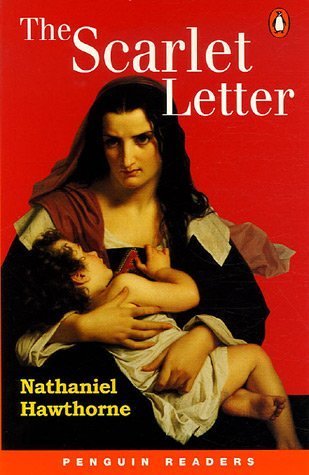
The Power of Your Story: The Journey in The Scarlet Letter
Nathaniel Hawthorne’s The Scarlet Letter begins in a stark, puritanical world—New England’s rigid, unforgiving society of the 17th century. This is a place where sin is punished visibly, and conformity enforced mercilessly. Into this world steps Hester Prynne, a woman who bears not only the burden of a secret but also the external mark of shame: the scarlet letter A stitched into her clothing, a symbol of adultery and social death.
Your story, like Hester’s, may begin in a crucible—public exposure, personal failure, or societal rejection. What fuels The Scarlet Letter is not only the weight of that burden but the radical way Hester chooses to carry it. In your journey, you will learn, as she does, that the power of your story is not in hiding or fleeing shame but in transforming it into a source of strength and meaning.
Hester is sent to live on the outskirts of town—isolated, watched, and judged. Yet, rather than surrendering to despair, she claims her narrative. She refuses to name the father of her child, asserting control over her story in a world determined to silence her. This act alone is revolutionary: it shows that purpose is an act of ownership—the choice to speak your truth on your terms, even when the world demands otherwise.
Through her scars and exclusions, Hester creates a new space. She becomes a seamstress, her skill and kindness slowly softening the collective judgment. The letter A, once a mark of shame, begins to transform into a symbol of ability, resilience, and identity reclaimed. Your story gains power when you rewrite the narratives imposed on you by others, turning wounds into wisdom and barriers into bridges.
Behind the heavy silence looms Reverend Arthur Dimmesdale—the conflicted man who shares Hester’s sin in secret. Dimmesdale’s story contrasts sharply with Hester’s. Where she owns her truth publicly, he conceals and suffers inwardly, his purpose fragmented by guilt and fear. This dynamic reminds us of the cost when stories are denied or suppressed.
Dimmesdale’s deteriorating health and mounting anguish symbolize the corrosive power of unspoken truth. Your story learns power not only in revelation but in the courage required to own your full self—even the parts steeped in vulnerability and failure.
Roger Chillingworth, Hester’s estranged husband, provides yet another angle. His quest for revenge consumes him and warps his soul, teaching a harsh lesson on purpose corrupted. Obsession blinds him, and in his need to control Hester’s story, he loses his own humanity. Hawthorne’s narrative warns that purpose driven by hatred becomes destructive, not just to others but to the self.
The relationship between these three—Hester, Dimmesdale, and Chillingworth—is a tapestry woven with themes of love, guilt, forgiveness, and redemption. Your story finds power in navigating these complexities. It grows in the tension between hiding and revealing, between judgment and empathy, between pain and healing.
The forest becomes a potent symbol of freedom and truth in The Scarlet Letter. It is here, away from the eyes of the town, that Hester and Dimmesdale contemplate a future beyond the constraints of judgment. The wildness of the woods contrasts with the rigidity of Puritan society, representing the untamed, uncertain space where true selves can breathe.
Walking through this metaphorical forest, your story embraces the liminal spaces—those moments of transition when old identities fall away and new ones begin to form. Purpose blossoms in these thresholds, demanding courage to step beyond the known into possibility.
Hawthorne’s depiction of Pearl, Hester’s child, adds a crucial dimension. Pearl is both a living reminder of sin and a symbol of hope, vitality, and natural innocence. Through Pearl, the story honors the paradox that new life and new stories emerge from the most painful ruptures.
Hester’s ultimate choice to stay in the community, continuing to wear the scarlet letter until her death, speaks to a profound acceptance and integration of her story. She embodies the power of purpose found in steadfastness—not in fleeing pain but facing it fully and with dignity.
The final moments of The Scarlet Letter suggest that stories endure beyond individual lives. Hester’s grave, marked simply and shared with Dimmesdale’s, speaks to reconciliation and peace found in embracing the fullness of one’s journey.
Your story, like Hester’s, is a sacred narrative—a complex weave of light and shadow, isolation and belonging, sin and grace. Its power lies in your willingness to live it authentically, to claim both your scars and your strengths.
This is a call not to perfect or hide your story but to live it boldly, learning that your greatest power arises when you embrace your truth in all its complexity.
Your story matters more than you know. It transforms pain into purpose, silence into song, and exile into home.
Like Hester Prynne, you are called to wear your story with courage and wisdom—and in doing so, to become a beacon for others who walk paths of hardship and hope.
What fascinates me is how the same story patterns keep appearing in people who have never met. A designer in Berlin talks like a Warrior exhausted by endless battles for recognition. A chef in Barcelona feels like the Orphan, forever on the edge of belonging. A startup founder in Paris discovers she has been living the Ruler’s story of control when her heart longs for the Explorer’s open road. Then we sit in a cinema and watch a character in a film struggle with the very same script. In La Vita è Bella, a father shields his son from Holocaust horrors by framing camp life as an enchanted game, turning despair into defiant love and survival. In that moment, the language of story becomes universal: you no longer feel uniquely stuck; you feel spoken to. The film is no longer “about” someone else. It is a mirror, gently asking: “Is this the story you still want to live?”
In The Power of Your Story, I always begin with one question: “In which areas of your life is it clear that you cannot achieve your goals with the story you’ve got?” It is a brave question because it exposes the hidden contracts we live by: “I must always please,” “I must never fail,” “I am only valuable when I achieve.” As people answer, you can feel the old plot loosening its grip. Then, using the archetypes and classic plots from film, we start drafting a new premise: What if your life is not a tragedy of overwork but a quest for meaningful creation? What if your business is not a battlefield but a love story with your best customers? What if your leadership is not about power but about pilgrimage—inviting others on a journey that matters?

The Power of Your Story: The Journey in One Hundred Years of Solitude
One Hundred Years of Solitude is not just a novel; it’s a kaleidoscope of story, memory, and magic—a reflection on time, identity, and the human need for connection amid the vast solitude of existence. Gabriel García Márquez weaves the multigenerational saga of the Buendía family, set in the fictional town of Macondo, blending the ordinary with the extraordinary, history with myth, reality with fantasy.
Your story, like the Buendías’, begins with hope and possibility—José Arcadio Buendía and Úrsula Iguarán found Macondo as a place apart from the world, a blank canvas for dreams. But as generations unfold, the family confronts patterns of repetition, fate, and the shadows that solitude casts. The novel captures the tension in every personal story: between the desire to break free and the gravity of inherited destiny.
The power of your story, Márquez suggests, lies in the awareness of cycles—how stories connect across time and space, how struggles and triumphs echo in your blood and soul. To live your story fully is to recognize the threads that link you with ancestors and descendants, with culture, with the collective memory of your people.
In Macondo, the extraordinary becomes ordinary. Rain lasts for years, ghosts walk the streets, and time bends. This magical realism is a metaphor for the way your story blends fact and feeling, memory and myth. The past is never past; it lives vividly in your present sense of self and place. Your narrative gains power when you accept the poetic nature of life—its mysteries, contradictions, and wonders.
The Buendía family’s repetitive mistakes—love affairs ending in tragedy, quests for knowledge leading to blindness, obsessions culminating in ruin—remind you that purpose is entwined with awareness. Your story gains its strength when you recognize patterns in your life and choose whether to continue or transform them.
Love and solitude weave together through the novel’s tapestry. Family bonds bring both salvation and suffering. In solitude, characters lose themselves; in connection, they find fleeting reprieve. Your story is shaped by how you navigate this delicate balance—whether through embracing intimacy or facing isolation. The power lies in your capacity to choose connection despite risk, to find meaning even in loneliness.
Melquíades, the gypsy who brings knowledge and prophecy, symbolizes the transformative power of stories themselves. His parchments, revealing the Buendía history, highlight that your story gains meaning when shared and understood. Purpose is not private—it becomes communal as you tell it and listen to others’ narratives, knitting the fabric of shared existence.
The final generation’s tragic realization—that the family’s fate is written and unchanging—poses profound questions. Is purpose predetermined or created? Márquez leaves this open, yet urges embracing the story you live with consciousness. Recognition, even of limitation, is itself a step toward meaning.
Your story, then, is an offering—a bridge across solitude, a beacon of human persistence and imagination. It challenges you to embrace complexity, imperfection, and beauty in your unfolding life. Like Macondo, your story will weather storms and moments of wonder, ghosts and laughter, endings and beginnings.
One Hundred Years of Solitude invites you not merely to survive your story but to transform it through presence, love, and the telling. To find your purpose is to weave your thread consciously into the vast loom of humanity.
Remember, your story matters—not just today, but across generations. It lives in the loneliness you overcome, the connections you forge, and the meaning you create.
Walk your journey as the Buendías did—with bravery, curiosity, and open heart—and your story will shine its light into the vast solitude we all must cross.
What this quest can bring all of us is not a neat formula, but a toolkit and a courage. The toolkit consists of questions and structures: the premise of your story, the words on your future tombstone, the mission you dare to say out loud, the archetype that best expresses your values, the plot that truly fits the season of life you are in. The courage comes from realizing you are not alone: every great story, every great business, every meaningful relationship has had to rewrite itself at some point. When you start to see your life as a work in progress rather than a verdict, you reclaim authorship. You stop asking, “What is happening to me?” and start asking, “What story am I telling—and what story do I want to tell next?”
The universal language of stories is, in the end, a language of choice. You cannot control every event, every loss, every unexpected twist. But you can choose the story that gives those events meaning. My work, and my joy, is to walk with people through the great cities and great movies of the world until they can hear that language clearly in themselves. When they do, something simple and astonishing happens: they stop trying to live someone else’s script. They become the storyteller, not just the character. And from that moment on, their business, their relationships, and their inner life begin to align around a new, truer story—one only they can tell.
What do I mean by ‘story’?
What do I mean by ‘story’? I don’t intend to offer tips on how to fine-tune the mechanics of telling stories to enhance the desired effect on listeners. And I do not mean the boiler-plate, holier-than-thou brand stories often found in the Mission Statement of corporate websites, or the Here’s -why-we’ll – absolutely-meet-our-fourth-quarter numbers-narrative-yarn-turned-pep-rally that team leaders often like to spin to rally the troops.
No, I wish to examine the most compelling story about storytelling – namely how we tell stories about ourselves to ourselves. Indeed, the idea of ‘one’s own story’ is so powerful, so native, that I hardly consider it a metaphor, as if it’s some new lens through which to look at life. Your life is your story. Your story is your life. When stories we read or watch or listen to are triumphant, they are so because they fundamentally remind us what is most true or possible in life – even when it is an escapist romantic comedy or sci-fi fantasy or fairy tale. If you are human, then you tell yourself stories – positive ones and negative, consciously and, far more than not, subconsciously. Stories that span a single episode, or a year, or a semester, or a weekend, or a relationship, or a season, or an entire tenure on this planet. Telling ourselves stories helps us navigate our way through life because they provide structure and direction. ‘Just seeing my life as a story’ said one of my clients ‘allowed me to establish a sort of road map, so when I have to make decisions about what I need to do [the map] makes it easier, takes away a lot of stress’.
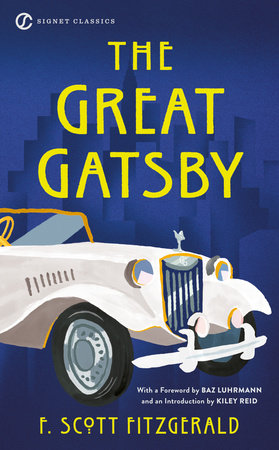
The Power of Your Story: The Journey in The Great Gatsby
The Great Gatsby begins in the summer of 1922, in a world glittering with wealth, jazz, and decadence but shadowed by the loneliness and disillusionment lurking beneath. At the heart of this American masterpiece is Jay Gatsby—a man who has reinvented himself out of desire, longing, and yearning for an elusive dream. His story is one of transformation and striving, a powerful metaphor for the human search for purpose amid illusions.
Your story, like Gatsby’s, may begin with a yearning—a hope for something just out of reach. Gatsby’s rise from humble beginnings to extravagance embodies the idea that purpose is often born in longing—the powerful, restless drive to remake ourselves, to rewrite who we are and where we belong. His lavish parties, shimmering mansion, and magnetic charm captivate the world, but they are all means to an end: winning back Daisy Buchanan.
Yet Gatsby’s story is also a cautionary tale about the power and peril of chasing a dream at all costs. His idealism blinds him to reality, and his purpose—rooted in nostalgia and fantasy—is ultimately unattainable. Your story gains power when it learns from Gatsby’s yearning to hold beauty and hope without losing sight of truth.
Narrated by Nick Carraway, Gatsby’s neighbor and confidant, the novel offers perspective on obsession and illusion. Nick’s steady eyes reveal both Gatsby’s grandeur and his vulnerability—his greatness and his tragedy. Through Nick, your story finds wisdom in observation: the importance of seeing beyond appearances, of understanding complexities without rushing to judgment.
The social world of East and West Egg, the Buchanans’ old money versus Gatsby’s new wealth, the shifting class lines all show how purpose must navigate external forces—culture, status, history. Gatsby’s reinvention is a rebuke and a tribute to these structures: he seeks to belong, to transcend, but is also caught in cycles of exclusion and longing. Your purpose lives in this tension between who you are and who you wish to become, shaped by forces beyond your control and your own choices.
Daisy Buchanan, Gatsby’s muse and ultimate desire, is both radiant and elusive. She symbolizes the ideal—a dream of love, security, and belonging—but also the fragility of illusions. Gatsby’s devotion to Daisy shows how purpose can inspire greatness yet tempt us toward self-delusion. Your story gains depth as you learn to hold ideals lightly, to seek connection yet remain grounded.
The tragic climax—Gatsby’s murder, misjudged and unrecognized—underscores the novel’s poignant meditation on the American Dream and the cost of relentless pursuit. Gatsby dies alone, his hope unfulfilled, revealing how the quest for purpose, when untethered from reality and community, can lead to isolation.
Yet, amid this tragedy is a quiet call to reflection. Nick’s closing reflections offer a meditation on time, memory, and possibility. Purpose lives in the tension between past and present—the yearning for a “green light” across the bay, the dream of what might have been and what still might be.
The power of your story lies in engaging with these tensions—between hope and truth, longing and acceptance. Like Gatsby’s, your journey is about seeking meaning in a complex, often contradictory world. It asks you to be both dreamer and realist, seeker and steward.
Fitzgerald’s prose is poetic, haunting, and evocative—each sentence illuminating the beauty and fragility of human aspiration. Your story, too, gains power when told with honesty and artistry, weaving joy and sorrow into a rich tapestry.
In the end, The Great Gatsby invites you to embrace your story fully—with its dreams, disillusions, loves, and losses—and to hold courageously to your purpose. It teaches that the journey toward meaning is never perfect or assured; it is a dance between light and shadow, forever reaching toward the horizon.
Your story is your “green light.” Carry it with resilience and grace. Let it inspire you to live not just for what is, but for what can be.
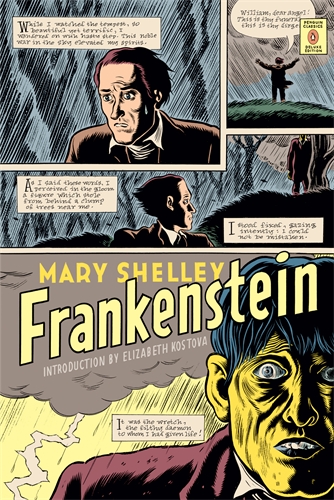
The Power of Your Story: The Journey in Frankenstein
Mary Shelley’s Frankenstein begins with the boundless ambition of Victor Frankenstein, a young scientist driven by the dream of transcending human limits—of conquering death and mastering creation itself. Victor’s story opens as an exploration of purpose pursuing the extraordinary: to give life where there was none, and to carve new paths for humankind. But his journey quickly becomes a cautionary tale about the power—and peril—of purpose untempered by wisdom, humility, and compassion.
Your story, like Victor’s, may ignite in dreams of greatness and yearning to change the world. You may set out with bold vision, driven by hope and determination. Yet Frankenstein reveals something vital: purpose carries weight. Unchecked, ambition can unravel the fabric of your life, your relationships, and ultimately, your soul.
Victor secludes himself in study, obsessed with the secret of life. The power in your story during such phases is the capacity for focused learning and creation. Yet, Shelley warns that creation without care is dangerously incomplete. When Victor brings the Creature to life, he fails to provide guidance, love, or responsibility. The Creature becomes a mirror of abandonment, loneliness, and the search for identity.
Your story gains power through how you respond to your creations—be they ideas, projects, relationships, or aspects of self. Abandonment breeds suffering; nurturing brings growth. The Creature’s journey from innocent curiosity to anguished vengeance reflects the human longing for connection and meaning. He teaches us that purpose is relational—not isolated action but engagement with the world and others.
The relationship between Victor and his creation pulses with complexity—hate and desire, fear and forgiveness, cruelty and empathy. Your story deepens as you navigate contradictions within yourself and in your relationships: the parts you reject and those you cherish. Frankenstein asks whether we can accept our shadows and whether purpose is possible without reconciliation.
Victor’s relentless pursuit of the Creature after tragedy reveals a second kind of obsession, one fueled by guilt and fear rather than hope. Here lies the danger of purpose driven by blame and evasion. Your story gains clarity when you choose responsibility over denial, courage over avoidance, even in the face of loss.
The Creature’s eloquent speeches about injustice, beauty, and suffering call to your own inner voice seeking acknowledgment. His tragic plea for a companion reveals the fundamental human need to be seen and loved—but also the consequences of isolation and deprivation.
Shelley’s novel also explores themes of nature vs. nurture, the quest for knowledge, and the ethical limits of science. Your story intersects with these timeless questions: how do you honor curiosity while respecting boundaries? How do you balance innovation with wisdom? Where do your values shape your contributions to the world?
The climax of Frankenstein is not only a confrontation between creator and creation but a symbolic reckoning with purpose itself. It warns that without humility, without love, creation can become destruction. Yet it offers hope—in the possibility to learn from suffering, to reach beyond fear, and to seek redemption.
Your story’s power lies in walking the edge between these forces—embracing your creative gifts while holding compassion and accountability close. It asks you to bring your whole self to your purpose, not only ambition but empathy.
In the bitter Arctic wilderness where Victor’s journey ends, and the Creature vows to vanish into solitude, Shelley suggests that purpose is both a solitary and shared journey. Both creator and creation bear scars, both search for peace. Purpose completes its cycle in acceptance, forgiveness, and sometimes, letting go.
Your story, like Victor’s and the Creature’s, is a sacred and complex dance. It holds light and shadow, creation and loss, desire and reckoning. The power in your story is your courage to keep moving through doubts and failures, to create with heart, and to seek meaning beyond yourself.
Remember: your story matters not because it is perfect but because it is real. Like the lightning that ignites life in Frankenstein, your purpose has the power to awaken new worlds—if carried with humility, responsibility, and love.
Walk your journey boldly. Embrace your creations. Your story is the lightning that animates the infinite possibility within you.

The Power of Your Story: The Journey in Mrs Dalloway
Every story worth telling unfolds in a single day, a single breath, a single moment where time folds upon itself like waves crashing on memory’s shore. Virginia Woolf’s Mrs Dalloway captures this truth in the life of Clarissa Dalloway, a woman stepping out into London’s bustle on a June day in 1923 to buy flowers for her evening party. What seems a simple errand becomes a profound odyssey through the corridors of the mind—past joys and regrets, present fears and fleeting connections, shadowed by the distant echo of death. Clarissa’s story is yours: the quiet power of living fully in the flux of time, where purpose emerges not from grand gestures but from the intimate weave of perception, loneliness, and defiant aliveness.
Clarissa’s day begins with agency—”Mrs Dalloway said she would buy the flowers herself”—a small rebellion against the roles that confine her. At 52, married to the steady Richard Dalloway, mother to young Elizabeth, she embodies the poised hostess of post-war England. Yet beneath her composed surface swirls a torrent of inner life: memories of youth at Bourton, where she loved passionately—Peter Walsh with his intensity, Sally Seton with her kiss that burned like “the flash of firelight in a dark room.” These recollections pull her between past and present, a dance Woolf renders through stream-of-consciousness, where thoughts cascade like Big Ben’s chimes marking the hours. Time is no linear march here; it circles, loops, traps, and liberates, reminding us that your story’s power lies in how you inhabit its fluidity—embracing the past as living presence rather than relic.
As Clarissa navigates Westminster’s streets, the motorcar backfires, shattering the morning calm and splintering her reverie into visions of mortality. Planes skywrite advertisements, but she imagines cryptic messages from the dead. This intrusion of death underscores Woolf’s theme: the fear that lurks beneath everyday vitality. Clarissa recalls her youthful dread of some “terrible disaster,” now embodied in Septimus Warren Smith, the shell-shocked war veteran whose parallel story unfolds miles away. Septimus, haunted by his dead comrade Evans, perceives trees as conspirators, skies as judges—his mind a battlefield where reality fractures. Woolf, who knew mental anguish intimately, portrays his torment as a mirror to Clarissa’s subtler disquiet: both grapple with isolation, the incommunicable self, the soul’s privacy that both comforts and condemns.
Septimus’s tragedy amplifies Clarissa’s journey. Pursued by Dr. Holmes and Sir William Bradshaw—symbols of oppressive “proportion” that stifle the human spirit—he leaps from a window, choosing death over conformity. News reaches Clarissa’s party, a glittering affair of politicians, dowagers, and whispers, where she retreats to her attic room. There, gazing at the old woman opposite—two souls connected yet forever separate—she feels a profound empathy: “Somehow it was her disaster—her disgrace.” Septimus’s act validates her own suppressed passions, her choice of safe Richard over fiery Peter or Sally. In this moment, purpose crystallizes—not in societal success, but in affirming life’s preciousness amid its terror. Clarissa emerges renewed, throwing open her party doors, choosing connection despite the ache of solitude.
Peter Walsh, returning from India after five years, threads through Clarissa’s day like a persistent echo. His stream-of-consciousness reveals a man trapped in the past, knife in pocket as emotional crutch, regretting his failure to “master” Clarissa. At the party, he weeps, confronting her poise as both loss and triumph. Their reunion evokes Woolf’s exploration of communication versus privacy: words falter, minds remain locked gardens. Yet in this failure lies story’s power—the beauty of unspoken depths, the loneliness that heightens presence. Clarissa’s feminism glimmers here: her party, seemingly frivolous, asserts agency in a patriarchal world, weaving intimacy amid empire’s crumbling facade. Post-WWI disillusionment permeates—Lady Bruton clings to old imperial glory, while Clarissa senses its hollowness, finding purpose in personal rituals like flower-buying or hosting souls.
Woolf’s modernist innovation—shifting perspectives, layering sensations—mirrors the novel’s core: psychology as perception’s prism. Clarissa sways “between memory and perception,” her body fading into “Mrs Richard Dalloway” while her soul sings. Septimus sees gods in trees; Peter hallucinates Clarissa’s youth. This fluidity challenges linear narrative, urging your story to embrace multiplicity: you are host and guest, past and present, alive and dying in every breath. Purpose arises in this web—defying oppression from religion (Miss Kilman’s zeal), medicine (Bradshaws’ conversion), or convention. Clarissa, complicit yet resistant, owns her “disgrace,” transforming it into vitality.
The novel critiques empire’s shadow: English power wanes, citizens like Peter feel personal empire’s failure. Clarissa cherishes “invisible” moments—watching lovers in parks, fearing invisibility yet reveling in soul’s privacy. Her party unites fragments: Elizabeth admires Miss Kilman despite tensions; Hugh Whitbread embodies shallow propriety. Through it all, Big Ben tolls, compressing eternity into hours, affirming life’s rhythm. Clarissa ends “behind the looking-glass,” content in her aliveness, Septimus’s death a gift freeing her from past’s haunt.
Your story echoes this: a day’s mosaic revealing eternity. Power lies in mindfulness—savoring flowers’ scent, streets’ hum, memories’ sting. Woolf invites living against death’s shadow, forging purpose in fleeting connections. Clarissa’s choice—Richard’s safety over passion’s risk—affirms partial lives as whole. Like her, weave solitude into communion, time’s terror into joy.
In Mrs Dalloway, story’s power is radical ordinariness: one woman, one day, infinite depths. Embrace your stream—curious, contradictory, alive. Your narrative, like Clarissa’s, triumphs in presence, turning hours into legacy.
Indeed we are actually wired to tell stories: The human brain, according to a New York Times article about scientists investigating why we think the way we do, has evolved into a narrative-creating machine that takes ‘whatever it encounters, no matter how apparently random’ and imposes on it ‘chronology and cause-and-effect logic’. Writes Justin Barrett, psychologist at Oxford University, ‘We automatically and often unconsciously look for an explanation of why things happen to us and ‘stuff just happens’ is no explanation’ (which feeds one possible theory for why we need, or even create, God or Gods). Stories impose meaning on the chaos; they organize and give context to our sensory experiences, which otherwise might seem like no more than a fairly colorless sequence of facts. Facts are meaningless until you create a story around them.
The Power of Your Story: The Journey in Pygmalion
Every transformation begins in the rain—unexpected, drenching, forcing shelter under shared roofs where worlds collide. George Bernard Shaw’s Pygmalion opens in London’s Covent Garden during a sudden downpour, where a Cockney flower girl, Eliza Doolittle, hawks wilted blooms amid the chaos. A young man, Freddy Eynsford Hill, bumps her basket; flowers scatter in mud. Under the church portico huddle the genteel Eynsford Hills—mother, daughter Clara, absent-minded Freddy—and a note-taking phonetician, Henry Higgins, with linguist Colonel Pickering. Higgins deciphers accents like a code, pinpointing origins: Eliza panics, fearing arrest as a “bad girl,” but Higgins boasts he could train her to pass as a duchess in months. The rain lifts; lives entwine. This chance encounter ignites Eliza’s story—not of romance or fate, but raw ambition to escape poverty’s grind for a flower shop job, “talking more genteel.”
Next morning, Eliza storms Higgins’ Wimpole Street laboratory, offering shillings for lessons. Higgins scoffs at her “squashed cabbage leaf” slang; Pickering bets he can’t refine her in six months for an ambassador’s garden party. Eliza accepts the wager’s stakes, enduring baths, new clothes, brutal drills—”not bloody likely!” her sole slip. Her dustman father, Alfred Doolittle, a “moralist drunkard” extorting £5, sells her for lessons, his perky philosophy (“undeserving poor”) landing an inheritance turning him “middle class moralist.” Eliza emerges refined—elegant gown, precise diction—but Higgins treats her as “experiment,” discarding slippers post-success. Hurt, she hurls them back, demanding respect beyond phonetics. Mrs. Higgins warns her son of Eliza’s limbo: too lady-like for streets, too common for society. Freddy falls smitten; Eliza eyes independence as phonetics teacher, stealing Higgins’ clients.
Shaw’s play probes class’s fragility—speech as social ladder, identity as performance. Eliza’s arc from “squashed cabbage” to duchess unmasks phonetics’ power: Higgins sculpts her like mythic Pygmalion’s statue, but she awakens demanding agency. Purpose blooms not in imposed refinement but self-ownership. Higgins, brilliant yet boorish, embodies elitist entitlement—”Why can’t a woman be more like a man?”—blind to Eliza’s inner fire. Pickering’s kindness contrasts, treating her “as a lady”; his “disappearance” post-wager shatters her illusion of equality. Your story mirrors this: transformation tempts reinvention, but true purpose claims the self forged in fire, rejecting objectification.
Eliza confronts Higgins: “What am I fit for? What have you left me fit for?” His flippant “marry a rich fool” wounds; she retorts she’d “marry Freddy” for kindness over genius. Freddy’s serenade—”On the street where you live”—hints romance, but Shaw subverts: Eliza opens a flower shop with Higgins’ unwitting aid, thriving independently. Doolittle’s wedding farce—now “notorious dustman orator”—satirizes class traps. Epilogue (Shaw’s addition) sees Eliza wed Freddy, managing shop while Higgins funds her, their bond platonic mentor-mentee. She mothers his “professional children,” purpose in partnership without romance’s cage. Shaw rejects Cinderella trope: no prince rescues; Eliza authors her tale.
Feminism pulses: Eliza rebels patriarchal molding, demanding “kindness” alongside intellect. Higgins’ misogyny—”Women upset everything”—crumbles against her resolve. Class critique bites: Eynsford Hills ape “Lisson Grove lingo” (Eliza’s slips fashionable); Doolittle’s windfall corrupts his roguish freedom. Language liberates or imprisons—Higgins wields it tyrannically, Eliza reclaims it for agency. Purpose transcends accent: self-respect, economic independence, mutual regard. Your story echoes—shed imposed voices, speak authentically, build from transformation without losing roots.
Shaw interrogates creation’s ethics: Higgins plays god, animating Eliza’s statue, but neglects her soul. She evolves beyond experiment, humanizing him subtly—he misses her “soul” post-departure. Purpose relational: Eliza teaches Higgins vulnerability; he, discipline. Freddy’s adoration idealizes; reality demands grit. Satire skewers Edwardian pretensions—ambassador’s party success fools none but exposes artifice. Epilogue clarifies: no sentimental union; Eliza chooses balanced life, Higgins her “master-builder” sans tyranny.
Pygmalion’s power: identity malleable yet innate. Eliza’s “lady” emerges not phonetics alone but dignity’s spark. Higgins learns limits; purpose humility in change. Your narrative transforms similarly—embrace reinvention cautiously, honor inner voice. Shaw urges: break class chains through will, not fairy dust. Eliza’s triumph—flourishing shop, family, self—affirms purpose in authenticity amid artifice.
In rain-soaked Covent Garden’s mud blooms your story’s seed. Like Eliza, tumble into chance encounters, endure forge of change, emerge claiming voice. Purpose? Not duchess crown, but self-sovereignty—kindness earned, independence seized. Higgins’ lab your crucible; Covent Garden, launchpad. Speak boldly; your accent, power.
Shaw’s genius: no heroes, flawed humans striving. Eliza’s “not bloody likely” lingers—defiant spark refining polish. Your story’s strength: refuse erasure, demand reckoning. Transformation twofold—outer polish, inner steel.
Live Pygmalion: buy flowers yourself, hurl slippers at indifference, wed dreams to reality. Purpose awaits—not in perfection, but persistence. Your tale, like Eliza’s, rewrites fates.
A story is our creation of a reality; indeed our story matters more than what actually happens. Is there really any difference, as someone famously asked, between the life of a king who sleeps twelve hours a day dreaming he’s a pauper, and that of a pauper who sleeps twelve hours a day dreaming he’s a king?
By ‘story’ I mean those tales we create and tell ourselves and others, and which form the only reality we will ever know in this life. Our stories may or may not conform to the real world. They may or may not inspire us to take hope – filled action to better our lives. They may or may not take us where we ultimately want to go. But since our destiny follows our stories, it is imperative that we do everything in our power to get our stories right.
For most of us, that means some serious editing.
To edit a dysfunctional story, you must first identify it. To do that you must answer the question: In which important areas of my life is it clear that I cannot achieve my goals with the story I have got? Only after confronting and satisfactorily answering this question can you expect to build new reality – based stories that will take you where you want to go.
Is this all starting to sound a little vague? I’m not surprised. But hold on. I understand you may be thinking Life as a story? The whole concept strikes you, perhaps, as a tad …. soft. I don’t look at my life in terms of story, you say. I disagree. Your life is the most important story you will ever tell, and you are telling it right now, whether you know it or not. From very early on you are spinning and telling multiple stories about your life, publicly and privately, stories that have a theme, a tone, a premise – whether you know it or not. Some stories are for better, some for worse. No one lacks material. Everyone’s got a story.

The Power of Your Story: The Journey in Crime and Punishment
Fyodor Dostoevsky’s Crime and Punishment plunges deep into the human psyche, exploring the delicate interplay between guilt, redemption, and the search for meaning. The novel opens in the oppressive streets of St. Petersburg, where impoverished former student Raskolnikov wrestles with intellectual pride and moral turmoil. His story is not simply about a crime, but about the fracturing and eventual healing of the soul—a journey through darkness toward light that mirrors the profound power your own story can hold.
Raskolnikov’s quest begins with a radical theory: extraordinary people possess the right to transgress moral law to achieve greatness. Tortured by poverty, despair, and conviction, he murders a pawnbroker, believing this will free him—and society—from corruption. Yet, rather than liberation, he encounters chaos within and without. Your story begins similarly: in moments when beliefs, actions, or losses shatter your foundation, forcing confrontation with inner contradictions and the consequences of choice.
Raskolnikov’s mental torment exposes the story’s core—the soul grappling to reconcile ideals with reality. His fevered isolation, paranoia, and delirium symbolize how unresolved guilt fragments identity. Yet Dostoevsky shows the power of story lies not merely in conflict but in consciousness—the moment we face our own brokenness and begin to seek wholeness.
Along the way, Raskolnikov encounters a tapestry of characters whose lives reflect different paths through suffering and grace. Sonia, the young prostitute, represents faith and unconditional love—her unwavering devotion offers Raskolnikov a path to redemption rooted in humility, forgiveness, and human connection. Your story resonates here, teaching that purpose often emerges not in solitude but in relationships that demand authenticity and vulnerability.
Porfiry, the astute investigator, engages Raskolnikov in psychological chess, embodying the pursuit of truth balanced with mercy. His dialogues reveal wisdom: that confession is a release, not merely an admission. Your story gains power in moments when judgment gives way to compassion, when fear yields to courage to reveal truth.
Dostoevsky does not simplify Raskolnikov’s transformation. It unfolds painfully, unevenly. His initial justifications erode under the weight of conscience, illness, and the compassionate gaze of Sonia. The novel portrays redemption as a laborious act—an inner resurrection that requires acceptance of suffering, letting go of pride, and embracing humility.
The novel’s setting—the oppressive, noisy, labyrinthine city—parallels Raskolnikov’s alienation and spiritual confusion. Yet even in these constraints, moments of beauty, kindness, and hope glimmer. Your story, like his, is marked by contradictions: despair and faith, crime and repentance, darkness and light.
Raskolnikov’s eventual confession and sentence to Siberian penal servitude mark a beginning, not an end. Sonia’s love follows him—a symbol of faith’s triumph and the enduring possibility of transformation. The final epilogue hints at spiritual resurrection, a soul reborn through grace and suffering.
Crime and Punishment invites you to view your story as more than a sequence of events—it is an inner odyssey of judgment, mercy, and awakening. Your purpose, like Raskolnikov’s, involves wrestling with your own “crimes,” whatever form they take—failures, regrets, or brokenness—and daring to walk the long, difficult path toward healing.
Dostoevsky’s genius lies in illuminating the human capacity for both darkness and redemption. Your story gains power when you acknowledge this duality, when you refuse despair and choose the hard, beautiful work of transformation. Like Raskolnikov, you are called not only to endure your suffering but to transmute it into testimony, compassion, and renewed purpose.
Your story is sacred because it is real—complex, painful, but capable of profound grace. The power of your story is your courage: to face the abyss within and emerge, step by step, into light.
Remember: your journey matters. Like Raskolnikov, you hold within you the potential for destruction and redemption. Your story is the bridge across your own darkness—the light that will guide you home.
Live it boldly. Embrace its contradictions. Your purpose unfolds in the telling.
And thank goodness. Because our capacity to tell stories is, I believe, just about our profoundest gift. Perhaps the true power of the story metaphor is best captured by this seemingly contradiction: we employ the word ‘story’ to suggest both the wildest of dreams (it is just a story ……) and an unvarnished depiction of reality (okay, what is the story?). How is that for range?
The challenge? Most of us are not writers. ‘I am not a professional novelist’ one client said to me, when finally the time came for him to put pen to paper. ‘If this is the story of my life, you are damn right I’m intimidated. Can you give me a little help in how to get this out? That’s what I intend to do with the Hero’s Journey and The Heroine’s Journey project. First, help you to identify how pervasive the story is in life, your life, and second, to rewrite it.
Every life has elements to it that every story has – beginning, middle, and end; theme; subplots; trajectory; tone.
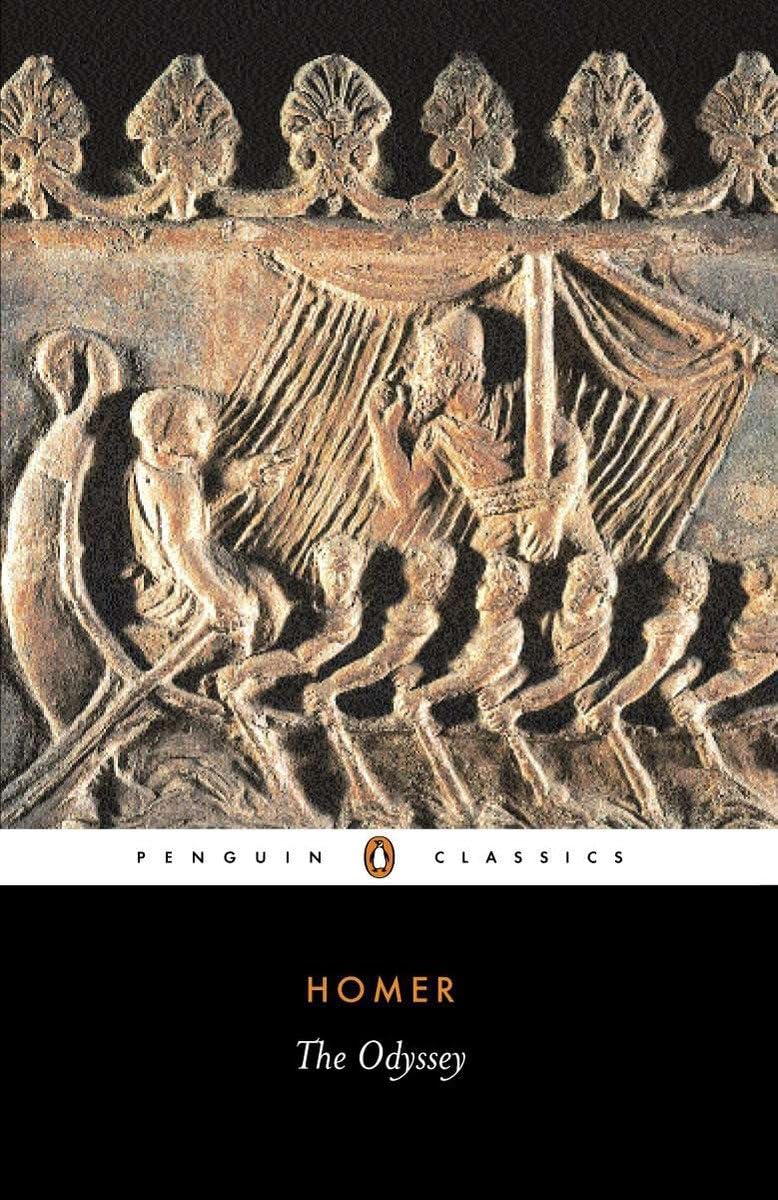
The Power of Your Story: Navigating the Odyssey
The Odyssey begins after ten years of war, but before the story truly unfolds, its hero Odysseus finds himself cast upon unknown shores, faced with impossible challenges, tempted by distractions, and yearning for home. This ancient epic is not just a tale of physical voyage—it’s the primordial story of human purpose: the call to journey beyond what is known, the struggle to reclaim one’s place in the world, and the discovery that home is not merely a location but a state of being crafted through resilience and love.
Your story, like Odysseus’s, begins with departure—a break from safety into the unknown. The journey is never linear or simple; it twists and tests the spirit through trials and temptations that challenge both body and soul. Odysseus’s encounterses with Sirens, Cyclops, Circe, and the underworld are not adventures alone, but symbols of internal struggles with desire, fear, identity, and mortality.
In each episode, the epic reveals the power of story to shape identity. Odysseus is known variously as “man of twists and turns,” “the cunning,” “the sufferer,” titles not simply of reputation but reflections of his journey. Your story’s power likewise accrues as you accumulate layers of experience—failures and successes, moments of wisdom and folly—that weave you into a unique soul.
Central to the Odyssey is the motif of homecoming. Odysseus’s purpose is tethered to returning to Ithaca, to Penelope and Telemachus, to reclaim the household fractured by absence and threat. It’s a quest for restoration and belonging—not just to a place, but to a self reconciled with time, change, and responsibility. Your story finds meaning as you, too, seek wholeness—coming home to your authentic self amidst life’s changes.
Yet the path home is beset with challenge. The epic portrays temptation and distraction—Circe’s magic, the Lotus-Eaters’ forgetfulness, the Sirens’ song—that can seduce and derail even the most seasoned. The power of your story lies in learning to navigate these lures: discerning presence from illusion, purpose from diversion.
Odysseus’s strength is not mere muscle but guile and wisdom. His cleverness outwits Polyphemus, his restraint survives Sirens. Your story becomes powerful when you cultivate both courage and insight, when you meet obstacles with imagination and patience.
The epic also honours companionship and loyalty. His crew’s faith sustains Odysseus, though loss and betrayal temper joy. Penelope’s fidelity at home is a beacon across distance and time. Your story unfolds in relationship: family, friends, kin—they anchor and challenge your voyage.
Upon return to Ithaca, Odysseus must reclaim his throne, house, and love against the suitors’ chaos. This final stage shows that purpose demands struggle not only outward but inward—restoring fractured bonds and rebuilding trust. Success is won through action tempered by justice and mercy.
The Odyssey is ultimately a poem about transformation—how the journey remakes you, how returning changes you, how purpose is a living evolution. Homer shows that every voyage alters the traveler; homecoming requires humility and strength.
Your story’s power pulses in this recognition: that journey and destination are one, that purpose is lived not in a distant goal but in the constant becoming of self through trials, love, loss, and renewal.
Like Odysseus, you sail waters unknown, guided by the pulse of home in your heart. Your story is your compass—through storm, silence, and star-lit nights.
Embrace your odyssey with courage, wonder, and steady heart. Your power lies in your journey, in your story—unfolding endlessly toward the light of your true home.
Story is everywhere in life. Perhaps your story is that you are responsible for the happiness and livelihoods of dozens of people around you and you are the unappreciated hero. If you see things in more general terms, maybe your story is that the world is full of traps and misfortune – at least for you – and you’re the perpetual victim (I’m always so unlucky…. I always end up getting the short end of the stick…. People can’t be trusted and will take advantage of me if I give them the chance.).
If you are focused on one subplot – business say – then maybe your story is that you sincerely want to execute the major initiatives in your company, yet you are restricted in some essential way and thus can never get far enough from the forest to see the trees. Maybe your story is that you must keep chasing even though you already seem to have a lot (even too much) because the point is to get more and more of it – money, prestige, power, control, attention. Maybe your story is that you and your children just can’t connect. Or your story might be essentially a rejection of another story – and everything you do is filtered through that rejection.
Stories are everywhere. Your body tells a story. The smile or frown on your face, your shoulders thrust back in confidence or slumped roundly in despair, the liveliness or fatigue in your gait, the sparkle of hope and joy in your eyes or the blank stare, your fitness, the size of your gut, the tone and strength of your physical being, your overall presentation – those are all part of your story, one that’s especially apparent to everyone else. We judge books by their covers not simply because we are wired to judge quickly but because the cover so often provides astonishing accurate clues to what is going on inside. What is your story about your physical self? Does it truly work for you? Can it take you where you want to go in the short term? How about ten years from now? What about thirty?
The Power of Your Story: The Journey in The Three Musketeers
Your story often begins with a spark—an invitation to something greater than yourself that stirs your courage and tests your loyalty. Such is the opening of Alexandre Dumas’s The Three Musketeers, a tale of friendship, honor, intrigue, and adventure set in 17th-century France. It is a story not only about sword fights and court conspiracies but about the power residing in purpose shaped by camaraderie, faith, and commitment.
Young d’Artagnan arrives in Paris, full of bravado and hope, seeking to join the King’s Musketeers. His journey begins in a frantic duel with three musketeers—Athos, Porthos, and Aramis—who become his brothers-in-arms. This meeting ignites the story’s immortal motto: “All for one, and one for all.” Your story’s strength often comes from such bonds—people who stand beside you, sharing risk, joy, and purpose.
The quartet’s adventures encompass duels, espionage, royal favor, and love, each episode layering complexity on loyalty and courage. D’Artagnan’s youthful courage matures into strategic wisdom; Athos’s noble melancholy conceals hardship and love lost; Porthos brings heart and humor; Aramis balances faith and worldly desire. Together, they navigate shifting social and political tides, embodying different facets of purpose united by shared ideals.
Your story gains power in this unity—the weaving of diverse gifts into a greater whole. Like the musketeers, purpose often requires partnership, conflict resolution, and collective trust. It flourishes not only in solitary quests but in community where strengths complement weaknesses.
Dumas’s richly painted Paris—court intrigues around Cardinal Richelieu and Queen Anne, plots involving the Duke of Buckingham and Milady de Winter—amplify the stakes. Purpose comes into sharp relief amid deception, power plays, and moral ambiguity. The musketeers’ unwavering code contrasts with court’s duplicity; your story must discern values amid complexity.
Milady de Winter, femme fatale and agent of chaos, challenges their bonds and integrity. She embodies the seductive dangers luring purpose off course—vengeance, manipulation, betrayal. Your story gains resilience when tested by such dark forces, when loyalty and honor withstand allure and threat.
D’Artagnan’s romantic pursuit of Constance Bonacieux anchors his purpose in love, offering vulnerability amid danger. Their relationship reminds us that purpose includes heart, risk, and vulnerability—that true courage is opening to connection alongside battle.
The musketeers’ trials—saving the queen’s honour, exposing plots, dueling assassins—are dramatic rites that reflect inner transformation: valor born not in impulse but in measured faith, selflessness, and wit. Your story finds energy when you move beyond impulse toward purpose aligned with moral compass and wisdom.
The novel’s triumphs are often bittersweet. D’Artagnan loses friends, confronts personal limits, and grows through hardship. In these losses and lessons, your story deepens—there is no quick victory, only relentless striving and learning.
The Three Musketeers celebrates purpose as a dance between loyalty to ideals and adaptation to circumstance. It teaches that heroism is rooted in faith—not blind, but chosen; not grandiose, but steady. Your story’s power lies in such choosing, in embodying “all for one” in the face of fear, uncertainty, and change.
Dumas’s vivid storytelling, mix of humor and tragedy, grandeur and intimacy, invites you to live your story fully—embracing friendship, honour, passion, and sacrifice. Your narrative is a sword and shield, a song and a vow.
Like d’Artagnan and his brothers, your journey summons courage—to follow calls that challenge, to stand for truths, to love despite risk, and to forge bonds that empower.
Your story is your field of battle and celebration. Carry your purpose boldly—where swords clash and hearts beat as one. Let the motto “All for one, and one for all” resonate as a compass, a promise, and a light on your path.
You have a story about your company, though your version may depart wildly from your customer’s or business partners. You have a story about your family. Anything that consumes our energy can be a story, even if we don’t always call it a story. There is the story of your relationship. The story of you and food, or you and anger, or you and impossible dreams. The story of you, the friend. The story of you, your father’s son or your mother’s daughter. Some of these stories work and some of them fail. According to my experience, an astounding number of these stories, once they are identified, are deemed tragic – not by me, mind you but by the people living them.
Like it or not, there will be a story around your death. What will it be? Will you die a senseless death? Perhaps you drank too much and failed to buckle your seat belt and were thrown from your car, or you died from colon cancer because you refused to undergo an embarrassing colonoscopy years before when the disease was treatable. Or after years of bad nutrition, no exercise, and abuse of your body, you suffered a fatal heart attack at age fifty – nine. ‘Senseless death’ means that it did not have to happen when it happened; it means your story did not have to end the way it ended. Think about the effect the story of your senseless death might have on your family, on those you care about who you are leaving behind. How would that story impact their life stories? Ask yourself, Am I okay dying a senseless death? Your immediate reaction is almost certainly, “No!, of course not!
I’m not trying to be morbid. Story – which dies if deprived of energy – is not about death but life. Yet if you continue to tell a bad story, if you continue to give energy to a bad story, then you will almost assuredly beget another bad one, or ten. Why is abuse so commonly passed from one generation to the next? How much is the recurrence of obesity, diabetes and certain other diseases across families a genetic predisposition, and how much is the repetition of a dangerous story about food and physical exertion.
The Power of Your Story: Journey into the Heart of Darkness
Joseph Conrad’s Heart of Darkness is a haunting voyage—not just down the Congo River, but into the shadowed recesses of the human soul. At its surface, it is a tale of colonial ambition and exploitation; beneath, it is a meditation on the unknown territory within each of us, the potential for light and shadow that shapes every purpose-driven journey. Your story, like Marlow’s, begins in curiosity and discovery but becomes a confrontation with profound ambiguity, where the boundaries of civilization and savagery blur.
Marlow, the narrator, sets sail to find Kurtz—a man exalted for brilliance but feared for his descent into moral chaos deep in the African interior. This quest evokes the archetypal journey, the hero traveling toward a place of revelation. Yet Kurtz’s “heart of darkness” is not merely geographical; it is psychological and spiritual, reminding us that the greatest darkness often lies inside ourselves.
From the outset, Marlow’s story is one of unfolding mystery. His observations of colonial brutality, dehumanization, and greed pierce the myth of Western “progress.” Your story may also tear at illusions—whether societal, personal, or cultural—exposing the complexities and contradictions that shape your path. The power of your story grows as you resist simple answers and embrace complexity.
Conrad’s evocative prose brings the Congo to life as a character—sensuous, dangerous, and enigmatic. The river’s winding course mirrors the inner labyrinth every seeker must navigate. Marlow’s feelings of alienation and awe echo your moments of disorientation when purpose feels at once urgent and elusive.
Kurtz stands as a towering symbol of purpose twisted by power unchecked. His eloquence and charisma mask ethical decay, revealing that greatness can tip into ruin when disconnected from conscience. Yet he also embodies potential—the capacity to illumine or destroy. Your story resonates here: purpose demands constant self-examination lest ambition devolve into obsession or tyranny.
Marlow’s encounters with other characters—the pilgrims submerged in complacency, the cannibals embodying disciplined restraint, and the eerie Kurtz’s Intended back in Europe who clings to idealized memory—frame the tensions between appearance and reality, civilization and primal truth. Your story’s power emerges in these relationships—in dialogue, in contrast, in the mirrors others hold up to you.
The novella’s climax—the meeting with Kurtz, lying weakened but still commanding—offers a profound insight. Kurtz’s last words, “The horror! The horror!” capture the agonizing awareness of human capacity for evil. Yet Marlow finds something beyond horror—a spark of humanity worthy of saving. Purpose in your story, too, may emerge from embracing suffering not as defeat, but as an entryway to truth and transformation.
Returning from the depths, Marlow wrestles with disclosure and silence. He chooses to shield the truth from Kurtz’s Intended, grappling with the ethical complexity of honesty and protection. Your story asks similar questions: what truths will you tell? How will you bear the weight of what you’ve seen within and beyond?
Heart of Darkness does not offer tidy resolutions. It leaves you with ambiguity as a companion and invites you to live with uncertainty. Your purpose is not a fixed endpoint but an evolving process—an ongoing journey into your own heart’s darkness and light.
Conrad’s masterpiece is ultimately a call to look inward—with courage and compassion—and to navigate the shadows that shape every quest for meaning. It reminds you that the line between hero and villain, light and dark, is thinner than you think.
Your story gains power when you acknowledge your own complexities, confront your fears, and choose to move forward with integrity, no matter how daunting the unknown.
The Heart of Darkness is your mirror—it reflects not just the world’s shadows but your own. Your power lies in holding this reflection without flinching, walking into your personal wilderness, and emerging with purpose forged in fire and truth.
Step boldly into your story. Let its darkness deepen your light.
Unhealthy storytelling is characterized by a diet of faulty thinking and, ultimately, long – term negative consequences. This undetectable, yet inexorable progression is not unlike what happens to coronary arteries from a high-fat, high-cholesterol diet. In the body, the consequence of such a diet is hardening of the arteries. In the mind, the consequence of bad storytelling is hardening of the categories, narrowing of the possibilities, calcification of perception. Both roads lead to tragedy, often quietly.
The cumulative effect of our damaging stories will have tragic consequences on our health, engagement, performance and happiness. Because we can’t confirm the damage our defective storytelling is wreaking, we disregard it, or veto our gut reactions to make a change. Then one day we awaken to the reality that we have become cynical, negative, angry. That is now who we are. Though we never quite saw it coming, that is now our true story.
It is not just individuals who tell stories about themselves; groups do it, too. Nations and religions and universities, companies and sports teams and political parties each tell stories about themselves to capture the imagination of their constituencies. Companies tell their stories to engage their customers and, increasingly, their workforce, stories which must be internally consistent and powerful if they’re to succeed over time.

The Death of King Arthur is the final, tragic chapter of Sir Thomas Malory’s Le Morte d’Arthur, the great medieval compilation of Arthurian legends. It recounts the end of Camelot, the legendary kingdom of King Arthur and his knights, and traces the final battles, betrayals, and reconciliations that lead to the death of Arthur and the fall of his ideal world.
The story begins with the rapid unraveling of Camelot’s unity. The noble knights of the Round Table, once bound by loyalty and shared code, fracture under the strain of love and deceit. The secret love affair between Sir Lancelot and Queen Guinevere, once hidden and forbidden, comes to light and tears the court apart. King Arthur’s trust in his closest companions erodes as accusations and violence rise.
At the heart of the divide is Mordred, Arthur’s illegitimate son or nephew (depending on the version), who seizes the moment of division to launch a rebellion. Mordred’s forces rise in defiance of the king, setting the stage for a cataclysmic final conflict.
The Battle of Camlann is both brutal and fateful. Arthur meets Mordred on the battlefield, where he wounds and kills Mordred but suffers a mortal wound himself. Knowing the end is near, Arthur commands that his sword, Excalibur—the source of his right to rule—be returned to the Lady of the Lake. With the sword cast into mysterious waters, Arthur is carried away to the mystical isle of Avalon to heal or die, leaving behind a legacy steeped in hope and mystery.
Guinevere retires to a convent seeking penitence, her love for Arthur mingled with regret. Lancelot, after his own battles both external and internal, lives a pious life, haunted by the failures that contributed to Camelot’s fall. The Knights of the Round Table meet tragic ends, their heroic ideals shattered by human frailty and conflict.
Despite defeat and loss, the story closes with the Arthurian promise—he is the “once and future king,” the legendary figure who will return when the land needs him most. Camelot dies, but its ideals live on in stories, in hearts, in the enduring human longing for justice, honor, and unity.
Your story, like Arthur’s, is not solely defined by beginnings or triumphs but by how you meet endings—and how endings birth new meanings.
The Death of King Arthur teaches that every journey holds both rise and fall, hope and despair, light and shadow. This duality is the heartbeat of your own narrative.
Arthur’s story begins in obscurity but is marked by destiny—an ordinary young man whose hand on a sword reveals his true call. Your story starts with moments that feel small or accidental yet carry the potential to awaken something powerful within you. Remember that not all stories are declared on mountaintops—many begin quietly, in hidden places, waiting to be claimed.
Camelot’s founding ideal—gathering around a Round Table of equals—is a metaphor for how purpose flourishes in connection. The power of your story is often magnified not by solitary achievement but by the relationships you build, the communities where values are shared and lifted.
Yet even in Camelot, human complexity interlaces with idealism. Arthur’s knights—heroes in their own right—are flawed, their loves and fears driving conflicts that fracture the kingdom. Your story is enriched when you embrace your complexity: the contradictions, mistakes, and growth that make you real. Purpose is not perfection; it is the courage to continue despite imperfection.
Love is both the kingdom’s treasure and its test. Guinevere and Lancelot’s affair lays bare the tension between desire and duty, passion and loyalty. Your story will traverse similar crossroads—times when your heart’s yearnings challenge your commitments. The power of your story lies in how you navigate these tensions—with honesty, reflection, and respect for yourself and others.
Mordred’s betrayal is not only a political act but a reckoning with shadow—the parts of self and story we hide or neglect until they erupt destructively. Your story’s strength increases with self-awareness—bringing shadow into light and integrating it into your whole self rather than allowing it to undermine you.
The final battle’s brutal, tragic nature reminds you that endings—no matter how painful—are integral chapters. Arthur’s death is an opening, not a closing. His request to return Excalibur to the lake symbolizes surrender and trust—recognition that the legacy you bear is greater than yourself and that letting go is sometimes the ultimate act of power.
Your story’s purpose often involves cycles: embracing new beginnings through endings, finding grace in release, and trusting in the continuities that outlast individual chapters.
The Once and Future King motif invites you to hold faith that your story does not end with failure or loss. The hopes, lessons, and values you embody ripple on, influencing others and shaping futures you may never see.
Arthurian legend is timeless because it mirrors the universal human experience: the hunger to build something meaningful against odds; the pain of betrayal, loss, and imperfection; the hope of renewal and return.
Your story gains power when you carry these truths with you. When you face your own Camlann moments—crises of identity, relationship, or purpose—with courage and openness. When you build your own Round Table—spaces of trust and equality in your life. When you wield your own Excalibur—your gifts and responsibilities—wisely and humbly.
Living your story means accepting that endings will come and that legacy is more than what you accomplish—it is who you become in the facing.
King Arthur’s death is not a defeat but an invitation: to live with integrity in the face of mortality, to love without guarantee, and to trust that your story, like his, is forever unfolding—a once and future call to courage and grace.
Carry your story boldly and fully. Your Camelot awaits.
Throughout this seminar I will detail how such organizations and their employees have reworked their story to the great advantage of both their business and their culture.
For twenty-five years I have studied human behavior and performance, and been privileged to witness many success stories of positive behavioral change: better relationships at home and at work, better job performance, weight loss and all-around improved health and lowering of health risks; love, excitement, joy and the discovery of talents heretofore buried. My experience has led me to see that these changes may be brought about by a unique integration of all the human sciences.
Over the past 30 years, my work has been deeply rooted in exploring flow experiences—those moments of deep engagement and creativity where challenge meets skill perfectly, as described by Mihaly Csikszentmihalyi. What I have discovered is that flow is not just a psychological state but a transformative journey, especially when combined with the power of storytelling. Storytelling provides the narrative framework that helps individuals and leaders make sense of their experiences, integrate their passions, and sustain flow beyond fleeting moments.
In my leadership journeys I use storytelling archetypes to create conditions that naturally foster flow. These timeless narrative structures help participants embody roles and challenges that align with their skills, creating a balance that triggers flow states. Storytelling here is not just decoration—it is a tool for meaning-making and motivation, enabling people to connect their personal and professional challenges to a larger, inspiring narrative.
Client feedback has been essential throughout this journey. From the earliest workshops to the latest leadership retreats, I have consistently integrated participant reflections and stories to refine the frameworks and exercises. This iterative process ensures that the storytelling methods remain relevant, practical, and deeply resonant. Clients often report that framing their challenges within a story helps them gain clarity, see new possibilities, and sustain the passion that fuels flow. Their feedback has confirmed that storytelling is the bridge between abstract flow theory and real-world application, making flow accessible and sustainable in everyday leadership and creative work.
In sum, my three decades of work show that flow and storytelling are inseparable partners. Flow offers the experience of peak engagement, while storytelling provides the narrative structure that helps individuals understand, sustain, and share that experience meaningfully. This synergy, continuously refined through client collaboration, is at the heart of my approach to leadership and creativity.
The Power of Story in Cold Blood
As I reflect on Truman Capote’s In Cold Blood, my awe for the power of storytelling is renewed and deepened. This book—a definitive Penguin Classic—stands apart as a literary work that goes beyond mere journalism or true crime to awaken readers to profound truths about human nature, morality, and society. In this extended exploration, I seek to convey not only why In Cold Blood is an extraordinary narrative but also how it transformed storytelling itself.
When I first read In Cold Blood, I was immediately struck by the stark contrast between the cold, brutal facts of the murder that took place in a small Kansas town and the warmth, complexity, and attention to detail with which Capote portrayed the people involved. The story revolves around the 1959 murders of the Clutter family, a crime so shocking and senseless that it reverberated across the nation. Yet, Capote’s genius is in how he refuses to allow the story to become just a sensational crime report. Instead, he immerses us into the psychological and emotional realms of not only the victims but also the perpetrators: Richard Hickock and Perry Smith.
I find this humanization to be the core of the novel’s power. Capote paints Hickock and Smith with layers of nuance and contradiction—men shaped by unfortunate circumstances, abuse, broken dreams, and flawed choices. This portrait challenges me as a reader to wrestle with discomforting questions. How much of our identity and destiny is driven by forces beyond our control? What separates us from those who commit unimaginable acts? By refusing to reduce these men to caricatures of evil, Capote forces us to confront the complexity of morality and empathy.
This narrative empathy is tightly interwoven with Capote’s meticulous craftsmanship. The depth of detail—from the Kansas landscape to the minutiae of daily life—grounds the story in realism, while the novelistic style deepens the emotional engagement. In crafting In Cold Blood as a “nonfiction novel,” Capote broke new ground, blending investigative rigor with literary techniques such as scene-setting, foreshadowing, and multiple perspectives. For me, this hybrid form is at the heart of the book’s lasting impact. It exemplifies how storytelling can transcend genres to create something both truthful and profoundly moving.
Reading In Cold Blood, I am struck by the tension Capote maintains between fact and interpretation. The narrative voice never preaches or dictates a moral conclusion; instead, it lays bare the facts alongside psychological insights and leaves space for readers to grapple with ambiguity. This nuanced storytelling demands active engagement, inviting me to reflect on the nature of evil, justice, and human frailty. Perhaps this is why the book resists simple categorization and remains relevant decades after its publication.
Beyond its narrative innovation, In Cold Blood serves as a poignant social commentary. It exposes the fragility of the American Dream—the ideal of safety, community, and upward mobility—and how cracks beneath that surface can harbor despair and violence. The small-town setting symbolizes a microcosm of larger societal anxieties, including crime, poverty, and alienation. Capote’s story compels me to confront these realities and consider how stories shape collective consciousness and cultural memory.
The moral complexity in In Cold Blood also extends to its depiction of the justice system and the death penalty. The fate of Hickock and Smith—both sentenced to death—raises profound questions about retribution and redemption. Through Capote’s nuanced portrayal, I see how storytelling influences public perception and legal discourse, revealing that narratives themselves have a power far beyond entertainment or reportage.
I am particularly moved by how Capote’s portrayal of Perry Smith invites compassion. Smith’s troubled childhood and dreams evoke humanity even in the face of terrible actions. This humanization complicates ethical judgments and underscores how stories can challenge ingrained beliefs. It reminds me that every person’s narrative is layered and that storytelling can open paths to understanding even the darkest corners of human experience.
As I consider the legacy of In Cold Blood, I recognize how it revolutionized the true crime genre and set a standard for narrative nonfiction. Its influence spans literature, film, and journalism, prompting storytellers to strive for the blend of fact and empathy Capote perfected. The story’s power lies not only in recounting a heinous crime but in its transformative ability to make readers see the world differently.
In reading and reflecting on In Cold Blood as a Penguin Classic, I am reminded that stories wield immense influence. They shape moral questions, build empathy, and form the frameworks through which we interpret reality. Capote’s masterpiece is a testament to storytelling’s power to illuminate complexity and confront uncomfortable truths without easy answers.
Ultimately, my interaction with In Cold Blood underscores that the power of story is its ability to move us deeply, alter perspectives, and endure beyond the moment. Through Capote’s art, the tragic events in Holcomb, Kansas, become more than history—they become a profound exploration of what it means to be human. And as I carry this story with me, I am reminded that powerful narratives, like Capote’s, transform not only literature but also our understanding of ourselves and the world.
Of course, some people who have travelled with me on the Power of your Story are utterly unaffected by what we do and what they’re exposed to. Why? Some feel their ‘story’ needs no major reworking (and perhaps they’re absolutely right). Some fail to buy in to what we do because they’re just moving too fast. For some, the timing isn’t right (though, as I intend to show, it is always the right moment to change: now). Whatever the reason, for virtually every group I encounter 20% – the percentage is like clockwork – are simply not interested in what we have to say.
I respect that. The Power of Your Story was not designed to push an agenda. While I passionately believe that the story metaphor is universal and, with awareness, can be extraordinarily beneficial, it ‘works’ only when the individual is willing to look hard at the major problem areas in his or her life, explore why they’re problems, then meaningfully change the problem elements, be they structure or content, which are causing a profound lack of productivity, fulfillment, engagement, and sense of purpose. We work with people. We don’t stand over them and make them do something they don’t want.
Unlike many practitioners in the field of performance improvement , I do not believe you can have it all. It’s an absurd proposition. I don’t believe that every day will be a great day, that you can eliminate regret and despair and worry, that you will always be moving forward, that you will always succeed, that you won’t veer off track again. I do believe that you can have what is most important to you. And that this is achievable if you’re willing to follow the steps of the process advocated in this seminar.
The Power of Your Story in Peter Pan
When I first encountered J.M. Barrie’s Peter Pan, part of the esteemed Penguin Classics collection, I realized immediately that this was more than a simple tale for children—it was a profound meditation on the human condition, a narrative that captures the magic and melancholy of childhood and the inevitability of growing up. This story wields an extraordinary power. It transcends generations, cultures, and age groups. In exploring Peter Pan, I came to appreciate the unique ways storytelling can illuminate our deepest desires and fears, shaping not only how we understand youth but also how we confront life itself.
The story of Peter Pan, the boy who never grows up, introduces readers to the enchanting world of Neverland—a place both magical and wild, filled with fairies, pirates, mermaids, and Lost Boys. Right from the outset, Barrie invites me into a world where imagination reigns supreme, where the ordinary boundaries of reality dissolve. But the wonder of Neverland is underpinned by a poignant tension: the stark contrast between eternal childhood and the inevitable pull of adulthood.
The figure of Peter Pan is emblematic of this tension. On the surface, he is the embodiment of freedom, adventure, and joy—the eternal child who defies time. Yet, as I delved deeper, Peter’s character revealed shades of complexity. His steadfast refusal to grow up reveals a fear, a hesitation to face the responsibilities and pains of adult life. This duality—the joyous yet haunted nature of Peter—struck me as one of the story’s most powerful elements. Barrie doesn’t simply spin a fantastical yarn; he probes the depths of human psychology wrapped in the innocence of childhood.
Throughout the novel, I was captivated by how Barrie uses imagination both as a means of escape and as a space for confronting reality. The adventures with pirates and the playful skirmishes with Captain Hook are thrilling, but they also symbolize deeper conflicts—between freedom and control, innocence and experience, safety and danger. These themes resonated with me as emblematic of the struggles inherent in growing up and finding one’s place in the world.
One of the story’s remarkable powers lies in how it portrays the complexity of childhood itself. With lyrical prose and rich detail, Barrie captures the contradictions—childhood is at once joyous and fearful, imaginative and grounded, idyllic and fraught with challenges. The interactions between Peter, Wendy, and the Lost Boys reflect a longing for belonging and family, yet also the independence and wildness of youth. As I read, I felt transported back to my own childhood, recalling the blend of wonder and apprehension that defines those years.
Barrie’s exploration of the adult characters further deepened the story’s emotional reach for me. Wendy, as a mother figure to the Lost Boys, embodies nurturing and care, yet she too is caught between the worlds of childhood and adulthood. Her eventual acceptance of leaving Neverland and growing up represents the bittersweet triumph of maturity. This dynamic interplay between characters highlights that Peter Pan is not merely a celebration of eternal youth, but a nuanced reflection on change, loss, and acceptance.
The narrative structure itself enhances the story’s power. Barrie’s episodic approach—with vivid, captivating scenes that flow seamlessly from one adventure to the next—mirrors the fragmented and nonlinear nature of memory and imagination. The rich imagery—from the fairy Tinker Bell’s luminous presence to the ominous menace of Captain Hook’s pirate ship—creates a sensory world that lingers in the mind. This structure invites readers to immerse themselves fully, making the fantastic feel palpably real.
Language plays a pivotal role in crafting this magical atmosphere. Barrie’s playful, poetic style invites delight and wonder while also conveying the underlying melancholy and complexity. Through his words, Neverland is both a place of joy and mystery, a symbol of eternal childhood and the bittersweet passage of time. This linguistic richness is a testament to the power of storytelling to engage the senses and emotions simultaneously.
In my reading, I also recognized the broader cultural and symbolic significance of Peter Pan. Over the decades, this story has become a cultural touchstone, inspiring endless adaptations in theater, film, and beyond. Its themes of freedom, identity, and resistance to adulthood resonate universally, making it an enduring part of collective imagination. For me, this speaks to the immense power of a story to transcend time and medium, to continually reinvent itself while retaining its core truths.
Further, I found Peter Pan offers a nuanced meditation on identity and belonging. Peter himself serves as both an ideal and a cautionary figure—the eternal child who embodies freedom but also risks isolation. This tension challenged me to think about the nature of selfhood: How do we balance the desire for eternal youth and possibility with the realities of growth and responsibility? Barrie’s story doesn’t provide easy answers but invites deep reflection.
The figure of Captain Hook adds an additional layer of complexity. As the antagonist, Hook represents the forces of order, authority, and the adult world—often portrayed as threatening and oppressive. Yet, even Hook is humanized with moments of humor and vulnerability, reminding me that stories, even those with clear antagonists, seek to explore the spectrum of human traits rather than fixed categories of good and evil.
A key aspect I admire in Peter Pan is its ability to speak to readers across ages. For children, it is a thrilling adventure filled with magic and friendship. For adults, it carries nostalgic poignancy and philosophical depth. This duality illustrates how stories can operate on multiple levels simultaneously, offering different insights depending on the reader’s perspective and stage of life.
I also consider how Peter Pan serves as a powerful exploration of memory and loss. The fleeting nature of childhood and the inevitable passage of time are central themes, articulated through the narrative and characters’ arcs. These reflections evoke a universal human experience—the longing to hold on to precious moments and the sorrow that accompanies change.
Stories like Peter Pan demonstrate the power of narrative to shape how we process and understand such universal themes. Barrie’s tale is a reminder that storytelling is not just about escapism; it is a means of exploring truths about the self and society, wrapped in engaging and imaginative form.
Reading Peter Pan as a Penguin Classic, I am reminded of storytelling’s unique ability to blend fantasy and reality to reveal profound meanings. Barrie’s work exemplifies how narrative can challenge us to dream, to remember, and to face life’s transitions with courage. The story’s vibrant characters, imaginative settings, and emotional depth combine to create a tapestry that lingers long after the last page is turned.
Ultimately, reflecting on Peter Pan reaffirms for me that the power of story lies in its capacity to capture the fullness of human experience—the joy and pain, the magic and reality, the innocence and complexity. This timeless tale endures because it speaks to essential parts of ourselves, inviting us to remember that within every story lies the potential to transform how we see the world and ourselves.
As I carry the story of Peter Pan forward, I am inspired to recognize the ongoing importance of stories that challenge, enchant, and illuminate. Barrie’s masterpiece endures not because it offers simple escape, but because it holds up a mirror to the paradoxes of life—an eternal dance between childhood and adulthood, freedom and responsibility, imagination and truth.
Who are the people who come to the Power of Your Story with dysfunctional life stories that need serious editing? They are, simply put, among the smartest, most talented, most ambitious, most creative people in their communities and professional circles. Some participants even bring, or return with spouses, friends or parents. They tend to have lots of responsibilities, they’re accountable for a great deal that goes on in their companies, they often make lots and lots of money….. yet, perhaps ironically, for all their accomplishments they can’t seem to get their stories right. On the questionnaire I ask clients to fill out before they come down to a world city for our two – and – a – half – day journeys (or to the one and two day events we conduct around the world) they are asked, among other things, to write down some of the most important parts of their life story. ‘My father died young of emphysema’, wrote the CEO of his family’s company. Later on the questionnaire, he wrote ‘I smoke two packs a day.’ Still later, describing one of his goals for the now fifty-year-old company, he wrote, ‘On the evening celebrating our company’s seventy-fifth anniversary, I want to be able to look back on yet another quarter century of quality, growth and profitability’.
How can these three sentences follow from each other without their author acknowledging that, taken together, they add up to utter nonsense? Especially when the author is superbly gifted in so many other areas?
‘The most important thing in my life is my family, wrote one client ‘and if things continue in the direction they’re going, I’m almost certainly heading for divorce and complete estrangement from my children’.
I’ll give him this much: At least he saw the tragedy coming.
In a previous book I argued that one of our biggest problems is rooted in our flawed belief that simply investing time in the things we care about will generate a positive return. That belief and the story that flows from it are simply not true. We can spend time with our families, be present at dinnertime, have lunches with our direct colleagues, remember to call home when traveling, put in 45 minutes on the treadmill five days a week – we can all do all of it but if we’re too exhausted, too distracted, too frustrated and angry when ‘doing’ these things, the positive return we hoped for will simply not materialize. Without investing high-quality, focused energy in the activity before you, whatever it may be, setting time aside simply takes us from absenteeism to presenteeism.
The Power of Your Story in Madame Bovary

In reading Gustave Flaubert’s Madame Bovary, part of the distinguished Penguin Classics collection, I found myself immersed in a narrative that exemplifies the power of story to illuminate the profound complexities of human desire, disappointment, and societal constraint. This novel is an enduring masterpiece that reveals how storytelling can capture the contradictions of life with unflinching realism and psychological depth. Through Madame Bovary, I experienced firsthand how literature has the power not only to narrate but to transform understanding of the intricate fabric of human emotion and social reality.
At the heart of Madame Bovary lies the tragic figure of Emma Bovary, a young woman whose dreams of passion, luxury, and romance are at odds with the prosaic and confining realities of provincial life. From the very beginning, I was drawn into Emma’s world—a landscape painted by Flaubert with precise and evocative detail—and immediately felt the tension between her yearnings and the limitations imposed by society and circumstance. This tension, I realized, drives the novel’s enduring power.
Flaubert’s storytelling grabs me because it reveals the intimate struggle between idealism and reality, the collision of fantasy with the often harsh truths of existence. Emma’s dissatisfaction with marriage, her reckless pursuit of romantic escapades, and her descent into financial ruin are portrayed with sympathetic insight, yet without idealization or moralizing. This balance between empathy and critical observation impressed me deeply, for the story neither judges nor excuses but invites nuanced understanding.
One of the novel’s remarkable achievements is Flaubert’s commitment to realism, grounded in detailed observations of everyday life—social rituals, the routines of rural town life, and the minutiae of Emma’s environment. This realism creates a vivid backdrop, making the characters and their struggles palpably real. For me, Flaubert’s painstaking descriptive style elevates the narrative beyond a mere cautionary tale to a complex psychological portrait and social critique.
As I read, I was struck by the novel’s exploration of the limits and perils of romantic idealism. Emma seeks fulfillment through books, fantasies, and passion, yet time and again, reality falls short of her expectations. This gap between desire and actuality speaks to a universal human experience—the longing for something greater set against the constraints of life. It became clear to me that Madame Bovary is not simply about a woman’s downfall but about the tension inherent in human aspirations and societal roles.
The narrative structure itself contributes to the novel’s power. Flaubert’s detailed, often slow-moving pace mirrors Emma’s internal turmoil and the stifling environment that surrounds her. Rather than dramatic climaxes, the story unfolds with a steady accumulation of small disappointments and choices that lead inexorably to tragedy. This approach made me appreciate how storytelling can mimic life’s rhythms to create emotional authenticity.
Language plays a crucial role in shaping the story’s impact. Flaubert’s prose is precise, elegant, and at times biting, capturing both the beauty and banality of the world Emma inhabits. His famous insistence on “le mot juste” (“the exact word”) demonstrates how every word carries weight and shapes meaning. This linguistic rigor reinforces the novel’s themes of illusion versus reality, reflecting Emma’s quest and ultimate disillusionment.
As I engaged with Madame Bovary, I noted the profound social critique embedded in the story. The novel exposes the constraints placed on women by 19th-century bourgeois society, highlighting issues of gender, class, and power dynamics. Emma’s struggles are inseparable from her social context—her limited options and the rigid expectations of her role amplify her sense of entrapment. This social dimension deepened my understanding of how stories serve as mirrors to cultural realities and engines of social reflection.
The characters surrounding Emma further illuminate the novel’s themes. Charles Bovary, her husband, represents the banal conventionality and mediocrity Emma chafes against, while her lovers embody different facets of desire and escapism. Each interaction underscores the complexities of human relationships, showing how love, passion, and disappointment intertwine. For me, these nuanced characterizations reveal how storytelling can capture the messy contradictions of real life.
Madame Bovary also explores the consequences of illusion—how the dreams and narratives we construct can both inspire and destroy. Emma’s descent into debt and despair is a stark portrayal of the destructive potential when fantasy collides with reality. This aspect of the story serves as a powerful caution about the dangers of escapism but also about the human need for meaning and fulfillment.
I was particularly moved by the tragic inevitability that permeates the narrative. Despite moments of hope and rebellion, Emma’s fate seems sealed from the start. Yet Flaubert’s portrayal is not fatalistic but profoundly humane—acknowledging the tragic flaws and vulnerabilities that define us. This balance between inevitability and compassion is a hallmark of powerful storytelling, inviting readers to reflect on fate, choice, and agency.
Reflecting on the enduring legacy of Madame Bovary, I recognize how Flaubert’s work revolutionized the novel form and influenced generations of writers. Its psychological insight, narrative rigor, and social critique continue to resonate, making it a cornerstone of literary realism. The novel’s power lies not only in its story but in its ability to provoke thought and challenge readers to confront uncomfortable truths about desire, society, and the human condition.
Reading Madame Bovary deepened for me the appreciation that literature’s power extends far beyond plot—it resides in its ability to evoke empathy, capture nuance, and hold up a mirror to society. Flaubert’s novel exemplifies how storytelling can transform individual experience into universal art, making personal tragedy a lens through which larger truths are revealed.
Ultimately, my journey with Madame Bovary reinforced my belief in the transformative power of story. Flaubert’s masterwork reminds us that every story holds the potential to uncover hidden desires, expose societal flaws, and illuminate the complexities of the human heart. Through Emma Bovary’s tragic tale, we see how story guides us in understanding our own dreams, disappointments, and the eternal quest for meaning in life.
Presenteeism is a condition increasingly plaguing entrepreneurs, a vague malady defined as impaired job performance because one is medically or otherwise physically or psychologically compromised. Is an entrepreneur who is too fatigued or mentally not there for eight hours really better than no one? How about a parent? A spouse? Time has value only in its intersection with energy; therefore, it becomes priceless in its intersection with extraordinary energy – something which I call full engagement. Or flow. Or bliss.
In what areas are you disengaged right now. Whatever the answer, you’re likely to lay a good deal of the blame for this disengagement on external facts – overwork, the time and psychic demands of dealing with aging parents, frequent travel, an unsupportive spouse, not enough hours in the day, debt, not my fault, out of my hands, too much to do, always on the call – but such excuse-making is neither helpful nor accountable.
We enjoy the privilege of being the hero, the final author of the story we write with our life, yet we possess a marvelous capacity to give ourselves only a supporting role in the ‘storytelling’ process, while ascribing the premier, dominant role to the markets, our family, our kids, fate, chance, genetics. Getting our stories straight in life does not happen without our understanding that the most precious resource that we human beings possess is our energy.
The energy principle still holds, and is crucial to ideas in this seminar, too; I maintain that it is at the heart of the solution not only to our individual problems but also to our collective, national ones – our health care problem, our obesity problem, our stress problem, our multi-tasking problem.
In recent years I’ve come to see that, amazingly, the key to almost all of our problems, more fundamental even than poor energy management, is faulty storytelling, because it is storytelling that drives the way we gather and spend our energy. I believe that stories – again, not the ones people tell us but the ones we tell ourselves determine nothing less than our personal and professional destinies. And the most important story you will ever tell about yourself is the story you tell to yourself. (Mind if I repeat that: the most important story you will ever tell about yourself is the story you tell to yourself).
The Power of Your Story in Dracula
Bram Stoker’s Dracula, a foundational work within the Penguin Classics, wields a profound narrative power that transcends its gothic horror roots to explore deep fears, desires, and the complexities of human nature. At its core, the novel is not merely a tale of supernatural terror but a multilayered story that illuminates cultural anxieties, psychological struggles, and societal transformations of its time—and of timeless human concerns. Through its epistolary form, richly drawn characters, vivid settings, and potent themes, Dracula demonstrates the extraordinary capacity of storytelling to captivate, unsettle, and provoke lasting reflection.
The novel’s epistolary structure immediately draws the reader into an intimate engagement with the tale. Told through a collection of letters, diary entries, and newspaper reports, the story unfolds through multiple perspectives, creating both immediacy and fragmentation. This format intensifies suspense by presenting events as though experienced firsthand, inviting the reader to piece together the horrifying mystery alongside the characters. Rather than a singular authoritative voice, the narrative mosaic mimics the complexity of real-world experience, underscoring the fragmentary nature of knowledge and the challenge of confronting the unknown.
At the center of the story stands Count Dracula, who embodies several potent anxieties: death, the alien, contagion, and the otherworldly. Dracula threatens Victorian England from the untamed wildness of Transylvania, a figure both monstrous and seductive. His vampiric nature symbolizes a profound fear of invasion—cultural, moral, and physical—against which the novel’s characters must defend themselves. This invasion is more than literal; it represents societal fears of degeneration, foreignness, and the disruption of established hierarchies and norms.
Fear, here, plays a dual role. On one level, it is the primal, visceral terror of an unknown predator in the night. On another, it unfolds psychologically, as characters grapple with threats to identity, purity, and social order. These layered fears speak to anxieties deeply embedded in the Victorian psyche but persistently resonate today. The vampire legend becomes a conduit through which universal human dread—of death, loss, and decay—is articulated, making Dracula more than gothic entertainment but a profound cultural text.
The novel’s characters enrich these themes through their varied responses to Dracula’s threat. Jonathan Harker’s initial visit to Dracula’s castle introduces the reader to gothic dread and foreign menace, setting the story’s ominous tone. Mina Harker represents rationality, moral fortitude, and compassion, acting as a linchpin for the group’s resistance. Van Helsing’s blend of scientific knowledge and occult wisdom embodies the era’s tension between modernity and superstition—a scientific enlightenment reaching into ancient mysteries. These figures collectively symbolize a society striving for order and control amid encroaching chaos.
Atmosphere and setting significantly contribute to the narrative’s power. The bleak, remote castle of Transylvania evokes isolation and malevolence, its labyrinthine passages and eerie silence creating a palpable sense of dread. In contrast, the fog-shrouded English countryside and shadowy urban spaces symbolize the intrusion of darkness into the heart of civilization. The use of setting not only heightens suspense but metaphorically reflects the novel’s underlying conflicts—between wildness and order, darkness and light, the unknown and the known.
Sexuality and desire emerge as subtle yet potent motifs throughout Dracula. The vampire’s bite, laced with erotic undertones, blurs boundaries between pleasure and violence, seduction and domination. Victorian repression of sexuality is both challenged and explored, as the story taps into deep-seated anxieties surrounding gender, power, and expression. The eroticized nature of vampirism adds complexity to Dracula’s menace, making him a figure of forbidden attraction as well as horror. This interplay enriches the narrative’s psychological depth and cultural commentary.
The multiplicity of narrative voices also reinforces the story’s exploration of perspective and truth. As the tale alternates among characters’ journals and letters, it becomes clear that knowledge is partial and fragmented, complicating the idea of a singular truth. This narrative strategy heightens the reader’s involvement, making the process of uncovering Dracula’s secrets a shared endeavor. It also mirrors the characters’ own struggles to comprehend and respond to a terror that resists easy understanding.
Dracula further captures the tension between modern science and ancient folklore. Van Helsing’s use of emerging technologies—blood transfusions, phonographs—alongside traditional spiritual practices highlights a society caught between rational progress and mystical fears. This clash enriches the narrative, suggesting that some unknown forces defy scientific mastery. The struggle against Dracula becomes more than a physical battle; it is a symbolic confrontation between reason and superstition, progress and primal fear.
The treatment of gender roles and societal expectations adds further complexity. Female characters such as Mina and Lucy embody contrasting ideals of Victorian femininity. Lucy’s transformation into a vampiric figure threatens the era’s social order, while Mina’s steadfast morality and intellect exemplify emerging notions of female agency. Their victimization and rescue underscore anxieties about women’s roles and sexual agency, making the novel a layered inquiry into power, control, and transformation.
Stylistically, Stoker’s prose deftly balances detailed description with dramatic pacing. His vivid imagery grounds the supernatural in tangible reality, while bursts of suspenseful dialogue drive the plot forward. The oscillation between moments of terror and tenderness, darkness and light, creates a dynamic rhythm that sustains the reader’s emotional engagement. Language is wielded with precision to evoke mood, deepen character, and illuminate theme.
Considering Dracula’s lasting impact reveals its role in shaping popular culture’s vampire mythology and the gothic genre. Its influence pervades literature, cinema, and art, testifying to its powerful narrative resonance. This enduring legacy stems from its ability to tap into universal fears and desires, crafting a story that adapts to changing cultural landscapes while retaining its core themes.
The ethical and existential questions raised—about good and evil, life and death, human nature and monstrosity—linger beyond the reading experience. The narrative frames the confrontation with Dracula as a broader metaphor for confronting the shadow aspects of society and self, emphasizing courage, solidarity, and resilience. This elevates the novel from mere horror to a profound meditation on humanity’s darkest challenges.
Ultimately, Dracula illustrates storytelling’s unique capacity to provoke fear while fostering empathy and insight. It opens a space where the unknown can be faced, where repressed desires and anxieties find expression, and where the boundaries between the self and other are interrogated. Its power lies not only in thrilling and terrifying but in illuminating truths about culture, identity, and the human condition.
Through its rich characters, evocative locales, and multilayered themes, Dracula stands as a testament to the transformative power of narrative. It is a story that haunts and enlightens, unsettling complacency and expanding understanding. The novel invites readers to confront darkness both outside and within, revealing the enduring capacity of story to shape how humanity perceives itself and its fears.
So, you would better examine your story, especially this one that is supposedly the most familiar of all. ‘The most erroneous stories are those we think we know best – and therefore never scrutinize or question’ said paleontologist Stephen Jay Gould. Participate in your story rather than observing it from afar, make sure it is a story that compels you. Tell yourself the right story – the rightness of which only you can really determine, only you can really feel – and the dynamics of your energy change. If you are finally living the story you want, then it need not – it should not and won’t – be an ordinary one. It can and will be extraordinary.
After all you are not just the author of your story but also its main character the hero. Heroes are never ordinary.
In the end your story is not a tragedy. Nor is it a comedy or a romance or a thriller or a drama. It is something else. What label would you give the story of your life, the most important story you will ever tell. To me that sounds like a hero’s journey.
End of story.
PART ONE
Old Stories
If an idiot were to tell you the same story every day for a year, you would end by believing it – Horace Mann
That’s Your Story?
Slow death.
An uglier two-word phrase it’s hard to find. But if you’re at all like the people I see in the Hero’s Journey & Hero’s Journey seminars, then I’m afraid you understand the phrase all too well.
How did it come to this?
What am I doing?
Where am I going?
What do I want?
Is my life working on any meaningful level? Why doesn’t it work better?
Am I right now dying, slowly, for something I’m not willing to die for
Why am I working so hard, moving so fast, feeling so lousy

The Power of Your Story in Les MIserables
Victor Hugo’s Les Misérables, a monumental work within Penguin Classics, stands as a towering testament to the transformative power of storytelling. The novel’s expansive narrative weaves together intricate character studies, sweeping social critique, and profound meditations on justice, mercy, and redemption. Far beyond a historical epic, Les Misérables uses story as a vehicle to explore the human spirit’s resilience in the face of suffering and the enduring quest for dignity and compassion. Through its richly drawn characters, epic scope, and moral depth, the novel exemplifies how storytelling can illuminate society’s darkest corners while affirming hope and human dignity.
From the outset, Les Misérables challenges readers with its scale and ambition. Set against the backdrop of early 19th-century France, the story traces the lives of destitute characters, political idealists, and ordinary citizens ensnared in the tides of history. Central to the novel is Jean Valjean, a former convict whose journey from condemned prisoner to compassionate benefactor encapsulates the novel’s major themes of transformation and grace. Through Valjean’s struggle, the narrative explores the possibility of redemption against the harsh realities of a judgmental society.
One of the novel’s extraordinary strengths lies in its detailed characterization. Jean Valjean’s moral evolution is rendered with nuance and depth, capturing the tensions between law and justice, punishment and forgiveness. As Valjean wrestles with his past and seeks to live virtuously, readers are invited into a profound exploration of conscience, identity, and the power of personal change. His adversary, Inspector Javert, embodies the rigid application of the law, relentless in his pursuit but ultimately trapped by his own inflexible principles. Their conflict animates the story’s moral debates, emphasizing the complexities of justice beyond black-and-white judgments.
The novel’s power is further amplified through its portrayal of other richly portrayed figures: Fantine, whose tragic sacrifice highlights the plight of women and the vulnerable; Cosette, symbolizing innocence and hope; and Marius, the passionate idealist caught in the upheavals of revolution. Each character embodies facets of humanity—suffering, love, idealism, and despair—making the story’s emotional impact deeply resonant. The ensemble cast breathes life into the social realities Hugo seeks to expose, while their intersecting stories weave a tapestry of human experience across class and circumstance.
Hugo’s storytelling is notable for its encyclopedic detail and social critique. The novel spends significant passages depicting the dire conditions of the poor, the political instability of post-Napoleonic France, and the brutality of institutions like the penal system. These sections serve not only as historical documentation but as urgent moral calls to awareness and change. The story insists that individual suffering is inseparable from social injustice, urging readers to consider broader systemic reforms alongside personal virtue.
The sprawling narrative structure, spanning decades and shifting across multiple perspectives, invites readers into a complex and layered understanding of history and humanity. Hugo uses history not merely as backdrop but as a dynamic force shaping lives and choices. The June Rebellion of 1832, vividly depicted through the barricades and revolutionary fervor, exemplifies the clash between oppressive structures and the aspirations for freedom and justice. This historical anchoring enhances the story’s stakes and allows for wide-ranging reflections on revolution, sacrifice, and social progress.
Language and style play crucial roles in shaping the novel’s emotional and intellectual power. Hugo’s prose ranges from lyrical and poetic passages to dense philosophical reflections, embodying the tension between narrative and essayistic elements. His evocative descriptions of Paris—its streets, sewers, and rooftops—transform the city into a living character that shapes and witnesses human dramas. This vivid rendering of place enriches the reader’s immersion and underscores the inseparability of environment and human fate.
The themes of mercy, compassion, and human dignity form the novel’s ethical core. Jean Valjean’s repeated acts of kindness, even at great personal risk, demonstrate how generosity can redeem and reshape both giver and receiver. This emphasis on empathy challenges punitive societal norms and offers a radical vision of solidarity. The novel also grapples with the limits of law and justice, as seen in Javert’s tragic inability to reconcile his principles with mercy. These conflicting values intersect throughout the story, inviting readers to ponder the nature of true justice.
Furthermore, the novel addresses the power of love in its many forms—romantic, familial, altruistic—and how love motivates sacrifice and renewal. The relationships between characters underscore love’s capacity to heal wounds, inspire courage, and sustain hope amidst despair. Through Cosette and Marius’s youthful love, the story also gestures toward future possibilities and societal regeneration, providing an emotional counterbalance to the harsh realities depicted.
Throughout Les Misérables, there is a persistent tension between despair and hope. Hugo acknowledges the depths of human suffering and the persistence of cruelty and injustice but refuses to succumb to nihilism. Instead, the narrative affirms the potential for change—personal, social, and spiritual. This underlying optimism imbues the story with a redemptive arc, making it not only an indictment of injustice but also a celebration of the human spirit’s capacity to rise.
The novel’s enduring power also stems from its capacity to speak across time and cultures. Its exploration of poverty, inequality, justice, and human dignity resonates universally, making it relevant beyond its historical Parisian setting. Les Misérables continues to inspire adaptations, theatrical productions, and scholarly inquiry, testament to its profound impact and narrative vitality.
In reflecting on the power of Les Misérables, it is clear that storytelling here serves multiple functions: as a vehicle for social critique, a moral inquiry, and a celebration of human resilience. Victor Hugo’s epic narrative teaches that story can confront injustice with empathy, complexity, and hope, shaping how readers grapple with the complexities of life and society.
Ultimately, Les Misérables exemplifies storytelling’s profound ability to combine the personal and the political, the tragic and the hopeful. Through its intricate characters, sweeping historical scope, and meditations on justice and love, the novel offers a vision of humanity’s capacity for redemption amidst hardship. It invites readers to witness suffering and embrace compassion, underscoring the power of story to transform understanding and inspire better futures.
Slow death: what a harsh phrase. Is that really what is happening to all those people, the ones who start out contended by what is good and pure in life – a simple cup of coffee, a few seemingly reasonable life goals (a nice salary, say, and one’s own home) – and who , once they have achieved those goals, can’t even be satisfied because they’ve already moved on to life’s next-sized latte (six figure salary, second home, three cars) only to move on to something double-extra grand when that’s achieved, a continual supersizing that guarantees one can’t ever be fulfilled?
Okay. Not everyone I see or hear about is dying slowly. But to judge from the responses I get, workshop after workshop, year after year – and each year it gets worse – whatever it is they’re doing sure doesn’t sound fun. It doesn’t even sound like getting by. I read the frustration and disappointment in their self-evaluations and hear it in their own voices, if and when they’re comfortable enough to read aloud from their current dysfunctional story, the autobiographical narrative they attempt to write the first day at the Power of Your Story, but usually don’t finish until the night before our last day together.
The Power of Your Story in ‘The Old Man and the Sea’

Ernest Hemingway’s The Old Man and the Sea, a seminal work within Penguin Classics, stands as a supreme example of storytelling’s ability to embody simplicity and profound depth simultaneously. This novella captures human endurance, dignity, and the struggle against overwhelming odds through spare, precise language and a narrative resonating far beyond its modest length. The story’s power lies in its universal themes and symbolic richness, revealing how storytelling can distill life’s complexities into a moving and enduring exploration of character and spirit.
At the heart of the narrative is Santiago, an aging Cuban fisherman whose epic battle to catch a giant marlin exemplifies human grit, courage, and resilience. The simple plot—a man alone at sea striving to prove his worth—belies the profound philosophical questions embedded in the story. Santiago’s struggle becomes a metaphor for life itself, for the dignity inherent in perseverance despite the inevitability of loss. This duality is a fundamental aspect of the novella’s power, inviting readers to reflect on the nature of success, failure, and what it means to fight on.
Hemingway’s narrative style is crucial to the story’s impact. His hallmark economy of language, often described as the “Iceberg Theory,” allows much to remain beneath the surface, lending emotional weight and depth to the prose. The direct, unadorned sentences evoke a world stripped to essentials—man, nature, struggle—yet beneath this apparent simplicity lies a web of deep feeling and philosophical insight. This storytelling approach amplifies the universal resonance of Santiago’s experience, making it both intimate and archetypal.
The novella’s rich symbolism further enhances its interpretive layers. Santiago’s battle with the marlin symbolizes the broader human confrontation with nature’s forces and fate. The sea itself is a vast, indifferent opponent and a source of sustenance and mystery, reflecting the complexity of the environment humans inhabit. The marlin becomes a noble and worthy adversary, representing the beauty, challenge, and dignity of the struggle. Even the sharks that later attack Santiago’s catch symbolize destructive forces that threaten human achievement, emphasizing the fragile and transient nature of success.
Characterization in The Old Man and the Sea is deceptively simple yet deeply evocative. Santiago’s persistence, humility, and respect for nature foreground an ideal of masculinity tempered by wisdom and acceptance. His relationship with the young boy Manolin, who admires and cares for him, highlights themes of mentorship, tradition, and hope. These relationships illuminate human interconnectedness and continuity across generations, balancing solitude with communal bonds.
The story’s pacing and structure mirror the measured rhythm of Santiago’s journey and the natural world he inhabits. The narrative unfolds slowly, with detailed descriptions of the fisherman’s techniques, struggles, and moments of introspection. This deliberate tempo enhances immersion, allowing readers to experience the physical and psychological demands of the ordeal. The cyclical quality of the story—Santiago’s morning departure, the long fight, and the return—evokes natural cycles of life and struggle, reinforcing the timelessness of the narrative.
The novel’s themes expand beyond individual endurance to encompass broader reflections on human existence. Santiago’s battle can be read as an allegory for the artist’s creative process, the human confrontation with limitations, and the search for meaning in a world that often offers uncertainty and loss. The novella meditates on dignity in the face of defeat, suggesting that true victory lies not in outcomes but in the courage to confront life’s challenges.
Hemingway’s portrayal of nature is integral to the story’s philosophical dimension. The sea and its creatures are portrayed with deep respect and intimate knowledge, emphasizing humanity’s place within, rather than above, nature. Santiago’s reverence for the marlin and his acknowledgement of its nobility reflect a harmonious coexistence with the natural world, contrasting with themes of domination or exploitation. This ecological awareness enriches the narrative and underscores the story’s universal appeal.
The novella also explores themes of solitude and companionship. Santiago’s isolation on the sea is profound, yet his thoughts and memories keep him connected to the broader human experience. His silent conversations with himself and imagined dialogues with his late wife reveal the importance of inner life in sustaining endurance. The return to shore and the recognition from Manolin reaffirm the value of community and human connection, adding emotional complexity to the story.
In addition to thematic depth, the novella’s cultural and historical context enriches its significance. Published in 1952, The Old Man and the Sea followed a period of artistic experimentation, yet its return to classical narrative elements and universal themes marked a reaffirmation of storytelling’s power to endure. Hemingway’s own life experiences, including his time in Cuba, inform the authenticity of the setting and character, adding layers of lived reality to the narrative.
The critical acclaim and widespread popularity of The Old Man and the Sea affirm its status as a modern classic. Winning the Pulitzer Prize in 1953 and contributing to Hemingway’s Nobel Prize in Literature in 1954, the novella’s recognition reflects its profound resonance with readers and critics alike. Its easily accessible language and poignant themes have made it a staple in literary education and a touchstone for discussions on human nature and resilience.
Ultimately, The Old Man and the Sea exemplifies storytelling’s unique capacity to distill profound truths through economy of means. Hemingway’s craftsmanship, combined with the universal human themes woven throughout the narrative, creates a story that is at once simple and deeply affecting. It exemplifies narrative’s power to evoke empathy, provoke thought, and celebrate the indomitable spirit that defines the human condition.
This novella serves as a reminder that stories need not be sprawling epics to have impact; sometimes, the smallest vessel carries the deepest truths. Santiago’s journey captures the essence of struggle and dignity, becoming a metaphor that continues to inspire and move readers around the world.
In reflection, The Old Man and the Sea remains a cornerstone of literary achievement because of its masterful synthesis of style, theme, and character. It is an enduring meditation on perseverance, humility, and the relationship between humans and nature—one that continues to resonate with readers searching for meaning in adversity.
As the Power of Your Story seminar progresses and people’s defenses start to melt away, I hear more and more of these stories. By almost any reasonable standard, these stories exemplify failure; in many cases, disaster. There is no joy to be found in them, and even precious little forward movement. In every workshop, nearly everyone has a dysfunctional story that is not working in at least one important part of his or her life: stories about how they do not interact often or well with their families; about how unfulfilling the other significant relationships in their lives are; about how – despite all that extracurricular failure – they’re not even performing particularly well at work, or, if they are, about how little pleasure they gain from it; about how they don’t feel very good physically and their energy is depleted.
On top of all that (isn’t that enough?), they feel guilty about their predicaments.They know, on some almost buried level, that their life is in crisis and the crisis will not simply go away. Their company is not going to make it go away. And so they wake up one morning to the realization that the bad story they for so long only feared has finally become their life, their story. Not that this development is their fault. No. Nor is there a heck of a lot to be done about it.
It is a competitive, cutthroat world out there
God knows, I want to change but I simply can’t. I’ll get eaten up and beaten by someone who’s willing to sacrifice everything.
The world moves faster today than it did a generation ago
What am I supposed to do – quit my job?
These are the facts of my life. There’s nothing I can do about them.
My life is a known quantity; so why mess with it even if it’s killing me?
Let me repeat that one: …… even if it’s killing me.
People don’t need new facts – they need a new story.
The Power of Your Story in ‘Hamlet’
William Shakespeare’s Hamlet, one of the most renowned works in the Penguin Classics repertoire, reveals storytelling’s unparalleled capacity to explore the depths of human psychology, moral complexity, and existential doubt. This tragedy stands as a pinnacle of dramatic literature, demonstrating how story can delve beneath surface action to probe the profound conundrums of identity, loyalty, revenge, and mortality. Through its rich characters, intricate plot, and philosophical intensity, Hamlet exemplifies the enduring power of narrative to engage, challenge, and move audiences.
At the center of the play is Prince Hamlet, whose inner turmoil and quest for justice drive the narrative forward. Hamlet’s journey unfolds amid political intrigue, personal grief, and existential questioning, inviting audiences to accompany him through his doubts, decisions, and moral struggles. This psychological complexity distinguishes Hamlet from many of Shakespeare’s contemporaries—rather than a straightforward revenge plot, it is an exploration of consciousness itself. The story’s power lies in its ability to depict the contradictions and ambiguities that define human experience.
The multifaceted portrayal of Hamlet himself is a key element of the story’s enduring impact. He is at once contemplative and impulsive, cynical and idealistic, noble and flawed. His famous soliloquies—most notably “To be or not to be”—offer profound insights into the human condition, revealing anxieties about life, death, suffering, and the fear of the unknown. This introspective voice invites audiences into Hamlet’s interior world, creating intimate engagement and fostering empathy even amid his flaws.
Hamlet also captivates through its exploration of themes such as revenge and justice, appearance and reality, madness and reason. The tension between action and inaction—epitomized by Hamlet’s dithering—reflects broader philosophical inquiries about human agency and ethical responsibility. The layered deceptions and intrigues within Elsinore Castle highlight how appearances can mask deeper truths, prompting audiences to question certainty and value truthfulness in human relationships.
The play’s rich cast of supporting characters enhances its narrative complexity. Ophelia’s tragic fate illustrates the vulnerability of innocence caught in political and emotional turmoil. Claudius, the usurping king, embodies corruption and ambition, while Gertrude, Hamlet’s mother, stands at the crossroads of loyalty and complicity. Each figure contributes to a mosaic of motivations and ethical dilemmas, underscoring the story’s exploration of power, guilt, and affection.
Shakespeare’s artistry shines in the play’s language and dramatic structure. The interplay of poetic dialogue, prose, and soliloquies allows for varied emotional registers—from intense passion to biting irony and quiet introspection. The timing and placement of key speeches heighten dramatic tension and deepen thematic resonance. The use of the play-within-a-play device, where Hamlet stages a reenactment of his father’s murder, cleverly blurs the boundaries between performance and reality, emphasizing themes of deception, guilt, and revelation.
The motif of death pervades Hamlet, shaping atmosphere and thematic significance. Graveyards, skulls, and mortality’s inevitability figure prominently, nurturing a palpable sense of existential dread and poignancy. Scenes such as the burial of Ophelia and Hamlet’s confrontation with Yorick’s skull embody this thematic preoccupation, compelling audiences to confront the transience and fragility of life.
The narrative also engages deeply with political contexts and social critique. The unstable kingdom of Denmark, rife with espionage and corruption, reflects anxieties about power, legitimacy, and governance. Hamlet’s personal quest unfolds within these larger political currents, intertwining personal and political tragedy. This connection amplifies the story’s stakes, illustrating how individual dilemmas are inseparable from societal structures.
Hamlet’s enduring influence attests to its narrative power. The play has inspired countless adaptations, interpretations, and scholarly debates, demonstrating the universal relevance of its questions and conflicts. Its characters have become archetypes, and its lines continue to resonate culturally, affirming literature’s capacity to engage with fundamental human issues across centuries.
Moreover, the story’s ambiguity and complexity resist definitive interpretation, inviting ongoing reflection and discourse. The play’s open-endedness regarding Hamlet’s motives and madness, Claudius’s culpability, and the nature of justice challenges audiences to confront uncertainty and moral complexity in real life. This unresolved tension contributes to Hamlet’s lasting fascination and innovative narrative approach.
Psychologically, the story probes the workings of grief, trauma, and human motivation. Hamlet’s struggle with his father’s death and his mother’s remarriage illuminates the painful process of mourning and the clash between reason and emotion. This exploration of internal conflict situates the play as an early example of modern psychological drama.
The treatment of gender roles and relationships in Hamlet further enriches the narrative. Ophelia’s fate highlights the vulnerabilities and limitations imposed on women, while Gertrude’s character invites debate over agency and complicity within patriarchal structures. These dynamics contribute to a layered examination of identity, power, and societal expectations.
In performance and text, Hamlet operates as a dynamic story, adapting to myriad contexts and epochs while retaining its core power. Its capacity to speak to diverse audiences through varied interpretative lenses underscores storytelling’s role as a living, evolving art form.
Ultimately, Hamlet manifests storytelling’s highest potential: to entertain, to provoke thought, and to offer profound insights into the human condition. Through its rich characters, intricate themes, and poetic language, it invites readers and viewers alike into an exploration of life’s deepest questions. The story unfolds as a meditation on mortality, identity, morality, and the complexity of existence—elements that affirm narrative’s fundamental role in helping humanity understand itself.
Is Your Company Even Trying to Tell a Story?
We’ve examined the corporate story the worker hears. Let’s see what story the company is typically telling.
First they need you and you need them. (Ideally, they also want you and you also want them, but that may not be part of your company’s story). The typical company is saying that the fast-paced business world being what it is – what with globalization and outsourcing and downsizing and sustainability and AI and synergies and streamlining – it must make increasing demands on your life. Keep swimming or die. Which means longer hours for you, ergo less time for your family and yourself. It means holding meetings during lunch or before or after the workday proper, which essentially kills your chance to exercise and stay in shape. (and let’s just order in any food that’s fast during meetings to maximize efficiency). Oh, right: and while all this is going on, the company – continually stressing its imperative to move forward if it is to survive at all – also demands that you frequently change directions, reinvent the very way you operate, completely alter how you conduct business.
Everyone who likes that story, raise your hand.
Older workers, in particular – those who have seen it all before – are likely to undermine the story for such a company. So, too, anyone else who fears that he or she may be easy to eliminate, or may have a diminished role in the transformed company. To these employees the story their company is telling may be exciting in the abstract, or to investors, but it’s potentially humiliating for them. Among these workers, suspicion, cynicism and distrust run rampant. While the defiant worker publicly may appear vested in the change process, privately he tells himself: New thinking be damned. He works subversively to undermine the new directive. He knows that, for the new initiatives to take, everyone must embrace them. Not him. He will go through the motions but he is not going to make any real course corrections.
And so, like a dinosaur, he moves closer and closer to extinction.
The employee loses and the company loses as well. Entire organizations have been undermined by storytelling that excludes a significant portion of their workforce. Failure to align the evolving corporate story with the aspirations of the individual employees, up and down the workforce – the very ones who have been enjoined to help write that new, improved story – has systemic implications. Athletes routinely give up on playing hard for coaches they deem excessively punitive or inconsistent; the bond of their mutually aligned stories – to win a championship – is undermined because the coach’s story does not seem to allow for the inevitable particularities of any individual athlete’s story. Mutiny is not just what happens when ship captains indefensibly change or robotically stick to the rules but also when CEO’s and schoolteachers do it. Organizations have been undermined by refusing to alter their story when it clearly wasn’t working.
Patrick Süskind’s Perfume: The Story of a Murderer reveals the profound and dangerous power of the stories individuals tell themselves—the internal narratives that shape identity, drive action, and ultimately define destiny. At its heart, this classic novel is not merely about a murderer obsessed with scent but about how Jean-Baptiste Grenouille constructs a self-justifying myth of genius and destiny that propels him toward monstrosity. Through Grenouille’s warped inner narrative and the stories others tell about him, Perfume demonstrates how the tales we whisper to ourselves can become both prison and liberation, creation and destruction.
Grenouille’s journey begins with the story he tells himself from infancy: that he is uniquely destined for greatness despite his rejection by the world. Born without scent in the stench-filled slums of 18th-century Paris, he internalizes society’s dismissal not as personal failure but as evidence of his superiority. This foundational narrative—”I am different, therefore I am chosen”—becomes the lens through which he interprets every experience. The power of this story lies in its ability to transform victimhood into purpose, alienation into mission. Grenouille doesn’t merely lack a scent; in his internal narrative, he transcends the vulgar sensory world that rejects him.
This self-constructed identity narrative drives every major plot point. When Grenouille discovers his extraordinary olfactory genius, it confirms his inner story of exceptionalism. The putrid streets of Paris, the tanneries, the perfumeries—all become chapters validating his mythos. Each new scent he catalogs reinforces the tale: “I alone perceive the world’s true essence.” This internal monologue becomes his reality, blinding him to moral boundaries. The novel reveals how the stories we tell ourselves can rewrite ethical landscapes, turning observation into possession, appreciation into predation.
The murders themselves emerge directly from Grenouille’s evolving personal narrative. Having inhaled the perfect scent of a young virgin, he doesn’t merely desire to preserve it—he must become it. His internal story shifts: “I am not merely a perceiver; I am the creator of perfection.” Each killing becomes a sacred act in his self-mythology, a necessary sacrifice on the altar of his genius. Süskind masterfully illustrates how internal narratives can justify atrocities when they align perception with destiny. Grenouille doesn’t see himself as monster but as artist, his victims not people but raw materials for his olfactory symphony.
The power of Grenouille’s self-story extends beyond his actions to shape how others perceive him. When Baldini the perfumer encounters him, Grenouille’s silent confidence and uncanny skill compel Baldini to tell himself a story of discovering a prodigy. Later, in Grasse, the master perfumer Giuseppe Baldini constructs a narrative of reluctant admiration for this strange apprentice who revolutionizes his craft. Even the authorities, investigating the murders, tell themselves stories of a rational world where such evil cannot exist. Perfume reveals the contagious nature of personal narratives—they infect others, creating collaborative myths that enable destruction.
Süskind’s genius lies in contrasting Grenouille’s internal narrative with the external world’s sensory reality. While Grenouille tells himself a story of transcendence through scent, 18th-century France reeks of decay, commerce, and human frailty. The novel’s vivid olfactory descriptions serve dual purposes: they immerse readers in Grenouille’s perceptual world while simultaneously exposing its delusion. The reader experiences both the intoxicating beauty Grenouille perceives and the horrifying reality of his actions, highlighting the disconnect between internal story and external truth.
The narrative structure reinforces this theme of competing stories. The novel unfolds episodically, each chapter marking a new phase in Grenouille’s self-mythology—from abandoned infant to scent-obsessed orphan, from apprentice to murderer, from fugitive to perfumer. This progression mirrors how personal narratives evolve, each experience reinterpreted to fit the larger tale of destiny. The mountain cave episode, where Grenouille survives in isolation smelling his memories, literalizes this concept: detached from human society, his internal story becomes his entire reality.
Grenouille’s ultimate perfume represents the apotheosis of his self-narrative. Having distilled the scents of thirteen virgins into a single fragrance, he tells himself, “Now I possess perfection; all will love me.” When he unleashes it during the climactic market scene, the crowd’s frenzied adoration validates his story completely. For one transcendent moment, his internal myth manifests externally—society worships him as god. Yet this validation reveals the narrative’s fragility: built on murder and deception, it collapses instantly when reality intrudes. The power of self-story shines brightest in its illusion and darkest in its inevitable unraveling.
The novel extends this theme beyond Grenouille to explore how all characters construct identity through narrative. Laure Richis tells herself a story of protecting her daughter through isolation and marriage. The Marquis de La Taillade-Espinasse constructs an elaborate theory of “suprasensitive beings” to explain Grenouille, preserving his worldview. Even minor characters—the fishmongers, the tanners—narrate their existence through class, survival, and routine. Perfume suggests that self-storytelling is the fundamental human mechanism for creating meaning amid chaos.
Language itself becomes a metaphor for narrative construction. Süskind’s prose obsessively catalogs scents, mirroring how Grenouille categorizes experiences to fit his internal story. The precise, almost clinical descriptions create a dual effect: they validate Grenouille’s perceptual genius while distancing readers morally from his actions. This linguistic strategy demonstrates storytelling’s power to simultaneously persuade and repel, to make the monstrous comprehensible.
The novel’s ending delivers the ultimate commentary on self-narrative. Having achieved his goal of universal love through perfume, Grenouille experiences not fulfillment but disgust. The adoration he engineered feels false because it validates the wrong story—he sought genuine connection, not manufactured worship. In his final act of self-destruction, he rejects both his created myth and biological reality, consumed by the hounds. This ending reveals the tragedy of unchecked self-storytelling: when internal narrative divorces completely from external reality, only annihilation remains.
Perfume resonates culturally because it speaks to universal experiences of self-narration. Modern readers recognize Grenouille’s pattern: constructing identity through perceived uniqueness, justifying questionable actions through personal destiny, seeking external validation of internal myths. The novel warns of social media age narcissism, influencer culture, and ideological echo chambers where self-stories harden into destructive realities.
Structurally, the novel’s circular narrative reinforces this theme. Grenouille’s birth amid fish guts mirrors his death by consumption, suggesting that extreme self-narratives inevitably return to primal reality. The false happy ending—where he seems triumphant—followed by sudden reversal exemplifies how self-stories maintain illusion until reality intervenes. This narrative architecture teaches that stories shape experience but cannot ultimately defy existence.
The power of Grenouille’s story lies in its universality: everyone tells themselves narratives of purpose, destiny, and exceptionalism. Perfume asks what happens when these stories become totalizing, when self-understanding excludes empathy, morality, and reality. The novel answers through Grenouille’s trajectory—from abandoned child to devoured monster—that such narratives lead to isolation and destruction.
Through its olfactory innovation, psychological depth, and narrative sophistication, Perfume reveals storytelling’s dual nature: the stories we tell ourselves create identity and meaning, but also delusion and danger. Süskind crafts a cautionary masterpiece demonstrating how internal narratives can justify monstrosity while seeking universal connection, making Perfume not just a story about a murderer, but a profound meditation on the stories that make us human.
If alignment of stories, yours and your company’s, is to be achieved – and I believe it’s neither as lofty nor as complicated a task as it may sound – then it is ideally generated both from top down (the company side) and bottom up (the workers side). But let’s not get carried away. For our purposes, we’ll presume zero input form the company. It is, after all, corporate culture.
That means the burden to change stories is on you.
Presenteeism
What if the most important adventure of your working life was not about the projects you complete, the titles you hold, or even the outcomes you deliver—but about the story you tell yourself? What if the office, with its familiar routines and relentless pace, is both your crossroads and your call to adventure?
Those who know me understand I see life and work as journeys—epic quests each of us must undertake. Every working person is a hero in the making. And every workplace challenge is a shadowy threshold, begging us to re-examine the story we live by—and the roles we choose.
In my journeys with creative professionals, entrepreneurs, leaders, and artists worldwide, I notice a repeating theme: too many of us are living by default stories, not the ones we would choose if we remembered we had the pen in our hand. Even the most ambitious, purpose-driven individuals fall prey to this trap.
We tell ourselves stories like:
- “I am valuable because I am always here.”
- “If I slow down or admit I’m struggling, I’ll be replaced.”
- “To be a hero is to put others before myself, no matter the cost.”
These are powerful myths, but not always true or empowering for the modern workplace hero. They lead us straight to the quicksand of presenteeism, where showing up becomes a prison, not a purposeful journey.

Umberto Eco’s The Name of the Rose masterfully reveals the perilous and transformative power of the stories individuals tell themselves—internal narratives that shape belief, justify violence, and determine destiny within a labyrinth of texts, doctrines, and secrets. Set in a 14th-century Benedictine abbey, this classic novel is not merely a medieval mystery but a profound meditation on how self-constructed myths—of truth, heresy, salvation, and knowledge—drive human action and societal conflict. Through its characters’ competing internal narratives and the central metaphor of the library as narrative repository, The Name of the Rose demonstrates how the stories we whisper to ourselves become both keys to understanding and instruments of destruction.
At the novel’s heart stands William of Baskerville, a Franciscan monk whose rationalist story—”Truth emerges through observation and logic”—guides his investigation of mysterious deaths within the abbey. William tells himself that empirical evidence and Aristotelian reasoning will unravel the labyrinthine murders, rejecting superstitious interpretations. This internal narrative of Enlightenment rationality, centuries ahead of its time, empowers him to challenge dogmatic authority. Yet even William’s story has limits; his faith in reason falters when confronted with the library’s ultimate secret, revealing that even rational narratives confront unknowable mysteries.
Jorge de Burgos, the blind librarian and ultimate antagonist, embodies the most destructive self-narrative: “Certain truths must be hidden to protect faith.” Jorge tells himself that Aristotle’s lost book on comedy threatens Christianity by promoting laughter and doubt, justifying murder to preserve what he perceives as divine order. His internal story transforms homicide into holy duty, the destruction of knowledge into salvation. Jorge’s blindness—both literal and metaphorical—illustrates how self-narratives can blind individuals to reality, converting libraries into tombs and scholars into killers.
The abbey’s very structure reinforces this theme of competing stories. The labyrinthine library, accessible only to the elite, symbolizes the curated narratives of Church authority—what knowledge is permitted, what must remain hidden. Each character navigates this maze according to their internal compass: William seeks empirical truth, Jorge divine certainty, Adso youthful wonder. The library becomes a metaphor for the human mind, its corridors representing the winding paths of self-justifying stories that lead either to enlightenment or madness.
Adso of Melk, the young novice narrator, represents the vulnerability of emerging self-narratives. Initially telling himself a story of innocent obedience, Adso’s experiences—intellectual awakening, sensual temptation, witnessing apocalypse—shatter his worldview. His internal evolution from naive apprentice to disillusioned chronicler demonstrates storytelling’s dual power: narratives can liberate through expanded perspective but also traumatize through lost certainty. Adso’s final reflection—”I have never succeeded in finding evidence of God’s existence”—reveals how personal stories mature through confrontation with complexity.
The murders themselves emerge from clashing self-narratives. Each victim dies pursuing their own story: the Greek translator Venantius seeks forbidden knowledge, the librarian Berengar lusts after carnal secrets, the inquisitor Remigio flees his heretical past. Jorge systematically eliminates them, his internal justification—”I protect the faith”—transforming poison into sacrament. This pattern reveals how individual stories collide within communal spaces, with the strongest (or most ruthless) narrative prevailing until truth intervenes.
Eco weaves semiotic theory throughout, positing that all understanding depends on interpretive narratives. William’s deduction—”Signs must be read correctly”—contrasts with Jorge’s—”Some signs must be suppressed.” The novel’s famous line, “Books are not made to be believed, but to be subjected to inquiry,” champions critical self-storytelling over dogmatic acceptance. Readers witness characters constructing meaning from the same evidence, underscoring that reality filters through personal narrative lenses.
Theological debates amplify this theme. The papal legates and Franciscan radicals tell opposing stories about poverty and power: one side preaches apostolic simplicity, the other justifies ecclesiastical wealth. These doctrinal narratives justify political maneuvering and violence, mirroring modern ideological conflicts. Eco reveals how religious self-stories, like Jorge’s biblioclasm, weaponize faith against inquiry, preserving institutional power at truth’s expense.
Structurally, the novel’s nested narratives mirror self-storytelling’s complexity. Adso’s chronicle frames William’s investigation, which uncovers Jorge’s suppressed history, which conceals Aristotle’s lost text. This Russian doll construction demonstrates how stories embed within stories, each layer reinterpreting the one beneath. The final conflagration—library consumed by fire—symbolizes self-narratives’ volatility: when foundational myths collapse (Jorge’s blindness revealed, Aristotle’s comedy discovered), only destruction remains.
Language itself becomes battleground for competing stories. Eco’s dense Latin quotations, multilingual dialogue, and esoteric references demand active narrative construction from readers. Characters debate translation’s fidelity—”What story does the original text tell versus our interpretation?”—paralleling the novel’s central mystery. This linguistic richness illustrates storytelling’s power to both illuminate and obfuscate truth.
The sensual episodes further explore self-narrative’s power over flesh. Adso’s liaison with the peasant girl unfolds through his internal conflict between monastic purity and natural desire. Telling himself “This is sin, yet beautiful,” he experiences narrative dissonance that expands his humanity. Similarly, Berengar’s masochistic submission stems from his story of forbidden knowledge as erotic liberation. These moments reveal how even bodily experience requires interpretive stories for meaning.
Apocalyptic imagery culminates the theme. Jorge orchestrates deaths to mimic Revelation’s seals, telling himself he enacts divine judgment. The abbey’s final inferno fulfills this prophecy, validating his narrative even in defeat. William’s rational story crumbles before the flames, Adso’s chronicle preserves partial truth. This ending affirms that self-stories persist beyond material reality, shaping how survivors interpret catastrophe.
Culturally, The Name of the Rose resonates because it dissects universal self-narration patterns: fundamentalism versus skepticism, authority versus inquiry, certainty versus ambiguity. Modern readers recognize Jorge in ideologues suppressing dissent, William in scientists challenging orthodoxy, Adso in seekers navigating complexity. The novel warns of echo chambers where self-stories harden into violence while celebrating narratives flexible enough for growth.
The library’s survival—texts scattered, partially recovered—offers hope. Some stories endure despite suppression, allowing future reinterpretation. Adso’s act of writing ensures William’s rationalist narrative persists, challenging Jorge’s dominance. This affirms storytelling’s redemptive power: even destructive self-narratives yield to collective memory and reevaluation.
Through its semiotic sophistication, historical authenticity, and narrative complexity, The Name of the Rose reveals storytelling’s dual nature: the internal stories we tell ourselves create worlds of meaning and purpose but also delusion and conflict. Eco crafts a masterpiece demonstrating how narratives—of faith, reason, desire, power—interlock within human minds and institutions, making The Name of the Rose not just a mystery, but a profound inquiry into the stories that define reality itself.
The First Threshold: Awakening to the Call
Every hero’s journey begins with a call to adventure—a crisis that shakes up the old world and offers a chance, however frightening, for transformation. Presenteeism is this crisis. What if you saw your own disengagement or declining health not as a personal failing, but as a summons? A moment to examine the story you’re living.
Are you actually answering your call, or are you stuck reliving someone else’s tired script?
Pause for a moment at your desk. Close your eyes. Ask: What is the true story I’m living here? Am I the weary warrior constantly pressing on, or the resourceful hero who knows when to rest, renew, and return with deeper gifts?
Allies and Mentors: The Importance of Leaders, Teams, and Self-Compassion
No hero travels alone. In epic tales and in real life, allies and mentors make all the difference. The modern workplace often pushes us into isolation—presenteeism thrives when we are most disconnected, convinced we are in this alone. But what if your story included allies?
Allies can be:
- A leader who models vulnerability and honesty about limits
- A team that values open conversation, not just relentless performance
- A workplace culture that considers well-being non-negotiable
Or, perhaps most importantly, an inner mentor: your wiser self who reminds you that even heroes need healing. When we share our struggles honestly, we invite others to do the same; we rewrite a culture of silent suffering into one of shared humanity.
Thomas Mann’s Death in Venice (Tod in Venedig) unveils the devastating power of the internal stories individuals construct about themselves—narratives of discipline, beauty, and destiny that unravel into obsession, decay, and self-destruction. This novella, set against Venice’s languid decay, follows Gustav von Aschenbach, a renowned writer whose rigid self-myth of artistic mastery collapses when confronted with erotic longing for the boy Tadzio. Through Aschenbach’s deteriorating internal narrative, Mann demonstrates how the stories we tell ourselves about control, genius, and desire become both fortress and prison, ultimately leading to ruin.
Aschenbach begins with a triumphant self-story: “I am the master of form, the Apollonian artist who transcends chaos through discipline.” This narrative of rational control defines his identity—decades of austere productivity earning him fame as Germany’s greatest living writer. He tells himself that true art requires renunciation of passion, that genius demands emotional restraint. This foundational myth empowers his career but renders him brittle; when Venice’s sultry air awakens suppressed desires, his internal narrative fractures. Mann reveals how self-stories of mastery, once adaptive, become dangerously rigid when life demands flexibility.
The novella’s structure traces the evolution—and devolution—of Aschenbach’s self-narrative across seven chapters, each marking a new interpretive layer. Initially, he frames his Venetian holiday as disciplined rejuvenation: “I seek inspiration through observation.” Encountering Tadzio transforms this story: the boy’s Platonic perfection becomes his muse, justifying lingering in the plague-ridden city. Aschenbach rewrites his gaze from aesthetic appreciation to erotic obsession, telling himself, “This is sublime love, not base lust.” This narrative shift rationalizes denial of reality—plague rumors, physical decline—demonstrating storytelling’s power to reshape perception.
Tadzio himself becomes the blank canvas for Aschenbach’s projections. The Polish boy exists as pure beauty, devoid of interiority, allowing Aschenbach to impose layered self-justifications: first as artistic ideal, then as Platonic Form, finally as Dionysian god. This progression reveals how internal narratives appropriate others to validate personal myths. Aschenbach tells himself Tadzio reciprocates his gaze, constructing a mutual romance from unilateral obsession. Mann exposes the solipsism of self-storytelling—external reality bends to serve internal fiction.
Venice functions as both setting and mirror for Aschenbach’s crumbling narrative. The city’s gilded decay parallels his internal collapse: canals reek of stagnation masked by perfume, just as Aschenbach perfumes his moral decay. He tells himself the city’s beauty justifies staying despite cholera warnings, reframing danger as destiny: “Venice chose me for this sublime encounter.” This environmental projection illustrates how self-stories co-opt surroundings, transforming objective peril into subjective romance.
Mann weaves classical mythology into Aschenbach’s narrative evolution. Initially identifying with Apollo (form, restraint), he gradually embraces Dionysus (ecstasy, dissolution). His gondola journey evokes Charon ferrying him to Hades; the buffoonish street singer becomes Silenus mocking his pretensions. These mythic overlays represent Aschenbach desperately restructuring his self-story—from rational artist to tragic lover—clinging to grandeur amid humiliation. The novella demonstrates how cultural narratives provide templates for personal myth-making, even in decline.
Physical transformation externalizes narrative collapse. Aschenbach dyes his hair, rouges his cheeks, procures youthful clothes and perfume, telling himself, “I renew myself for art’s sake.” This grotesque rejuvenation reveals self-storytelling’s extremity: when internal myth conflicts with bodily reality, the body becomes canvas for deception. His final seaside stare at Tadzio—envisioning the boy as Phaiacians’ ferryman guiding him to death—completes the narrative arc. Aschenbach dies affirming his story of transcendent love, even as cholera claims him.
The novella contrasts Aschenbach’s narrative with others, highlighting storytelling’s relativity. The travel writer in chapter one tells a story of mundane tourists; the gondolier narrates extortion as tradition; hotel guests construct social hierarchies. Tadzio’s family tells itself a story of aristocratic propriety, ignoring surrounding death. These competing narratives underscore Mann’s thesis: reality fragments through individual interpretive lenses, with the most compelling self-story dominating personal fate.
Language mirrors this theme through Mann’s dense, ironic prose. Aschenbach’s elevated diction initially reflects his controlled self-image, but as obsession grows, sentences elongate into sensual reverie, syntax mirroring psychic dissolution. The famous description of Tadzio—”the paradigm of all possible beauty”—encapsulates narrative idealization, transforming flesh into abstraction. Stylistic virtuosity demonstrates how literary form embodies internal storytelling’s progression from order to chaos.
Philosophically, Death in Venice interrogates the Apollonian-Dionysian tension central to self-narratives. Aschenbach’s initial repression of the Dionysian (passion, decay) creates imbalance; his late embrace proves fatal. Mann suggests healthy self-storytelling requires synthesis, not suppression—a balance Aschenbach achieves only in death’s delirium. This echoes Nietzschean influence, positioning the novella as meditation on how internal myths negotiate civilization’s discontents.
Culturally resonant, the novella dissects universal patterns of repressed desire and narrative denial. Modern readers recognize Aschenbach’s arc in midlife crises, closeted identities, addictive behaviors—anywhere self-stories suppress reality until collapse. Venice’s enduring symbolism of beauty masking decay reinforces the theme across eras. Mann warns that rigid narratives breed tragedy; flexible ones, though painful, permit growth.
The novella’s circular structure reinforces narrative determinism. Aschenbach begins rigid, ends fluid in death; Venice begins alluring, ends apocalyptic. Tadzio’s final wave—ambiguous farewell or indifference—leaves Aschenbach’s story unresolved, inviting readers to question its authenticity. This open ending affirms storytelling’s power: even in death, self-narratives persist, shaping legacy and memory.
Through its psychological precision, mythic depth, and stylistic mastery, Death in Venice reveals how the stories we tell ourselves about discipline, beauty, and destiny govern existence. Mann crafts a devastating portrait of narrative collapse, making Tod in Venedig not merely a tale of obsession, but profound inquiry into the internal fictions defining—and destroying—human life.
Crossing Into the Unknown: Changing the Story from Within
The core message of the hero’s journey is this: Transformation is possible. Not by fleeing our struggles or pretending they don’t exist, but by facing them honestly and letting them change us.
Presenteeism, at heart, is a warning flag. It signals a misalignment: between your body and your story, your willingness and your capacity, your presence and your true purpose. To change this, you do not need a grand gesture—just a willingness to edit the script:
- Instead of “I must always be present,” try: “My best work comes from knowing when to engage and when to replenish.”
- Instead of “Heroes never falter,” try: “True heroism is knowing my limits and helping others respect theirs.”
This is not self-indulgence. Research shows that places prioritizing well-being see higher productivity, lower turnover, and more vibrant, creative workplaces. Your organization benefits when its people are truly present.
Paulo Coelho’s The Alchemist reveals the profound alchemical power of the internal stories individuals construct about themselves—self-narratives of hidden potential, cosmic destiny, and universal support that transform timid shepherds into fearless questers—and how these personal myths inevitably reshape relationships with others, drawing allies, mentors, and lovers into one’s unfolding legend. The novella’s shepherd protagonist Santiago begins telling himself a simple dream-story—”Recurring visions of Egyptian treasure prove my special calling”—evolving it into epic self-mythology: “I am destined warrior whose Personal Legend commands universe’s aid.” Through this narrative evolution and its ripple effects on crystal merchants, tribal leaders, and desert lovers, Coelho demonstrates storytelling’s dual alchemy: first transmuting self-doubt into self-belief, then magnetizing others into supportive roles within one’s heroic arc.
Santiago’s initial self-story emerges from subconscious visions: “Treasure beneath pyramids signals my life’s purpose.” As poor Andalusian shepherd, he tells himself, “Routine grazing wastes my potential; dreams reveal true identity.” This foundational narrative reframes passivity as preparation—”Sheep taught patience for greater quest”—justifying radical departure. The power lies in self-redefinition: from anonymous herder to chosen seeker. Coelho illustrates how personal stories convert existential dissatisfaction into directed action, with Santiago’s internal dialogue—”Fear of failure blocks treasure”—overriding practical objections. This self-persuasion proves first alchemy: internal narrative reshapes self-perception from ordinary to mythic.
Melchizedek’s encounter catalyzes narrative expansion. The king of Salem tells Santiago, “Personal Legend is soul’s unique story,” teaching omen-interpretation as self-confirmation. Santiago adopts upgraded myth: “Universe conspires for committed dreamers.” Crucially, he begins telling himself about others: “Wise strangers appear as universe’s helpers.” This relational narrative shift magnetizes support—selling sheep becomes “tribute to destiny.” Coelho reveals storytelling’s outward radiation: robust self-stories perceive others as narrative allies rather than obstacles.
The crystal merchant episode masterfully contrasts narrative potency. Merchant tells himself limiting story: “Past failures prove dreams dangerous; security defines success.” His self-narrative—”Pyramids symbolize unattainable folly”—traps entrepreneurial talent in stagnation. Santiago counters with expansive myth: “Temporary work funds my Legend; his fears mirror what I overcame.” By telling himself merchant’s story as cautionary foil—”I choose growth over comfort”—Santiago profits while modeling transformation. Merchant weeps at departure, glimpsing alternative self-story. This dynamic demonstrates narrative contagion: another’s empowering myth challenges bystanders’ limiting tales.
Fatima’s desert oasis romance expands relational storytelling. Santiago tells himself romantic narrative: “True love accelerates, never detains, Personal Legend.” Fatima adopts complementary story: “Warrior’s beloved empowers his quest from afar.” Their mutual myths harmonize—”Our separation weaves eternal bond”—avoiding codependency traps. Coelho illustrates healthy narrative interdependence: self-stories about romantic others support individual destinies while forging transcendent connection. Fatima becomes living proof: committed self-narratives attract soul-aligned partners.
The Englishman’s alchemical obsession provides negative exemplar. Telling himself intellectual story—”Ancient texts hold secret knowledge”—he pursues literal decoding, ignoring intuitive heart. His fragmented narrative—”Formulas precede action”—isolates him from Bedouin wisdom. Santiago observes: “His story chases shadows while mine manifests reality.” By narrating Englishman as “what I could become,” Santiago reinforces commitment. The power dynamic clarifies: self-stories dictating relational roles—mentor/apprentice, ally/foil—propel or hinder collective progress.
Tribal chief’s war council tests narrative resilience. Santiago tells himself crisis story: “Omens summoned me as peacemaker.” Deciphering hawks, butterflies, wind through heart-language, he averts bloodshed. Chief adopts Santiago’s framing: “Desert boy embodies Allah’s will.” This mass conversion—from suspicion to reverence—demonstrates narrative scalability: individual self-myth expands to command groups when delivered with conviction. Others become characters in one’s legend, their stories realigned to serve larger arc.
The alchemist mentors ultimate narrative integration: “Listen when heart tells complete story.” Santiago learns advanced self-dialogue—”Treasures hide near beginnings”—preparing pyramid revelation. Alchemist reinforces relational narrative: “Universe populates your Legend with teachers.” By telling himself mentors as cosmic curriculum, Santiago accesses latent powers. This meta-storytelling elevates personal myth: self-narratives become dynamic conversations between soul, omens, and human encounters.
Omens function as narrative feedback loops. Urim/Thummim affirm decisions; recurring symbols validate persistence. Santiago tells himself: “Synchronicities prove story’s truth.” Crucially, he extends this to others—”Caravaneers carry messages for my quest”—transforming strangers into sign-bearers. Coelho posits interactive storytelling: robust self-narratives attune perception, materializing confirming reality through others’ unwitting participation.
Climactic pyramid scene delivers narrative apotheosis. Robbers reveal treasure beneath home sycamore, shattering literal expectations. Santiago reframes: “External journey mirrored internal gold all along.” Telling himself redemptive story—”Universe taught through circuitous path”—he integrates wisdom. Returning to Fatima, he narrates shared future: “Our Legends intertwine eternally.” Final embrace affirms relational closure: self-stories complete through others’ fulfillment.
Language reinforces narrative hypnosis. Parables—”Richest baker risked all”; “Desert speaks to prepared ears”—provide portable self-story templates. Aphorisms—”Ready souls hear universe’s language”—become mantras reshaping self-perception. Repetitive motifs—”Follow omens,” “Conspire together”—hypnotically install empowering myths. Coelho’s fable simplicity belies sophisticated narrative engineering: prose reprograms readers’ internal dialogues alongside protagonist.
Symbolism amplifies self-other dynamics. Sheep embody unexamined self-stories; merchant’s crystals reflect trapped potential; Fatima’s tent weaves love into quest. Pyramids symbolize unattainable ideals yielding wisdom; sycamore circles narrative homecoming. Natural elements—wind, hawks, butterflies—become narrative co-authors, teaching attuned self-stories command reality.
Bakery parable explicitly teaches narrative risk-reward: “Secure baker laments lost dreams.” Oil/crystal analogy balances caution with expansion. These embedded tales model self-storytelling technique—reframe setbacks, decode symbols, trust heart—equipping readers for personal alchemy.
Caravan dynamics reveal group narrative power. Bedouins tell defensive stories—”Oases safe, deserts deadly”—limiting perception. Santiago’s expansive myth—”Desert reveals secrets”—elevates collective awareness. When war looms, his peacemaking reframes crisis: “Conflict tests our Legends.” Group adopts his narrative, demonstrating charismatic self-stories realign communal myths.
Heart monologue delivers psychological climax: “Treasure near starting point.” Internal dialogue—”Follow feelings over reason”—crystallizes integrated self-story. Santiago tells himself complete narrative: “External symbols mirrored soul’s wisdom throughout.” This self-integration radiates outward, magnetizing final resolutions.
Culturally transformative since 1988 Brazilian release, The Alchemist‘s 65M+ sales reflect universal hunger for empowering self-narratives amid postmodern disconnection. Startup founders adopt “universe conspires” myth; life-coaches teach Personal Legend seminars; spiritual seekers decode personal omens. Coelho provides antidote to victimhood stories, celebrating narrative agency.
Fatima subplot models feminine narrative power: “Desert women sustain warriors spiritually.” Her story—”Love transcends possession”—empowers mutual growth, avoiding jealous containment. Their union teaches balanced relational mythology.
Through fable universality, archetypal wisdom, interactive symbolism, The Alchemist reveals supreme narrative alchemy: self-stories about hidden destiny transform identity, then magnetize others—mentors, lovers, tribes—into collaborative legends. Coelho crafts blueprint proving committed myths reshape self and world
Trials and Temptations: The Lure of Busyness and the Fear of Absence
No journey is without its temptations. In the world of work, “busyness” and “constantly being seen” are seductive false gods. We look for validation by logging long hours, replying to emails at midnight, never daring to say “I need a break.” This is presenteeism in its purest form.
But every story has a turning point—a moment when the hero sees through the illusion and claims a deeper power. What if you challenged the myth that visibility equals value? What if leadership meant championing cycles of exertion and renewal—for yourself and those you lead?
Charles Dickens’s A Christmas Carol is a resonant testament to the transformative power of the story we tell ourselves—our internal narrative—and how confronting and revising this story can lead to profound personal and relational change.
At the center of A Christmas Carol is Ebenezer Scrooge, a man whose self-story is one of isolation, control, and cynicism. Scrooge views himself as self-sufficient, financially prudent, and morally justified in rejecting human connection and generosity. His repeated declaration—“Bah! Humbug!”—is both a rejection of joy and a defense of the austere narrative that has ruled his life. This self-imposed story has kept him distant from friends, family, and the wider world, impoverishing his spirit even as his coffers grow.
What makes Dickens’s novella compelling is how this internal story is brought to crisis by the intrusion of external narratives—in Scrooge’s case, the ghostly visitations from Marley and the three Spirits of Christmas. Each apparition confronts Scrooge with versions of his past, present, and future, each telling a story about him that he had long suppressed or denied. Marley’s story is a cautionary echo of Scrooge’s potential fate, locked in chains forged by isolation and greed. It shakes the foundations of Scrooge’s narrative, forcing him to question the validity of his chosen path.
The Spirits then guide Scrooge through the stories of his own life and those of others. The Ghost of Christmas Past reveals the boy and young man who once knew joy and hope but whose story was derailed by fear and self-protection. The Ghost of Christmas Present exposes the warmth, struggle, and love of those around him, particularly the Cratchit family and their ailing Tiny Tim, whose hopeful narrative contrasts starkly with Scrooge’s bleak worldview. Finally, the Ghost of Christmas Yet to Come projects a future shaped by Scrooge’s unaltered story: loneliness, death, and forgetfulness.
Through these narrative mirrors, Scrooge is forced into a radical reappraisal of the story he has been living. He must reckon with the pain he has caused, the opportunities for kindness he has missed, and the fragility of life itself. The transformative moment comes when Scrooge embraces a new self-story—one of generosity, connection, and redemption. This is not a superficial change but a profound rewriting of identity, marked by authentic repentance and renewed purpose.
The power of the story here lies not only in Scrooge’s internal reckoning but also in how this new narrative reshapes his relationships. He mends bonds with family and friends, restores dignity to Bob Cratchit through goodwill and financial support, and actively participates in community life. Dickens illustrates that personal narratives are never isolated; they weave through the tapestry of collective life, influencing and being influenced by others’ stories.
Furthermore, A Christmas Carol serves as a cultural archetype for narrative redemption. Scrooge’s story has become a universal metaphor for those stuck in self-limiting and harmful narratives but capable of change. The enduring appeal of this novella lies in its invitation to readers to examine their own internal stories and to consider what ghosts—memories, regrets, futures—might challenge and inspire a new narrative.
Dickens’s use of vivid storytelling, rich symbolism, and layered characterizations amplifies this thematic center. The frozen clocks and decayed wedding feast at Miss Havisham’s house, the joyful resilience of the Cratchits, and the foreboding shadow of the future all visually and symbolically reinforce the narrative arc from despair to hope, from isolation to community.
Importantly, the novella teaches that storytelling is dynamic and continuous. Scrooge’s new story is not a once-off event but an ongoing commitment to live differently. His joyous exclamation—“I will honor Christmas in my heart, and try to keep it all the year”—represents the conscious maintenance of a redemptive narrative in everyday life.
In reflecting on A Christmas Carol, it becomes clear that the stories we tell ourselves both shape our lives and hold the power to transform them. Dickens’s tale is a clarion call to author our narratives with courage, compassion, and openness to change, knowing that such stories ripple outwards, touching and uplifting others.
This classic novella invites each reader to ask: What is the story I live by? And if that story is one of isolation or despair, what spirits might come to invite me into a greater, more powerful narrative of connection and hope?
Through Scrooge’s journey, we witness the human capacity to rewrite our stories, turning “Bah! Humbug!” into a proclamation of joy, generosity, and life renewed.
This is the enduring magic and power of A Christmas Carol—a story about the story, and the power within each of us to change the narrative for ourselves and those around us.
The Return: Sharing the Boon
The final stage of the hero’s journey is the return—the bringing back of newfound wisdom to the tribe. If you can transform your story around presence at work, you bring back a gift that can transform the culture around you.
This might look like:
- Leading discussions on workplace health and well-being
- Creating or supporting initiatives for flexible work and mental health support
- Building teams where checking in on someone’s state of being is as normal as checking their to-do list
You return, not depleted but richer, with a boon to share: the realization that the true power of presence is quality, not quantity. One engaged hour, one honest conversation, one real act of self-care can be worth days spent pretending.

Great Expectations by Charles Dickens is a timeless illustration of the extraordinary power of the story we tell ourselves—our internal narrative—and how it shapes not only how we see ourselves but also how we interact with others and the world around us.
At its core, Great Expectations is the story of Pip, an orphan whose life is defined and transformed by the story he constructs about who he is and who he might become. As a young boy in humble beginnings, Pip’s self-story is one of longing and inadequacy: he believes himself to be unworthy and socially inferior. This internal narrative is brutally reinforced when he meets Estella and Miss Havisham, figures who embody wealth, beauty, and status. They become the objects and arbiters of his identity story—symbols of a life that he views as desirable yet unattainable.
The power of Pip’s story is evident from the moment his expectations are triggered by the revelation of a distant benefactor, presumed to be Miss Havisham. Suddenly, his self-perception shifts: he is transformed from a coarse blacksmith’s apprentice into a gentleman-in-waiting. His story becomes one of upward mobility, of personal reinvention supported by wealth and social grace. He begins to narrate his own life as a quest for refinement, acceptance, and love, casting behind the boy from the marshes who was once content with a simple life.
However, this self-story, built on assumptions and illusions, begins to corrode Pip’s genuine relationships. He distances himself from Joe Gargery, his kind-hearted brother-in-law and moral anchor, and from Biddy, a steady friend whose story aligns with humility and authentic affection. Instead, Pip increasingly embraces the role of gentleman, a role filled with expectations imposed from without as much as from within. His narrative is no longer just about who he wants to be but also what society demands he become.
The greatest moment of reckoning arrives with the revelation that his true benefactor is not Miss Havisham but the convict Magwitch—someone whose social position is as low as Pip’s original status, and whose influence Pip had despised. This shatters his self-story and forces an agonizing confrontation with the truths he had repressed. Pip must rewrite his narrative, integrating gratitude, humility, and acceptance of his roots. It is a humbling transformation that reveals how powerful our self-told stories can be in constructing false realities but also how narrative revision can lead to authentic growth.
Dickens masterfully shows that the stories we tell ourselves are not just personal reflections but powerful forces that shape our perceptions, choices, and relationships. Pip’s journey reminds us that narratives founded on external validation and illusion are fragile and ultimately self-defeating. True power lies in embracing the complexity and imperfection of our stories, rather than chasing myths of perfection.
Moreover, Great Expectations reveals how our self-stories interact with those of others. Pip’s initial story ostracizes and alienates, but when he reconstructs his narrative to include love and forgiveness, he reweaves bonds severed by pride and misunderstanding. This relational dynamic affirms that stories are inherently social; they are dialogues between self and other rather than isolated monologues.
In reflecting on Great Expectations, it becomes clear that storytelling is a double-edged sword. Our self-narratives provide meaning and purpose, shaping identity and resilience. Yet when unchecked by honesty and compassion, they become prisons of expectation and disappointment. Dickens invites us to become active authors of our stories, willing to revise chapters and embrace new characters with openness.
Ultimately, the power of your story lies not simply in its plot but in your capacity to narrate it with courage and authenticity. Pip’s journey from naive boy to reflective man offers a blueprint for this process—showing how stories shape lives and how lives transform through stories.
This classic novel thus serves as a profound meditation on the narratives we live by: their capacity to build us up, to break us down, and to lead us toward redemption.
This understanding of storytelling, as exemplified in Great Expectations, continues to resonate because it taps into a universal human experience—the relentless crafting, dismantling, and remaking of the stories that define who we are.
Through Dickens’s enduring tale, readers confront not only Pip’s expectations but their own, challenged to ask: What is the story I tell myself? And am I the author of it, or simply its captive?
Writing Your Next Chapter
Let me ask you, as you read this: What would it mean to become the hero of your own workplace story? To notice, name, and gently edit the scripts that lead you to presenteeism?
If you see yourself in these words, you’re not alone. Millions experience this struggle daily, and its impacts are enormous—not just financially but emotionally, socially, and creatively for ourselves and our organizations. But you have the power to change your story, to step onto a new path.
Start by asking:
- What am I really seeking in my work?
- What stories about value, effort, and worth am I living by—and are they serving me?
- Where might I invite more honesty, more compassion, more allyship?
The future of work—and the future of your own hero’s journey—depends on the stories we choose. May yours be one of presence, purpose, and authentic creative transformation.
The Hidden Costs of Presenteeism: Why Organizations Pay a High Price for a Poor Story
In every organization, there is a visible ledger: bottom lines, turnover numbers, and absentee days. But lurking beneath that surface, unnoticed, is a silent leviathan gnawing at profits, morale, and growth: presenteeism. In my work on “The Hero’s Journey,” I remind leaders that the real tale of any organization is not just about presence—it’s about meaningful engagement, energy, and stories that fuel innovation. Presenteeism is what happens when people show up, but leave their passion, focus, or wellbeing at home.
The cost? More than you might imagine—and far greater than the mere sum of sick days or missed meetings.
A Tale of Two Cities by Charles Dickens offers a powerful exploration of the stories we tell ourselves—personal narratives that shape identity, morality, sacrifice, and ultimately, redemption. This classic novel, set against the tumultuous backdrop of the French Revolution, reveals how internal stories entwined with historical events can drive individuals toward acts of profound courage and selflessness.
At the heart of the novel is the contrast between two cities, London and Paris, symbolizing stability and chaos, order and rebellion. Dickens uses these cities not just as settings but as metaphors for the conflicting narratives that shape the characters’ lives. The story is one of resurrection and transformation, illustrating how personal tales of suffering and hope intertwine with larger historical forces.
The journey begins with Dr. Alexandre Manette, whose story is one of imprisonment and rebirth. Wrongfully incarcerated for eighteen years, his internal narrative initially centers on trauma, silence, and despair. Yet, through love and nurture, he reconstructs a narrative of healing and purpose, anchoring his identity in family and justice. His story shows how even the deepest personal wounds can be rewritten through care and connection.
Charles Darnay represents a narrative of identity conflict and moral choice. Born into French aristocracy but rejecting its cruelty, he tells himself a story of exile and integrity. His migration to England and marriage to Lucie Manette mark attempts to forge a new self-story, distancing from his past. Yet, his return to Paris and trial during the Revolution expose the fragility of personal narratives when caught in the sweep of collective vengeance.
Lucie Manette embodies the narrative of love as sustaining force. Her story revolves around devotion, resilience, and compassion, serving as emotional anchor for those around her. Through Lucie, Dickens shows the power of relational narratives—how the stories we tell ourselves about love and loyalty can foster hope amidst chaos.
Sydney Carton’s story offers perhaps the most profound meditation on self-perception and redemption. Initially a dissolute, cynical lawyer, Carton’s internal narrative is one of despair and self-loathing. Yet, his unrequited love for Lucie propels him toward a transformative story: one of sacrifice for a greater good. Carton’s ultimate self-narrative culminates in the famous act of substitution at the guillotine, embodying resurrection not just personally but symbolically for the nation.
Dickens masterfully contrasts these individual self-stories with the collective narrative of revolution—a tumultuous, violent tale of oppression, uprising, and justice. The novel’s portrayal of the French Revolution explores how shared grievances and stories of suffering ignite collective action but can also spiral into retribution and terror. Through evocative imagery of the storming of the Bastille and the rising crowd, Dickens illuminates how historical narratives grip individual destinies.
Language and structure deepen the thematic exploration. The opening lines—“It was the best of times, it was the worst of times”—signal the novel’s thematic dichotomies. Dickens’s alternating chapters between London and Paris reinforce the duality of stability and upheaval. Rich symbolism—the spilled wine signifying bloodshed, the knitting women representing fate, the resurrection motif permeating characters’ arcs—enables a layered understanding of storytelling’s power to reveal hidden connections.
The stories the characters tell themselves about identity, loyalty, and destiny drive their actions and shape their fates. Through A Tale of Two Cities, Dickens shows that while we cannot control historical forces, we can choose the narratives that give our lives meaning—be it love, sacrifice, or hope. The novel challenges readers to consider how their own self-stories might inspire courage in the face of adversity.
Reflecting on A Tale of Two Cities reveals storytelling’s dual nature: it can imprison through fatalism or liberate through self-authorship. Dickens’s narrative affirms that transformation is possible even amid devastation, provided one chooses a redemptive internal story. This message continues to resonate because it speaks to universal human experiences of suffering, change, and the search for purpose.
Ultimately, A Tale of Two Cities is a profound meditation on narrative’s power to shape history and soul alike, urging readers to become conscious authors of their stories in a world of shifting tides.
Old Stories
With relatively few variations, heroes and heroines tell stories about basically five major subjects.
- Business
- Family
- Health
- Friendships
- Happiness
By asking yourself basic questions about how you feel about what you do and how you conduct yourself – and by trying honestly to answer them, of course – you begin to identify the dynamics of your story.
Jules Verne’s Around the World in Eighty Days is a captivating narrative that exemplifies the power of the stories we tell ourselves—our internal narratives about possibility, determination, and adventure—that shape both our identity and our engagement with the wider world. This classic novel weaves a tale of an extraordinary journey, illustrating how the story one believes in can propel relentless action, inspire resilience, and redefine the boundaries of human potential.
At the center of the novel is Phileas Fogg, whose internal narrative is one of precision, resolve, and rational certainty. Fogg’s wager to circumnavigate the globe in eighty days springs from a self-story rooted in control and order: “I am a man of logic and discipline who can master time and fortune.” This self-assured internal monologue shapes every decision he makes, fuels his confidence amid obstacles, and reframes challenges as solvable problems. Verne demonstrates how a clear, focused personal narrative can serve as a compass, guiding one through uncharted territories.
Fogg’s narrative is not solitary but deeply relational, reflecting how the stories we tell ourselves influence and are influenced by others. His valet, Passepartout, initially skeptical, inhabits a self-story marked by loyalty and adaptability, growing through the journey into a hero in his own right. Their shared narrative intertwines, revealing how supportive relationships strengthen and expand individual stories.
The story’s episodic structure—traveling from London to Suez, Bombay, Hong Kong, Yokohama, and back—mirrors the unfolding of Fogg’s narrative. Each locale presents unique trials that test and refine the self-story of mastery and perseverance. Verne uses the physical geography as metaphor for life’s diverse challenges, showing how the story we carry must be flexible and resilient, adjusting without losing core purpose.
Crucially, Verne introduces tension by forcing Fogg to confront unpredictability. Delays, transport strikes, cultural barriers, and the relentless detective Fix believing Fogg a criminal inject uncertainty. These external forces pressure Fogg’s internal story, yet he holds fast, illustrating how faith in one’s narrative sustains endurance. Where others might be forced to rewrite their story, Fogg’s belief propels him forward, highlighting narrative tenacity.
The novel also explores cultural narratives—how various societies’ stories create the backdrop to Fogg’s journey. Through interactions in diverse regions, Verne paints a tapestry of customs and beliefs, underscoring that personal stories are embedded within a global mosaic of narratives. Fogg’s journey thus becomes a narrative about crossing not only physical but cultural boundaries through openness and respect.
Language and style augment the thematic depth. Verne’s clear, descriptive prose evokes vivid images and brisk pacing, mirroring Fogg’s efficient character. The novel’s use of suspense and timing—counting down the days—engages readers in an unfolding story that mirrors human concerns about time and achievement. The famous twist ending, where Fogg believes he has lost but discovers he arrived early, brilliantly emphasizes the role of perspective and the surprises inherent in narrative and life.
Fogg’s wager is itself a meta-narrative—he invests in a story about possibility that others deem implausible. His victory affirms that the stories we commit to can redefine what is achievable, transforming the mundane into extraordinary. This metafictional element invites reflection on how belief shapes reality.
Verne’s Around the World in Eighty Days invites readers to examine their own internal stories. It champions narratives of courage, optimism, and tenacity but also warns of the need for adaptability and relational connection. Fogg’s journey exemplifies how the stories we tell ourselves about who we are and what we can do determine not only personal destiny but also how we touch others’ lives.
Ultimately, Around the World in Eighty Days demonstrates storytelling’s unique power to inspire action and transformation across boundaries. Verne’s enduring tale remains a vibrant reminder that our self-stories are the vehicles through which we traverse life’s landscapes—with their challenges, wonders, and surprises.
This novel, with its themes of time, journey, and belief, underscores that the power of your story lies not just in its telling but in the courage to live it fully.
Your Story around Work
You have a story to tell about your passion for your work and what it means for you. And because more than half our waking life is consumed by working at your business, how we frame this story is critical to our chance for passion and happiness.
How do you characterize your relationship to your work? Is it a burden or a joy? Deep fulfillment or an addiction? What compels you to get up every day and go to work? The money? Is the driving force increased prestige, power, social status? A sense of intrinsic fulfillment? The contribution you are making? Is it an end in itself or a means to something else? Do you feel forced to work or called to work? Are you completely engaged at work? How much of your talent and skill are fully ignited?
What is the dominant tone of your story – inspired? challenged? disappointed? trapped? overwhelmed?
Does the story you currently tell about work take you where you want to go in life? If your story about work is not working, what story do you tell yourself to justify it, especially given the tens of thousands of hours it consumes?
Suppose you did not need the money: Would you continue to go to work every day? Write down five things about working at your business that, if money were no issue, you would like to continue.
- _____________________________________________________
- _____________________________________________________
- _____________________________________________________
- _____________________________________________________
- _____________________________________________________

Leo Tolstoy’s Anna Karenina stands as a monumental exploration of the devastating power of the stories we tell ourselves—internal narratives about love, duty, identity, and destiny—that propel us toward ecstasy or ruin. This Russian masterpiece reveals how self-constructed myths, when clashing with societal expectations and personal truths, can unravel lives and relationships with tragic inevitability.
At the novel’s heart is Anna Karenina, whose story begins as one of quiet resignation within a loveless aristocratic marriage. Her internal narrative shifts dramatically upon meeting Count Vronsky: “This is true passion, the fulfillment my soul has craved.” She tells herself a romantic myth of transcendent love overriding convention, justifying adultery as authentic self-realization. This self-story blinds her to consequences, transforming initial ecstasy into isolation as society’s judgment reinforces her victim narrative: “The world condemns what it cannot understand.” Tolstoy illustrates how intoxicating personal myths eclipse reality, converting desire into destiny.
Anna’s narrative arc exemplifies storytelling’s destructive potential. Her escalating internal monologue—from “Vronsky completes me” to “All reject me but him”—spirals into paranoia and despair. Pregnancy reinforces her myth (“Our child proves divine union”), yet childbirth and social ostracism fracture it. Child custody battles birth new story: “Sacrificed mother fighting injustice.” Ultimately, isolation breeds fatal narrative: “Death redeems my passion.” Anna’s suicide embodies unchecked self-storytelling’s tragedy—romantic idealization yielding self-annihilation.
Parallel runs Levin’s contrasting journey, embodying constructive narrative evolution. Rural landowner, Levin initially inhabits story of existential futility: “Land, labor, life meaningless without purpose.” Courtship with Kitty sparks relational rewrite: “Love anchors existence.” Marriage confronts domestic realities, prompting laborer dialogues revealing peasant wisdom. Levin’s ultimate epiphany—faith beyond reason—completes reconstruction: “Universal love transcends personal struggle.” Tolstoy contrasts Anna’s static romantic delusion with Levin’s dynamic philosophical growth.
Vronsky represents flawed masculine narrative. Military officer telling himself “Passion conquers convention,” he pursues Anna impulsively, later guilt-ridden: “My selfishness destroyed her.” Military escape attempts rewrite as duty, but suicide shadows persist. Vronsky’s arc reveals relational storytelling’s limits—personal myths damaging others demand accountability beyond self-justification.
Kitty’s transformation showcases redemptive relational narrative. Spoiled debutante narrating “Perfect match secures happiness,” rejection by Vronsky shatters delusion. Nursing service births service-story: “Selflessness heals wounds.” Marriage to Levin integrates growth: “Partnership builds meaning.” Kitty models narrative adaptability—rejection yielding maturity.
Societal narratives amplify individual stories. Russian aristocracy’s “Honor demands propriety” clashes with Anna’s passion myth, fueling hypocrisy (Karenin’s public piety masking private resentment). Peasants’ cyclical labor-story contrasts urban romanticism, grounding Levin’s epiphany. Tolstoy weaves personal tales within cultural frameworks, showing self-stories never exist in isolation.
Structure reinforces thematic duality. Alternating Anna/Vronsky passion-plot with Levin/Kitty domestic arc mirrors narrative tension—ecstasy versus stability. Circular endings—Anna’s death, Levin’s revelation—contrast tragic closure with open-ended growth. Tolstoy’s omniscient narration dissects interior monologues, exposing delusion: Anna’s romantic fever dreams versus Levin’s philosophical wrestlings.
Language amplifies psychological depth. Anna’s sensual prose (“Fire consumed her”) contrasts Levin’s analytical musings (“Life’s essence eludes reason”). Railway symbolism recurs—progress/escape motif for Anna, philosophical crossroads for Levin—literalizing narrative tracks. Tolstoy’s realism grounds mythic self-stories in physiological detail: Anna’s migraines signaling narrative fracture.
Religious themes elevate narrative stakes. Levin’s crisis—“Science yields no meaning”—resolves through peasant faith: “Do good instinctively.” Anna rejects institutional religion for personal passion-myth, isolation deepening. Tolstoy probes storytelling’s spiritual dimension: self-narratives versus transcendent connection.
Karenin embodies institutional narrative rigidity. Bureaucrat telling himself “Duty upholds order,” his post-scandal piety (“Forgiveness sanctifies”) masks resentment. Failed reconciliation attempts reveal narrative limits—public morality cannot heal private wounds.
Dolly’s domestic endurance provides grounding counterpoint. Narrating “Family survival demands compromise,” she manages Oblonsky’s infidelities pragmatically. Her story validates relational realism over romantic absolutism.
Train motif culminates thematic convergence. Anna’s final railway suicide rejects forward momentum, embracing stasis-death narrative. Levin’s station epiphany propels life-affirmation. Railways symbolize irreversible narrative choices—passion’s collision course versus philosophical evolution.
Anna Karenina resonates universally because it dissects timeless narrative pathologies: romantic delusion, existential void, societal hypocrisy. Modern parallels abound—social media passion-myths, quarter-life crises echoing Levin, cultural conformity battles. Tolstoy warns of self-storytelling’s peril while celebrating reconstructive potential.
Through psychological precision, structural duality, linguistic virtuosity, Anna Karenina reveals storytelling’s supreme duality: internal narratives forge identity and destiny but demand ruthless self-examination lest they destroy. Tolstoy crafts tragic masterpiece affirming conscious narrative authorship as life’s highest art—choosing growth over delusion, connection over isolation.
Your Story Around Family
What is your story about your family life? In the grand scheme, how important is family to you? So … is your current story about family working? Is the relationship with your husband, wife, or significant other where you want it to be? Is it even close to where you want it to be? Or is there an unbridgeable gap between the level of intimacy, connection and intensity you feel with him or her and the level you would like to experience?
Is your story with your children working? How about your parents? Your siblings? Other family members?
If you continue on your same path, what is the relationship you are likely to have, years from now with each of your family members? If your story is not working with one or more key individuals, then what is the story you tell yourself to allow this pattern to persist? To what extent do you blame your business for keeping you from fully engaging with your family? (really?) Your business is the reason you are disengaged from the most important thing in your life, the people who matter most to you? How does that happen? According to your current story, is it even possible to be fully engaged at work and also with your family?
Jane Austen’s Persuasion masterfully illustrates the transformative power of the stories we tell ourselves—internal narratives about love, regret, time, and second chances—that shape our emotional lives and relationships. This novel reveals how self-awareness and narrative revision can heal past wounds, restore agency, and open doors to authentic connection.
At its core is Anne Elliot, whose early self-story is one of quiet resignation and lingering regret. Persuaded by family and society to end her engagement to Captain Wentworth eight years prior, Anne tells herself: “I sacrificed love for duty; now I am destined for spinsterhood and quiet suffering.” This narrative frames her as passive observer in her own life, diminishing her vibrancy amid the superficial social whirl of Bath and Kellynch Hall. Yet Austen’s genius lies in Anne’s gradual reconstruction—she begins questioning her old story, recognizing her steadfast loyalty as strength rather than weakness, whispering to herself: “My constancy was virtue, not folly; perhaps time allows redemption.”
Captain Wentworth embodies a parallel narrative of wounded pride and guarded vulnerability. Rejected by Anne, his internal monologue hardens into: “Love betrayed me; I shall pursue fortune and independence alone.” His flirtations and naval successes become armor against emotional risk. Yet re-encountering Anne forces narrative reckoning—observing her quiet dignity, he confronts: “Was her choice truly rejection, or painful obedience?” Wentworth’s evolution from resentment to renewed admiration demonstrates storytelling’s capacity to reframe betrayal as mutual sacrifice.
Austen brilliantly weaves these personal narratives against rigid social stories of class, propriety, and marriage markets. Lady Russell’s well-meaning “persuasion” represents societal narrative pressure—”security over passion”—that initially derails Anne. The Musgroves’ carefree domesticity contrasts Anne’s introspection, highlighting narrative diversity within families. Through irony and subtle observation, Austen exposes how external tales constrain authentic self-stories, yet inner conviction ultimately prevails.
Persuasion’s structure mirrors narrative unfolding—slow revelations through letters, glances, overheard conversations—building to cathartic resolution. The iconic letter from Wentworth—”You pierce my soul”—becomes narrative rupture, shattering mutual silences and enabling rewritten stories: Anne reclaims agency, Wentworth vulnerability. Their reunion symbolizes storytelling’s redemptive arc—from regret to fulfillment.
Language amplifies psychological nuance. Anne’s free indirect discourse reveals internal conflicts: “Was it regret or wisdom that guided her?” Wentworth’s clipped naval precision softens into passionate declaration. Walks along Cobb, autumnal settings evoke time’s healing passage, literalizing narrative seasons.
Secondary characters enrich thematic depth. Mary’s hypochondria narrates perpetual victimhood; Louisa’s impulsive “persuasion” at the Cobb results in injury, warning against unexamined stories. Admiral Croft’s hearty optimism models flexible narratives thriving in change.
Persuasion resonates because it captures universal narrative struggles—timing, forgiveness, reclaiming agency after “what ifs.” Modern readers recognize social media’s persuasive pressures mirroring Lady Russell, or midlife reflections echoing Anne’s quiet evolution.
Austen affirms storytelling’s dual potential: self-narratives can imprison through regret or liberate through reflection. Anne’s journey teaches conscious authorship—questioning inherited stories, embracing personal truth despite societal chorus. Persuasion invites readers: What old tale limits you? What second chance awaits rewritten narrative?
Through exquisite subtlety, psychological acuity, and triumphant resolution, Persuasion celebrates narrative courage—the power to persuade oneself toward love renewed, lives reclaimed.
Your Story Around Health
What is your story about your health? What kind of job have you done taking care of yourself? What value do you place on your health, and why? If you continue on your same path, then what will be the likely health consequences? If you are not fully engaged with your health, then what is the story you tell yourself and others – particularly your spouse, your kids, your doctor, your colleagues and anyone who might look up to you – that allows you to persist in this way? If suddenly you awoke to the reality that your health was gone, what would be the consequences for you and all those you care about? How would you feel if the end of your story was dominated by one fact – that you had needlessly died young?
Do you consider your health just one of several important stories about yourself but hardly toward the top? Does it crack the top three? top five? If you have been overweight, or consistently putting on weight the last several years; if you smoke; if you eat poorly; if you rest infrequently and never deeply; if you rarely, if ever, exercise; what is the story you tell yourself that explains how you deal, or don’t deal, with these issues? Is it a story with a rhyme or reason? Do you believe that spending time exercising or otherwise taking care of yourself, particularly during the workday, sets a negative example for others?
Given your physical being and the way you present yourself, do you think the story you are telling is the same one that others are hearing? Could it be vastly different, when seen through their eyes?
Think to a time when you were very ill, so sapped of energy that you didn’t even feel like reading a book in bed. Do you remember any promises you made to yourself while lying in bed? As in ‘I don’t ever want to feel this way again. If and when I regain my health, I’m going to ….? Write down three promises you made.
- _________________________________________________________________
- _________________________________________________________________
- _________________________________________________________________
Charles Dickens’s Oliver Twist is a profound exploration of the stories we tell ourselves about innocence, survival, justice, and identity, revealing how narratives shape resilience amidst adversity. The novel follows Oliver’s journey from orphaned vulnerability to self-discovery and moral awakening, illustrating storytelling’s power in forging hope and belonging.
Oliver’s early life is framed by a narrative of abandonment and deprivation. Told by society—and internalized to some extent—that he is a “pauper” and “criminal-in-waiting,” Oliver’s story embodies the struggle of the marginalized. Yet, his innate goodness and yearning for family defy this imposed narrative, demonstrating how self-identity can resist external stigmatization.
The novel juxtaposes Oliver’s pure, untainted story against the dark, corrupt narratives surrounding him: Fagin’s world of manipulation and crime, the Artful Dodger’s survival-driven cunning, Nancy’s tragic conflict of loyalty and love. Dickens unveils how these characters’ self-stories, shaped by environment and necessity, drive their choices, for better or worse.
Oliver’s own narrative arcs toward resilience and moral clarity, symbolizing the possibility of a rewritten life narrative despite early trauma. His innocence is a form of storytelling power, inviting compassion and opening doors to kindness and redemption, as seen in Mr. Brownlow’s protective role.
Dickens employs rich symbolism—Oliver’s name evoking fruitfulness and renewal—and sharp social critique, using storytelling to challenge prevailing myths about the poor and criminality. The novel’s episodic structure mirrors Oliver’s fragmented identity and gradual narrative assembling.
Ultimately, Oliver Twist reveals storytelling as a battleground where identity is contested but can be reclaimed. Oliver’s journey offers a hopeful message: despite hardship and societal narrative imposition, one can author a life of dignity and belonging.
This classic work endures as a compelling meditation on narrative resilience and the transformative potential of self-authored stories amid injustice and struggle.
Your Story about Happiness
What’s your story about happiness? How would you rate your happiness over the last six months? Is your answer acceptable to you? According to your story, how important is happiness and how do you go about achieving it? Are you clear about where or how happiness might be realized for you? If there is something out there – some activity, some person – that dependably brings you happiness, how long has it been since you encountered it or her or him? What do you think is the connection, if any, between engagement and happiness? If your level of happiness is not where you want it to be, then what’s the story you tell yourself that explains why it’s not happening at this point in your life? If you continue on the same trajectory, then what kind of happiness do you expect is likely in your future, short-term and long.
Do you consider you own happiness an afterthought? An indulgence? A form of selfishness? Have you removed joy joy, as opposed to contentment – from the spectrum of emotions you expect and wish to experience during the remainder of your life?
Jot down ten moments/occassions during the last thirty days where you experienced joy:
- ________________________________________________________
- ________________________________________________________
- ________________________________________________________
- ________________________________________________________
- ________________________________________________________
- ________________________________________________________
- ________________________________________________________
- ________________________________________________________
- ________________________________________________________
- _____________________________________________________
James Fenimore Cooper’s The Last of the Mohicans powerfully demonstrates the stories we tell ourselves about identity, loyalty, honor, and survival—internal narratives that define courage and destiny amid cultural conflict. Set against the French and Indian War, the novel reveals how self-stories forge resilience, brotherhood, and sacrifice in a divided world.
At its heart stands Natty Bumppo (Hawkeye), whose narrative is one of frontier authenticity and natural wisdom: “I am the last true woodsman, guided by instinct over civilization’s falsehoods.” This self-story of independence and moral clarity propels him through wilderness perils, embodying storytelling’s power to navigate chaos with unerring purpose. Hawkeye’s evolving bond with Uncas and Chingachgook weaves personal identity into collective Mohican legacy—”We are brothers bound by forest truth”—illustrating relational narratives transcending race.
Uncas, the noble Mohican, inhabits a poignant tale of fading tradition: “I carry my people’s spirit into extinction with honor.” His selfless protection of Cora Munro transforms personal heritage into universal heroism, showing how cultural stories fuel transcendent sacrifice. Chingachgook’s stoic endurance complements this, narrating patience amid loss: “Survival preserves the sacred fire.”
Major Duncan Heyward represents the civilized soldier’s narrative conflict—duty versus instinct. Initially telling himself “Honor demands rigid protocol,” battlefield realities force revision: “True courage blends discipline with wilderness wisdom.” His growth underscores storytelling’s adaptability, integrating opposing worlds.
Cora Munro’s story grapples with racial identity and forbidden love. Facing Magua’s vengeful claim—”You are my white captive by blood right”—she authors defiant narrative: “My heart chooses freely beyond prejudice.” Yet tragic fate reveals narrative fragility against violent historical forces.
Magua embodies corrupted storytelling, his internal monologue consumed by revenge: “Betrayal stripped my warrior’s honor; vengeance restores it.” This destructive self-justification propels relentless pursuit, warning how unchecked narratives breed tragedy.
Cooper’s wilderness setting literalizes narrative frontiers—dense forests mirror psychological depths, rivers symbolize irreversible choices. Episodic structure traces archetypal quests: captivity, rescue, massacre at Fort William Henry—each testing and refining characters’ self-stories.
Language amplifies cultural contrasts: Hawkeye’s vivid frontier vernacular (“What eyes like a hawk’s!”) versus British formality, immersing readers in divergent worldviews. Rifle symbolism recurs—Daniel Boone’s “Killdeer” as extension of Hawkeye’s authentic self.
Secondary narratives enrich complexity. David Gamut’s psalm-singing innocence provides comic relief, contrasting survival pragmatism; Alice Munro’s fragility evokes protective narratives.
The Last of the Mohicans resonates through timeless themes: cultural identity amid change, loyalty transcending division, honor’s true measure. Modern parallels abound—indigenous rights echoing Mohican loss, personal quests mirroring Hawkeye’s independence.
Cooper affirms storytelling’s dual potential: self-narratives can unite diverse souls through shared purpose or divide through vengeful isolation. Hawkeye’s journey teaches narrative courage—embracing wilderness wisdom over civilized pretense, brotherhood over bloodlines.
Through epic scope, cultural nuance, and heroic archetypes, The Last of the Mohicans celebrates storytelling as survival’s essence—the power to author identity, destiny, and legacy amid encroaching darkness.
Your Story about Friends
What is your story about friendship? According to your story, how important are friends? How fully engaged are you with them? (that is don’t calculate in your mind simply how often you see them but what you do and how you are when you’re together). If close friendships are important to you, yet they are clearly not happening in your life, what is the story you tell yourself that obstructs this from happening?
To what extent are friendships important to your realizing what you need and want from life? If you have few or no friends, why is that? Is this a relatively recent development – that is, something that happened since you got married for example, or had a family, or got more consumed by work, or got promoted, or got divorced, or experienced a significant loss, or moved away from your hometown?
When you think of your closest friendships over the last five years, can you say any of them has grown and deepened? People who have a best friend at work are seven times more likely to be engaged in their work, get more done in less time, have fewer accidents and are more likely to innovate and share new ideas.
Suppose you had no friends – what would that be like? This may seem like a morbid exercise but write down three ways in which being completely friendless might make your life poorer (no one to turn to in times of crisis and celebration, no one to mourn your passing, etc.)
- _________________________________________________________________
- _________________________________________________________________
- _________________________________________________________________
Write Your Current Story (or try to)
The following are the steps in a process we’ve devised and refined over the years, from feedback our clients have provided. It starts with you writing your current story – a first draft. Eventually, after some hard and honest work – and several drafts – you’ll have produced a story that accurately reflects the way things have been going in your life. Then you’ll discard this current story, recasting it now as your ‘old story’ and replace it with your new, forward – moving story.
But that’s getting ahead of ourselves – especially considering that the majority of those I’ve worked with have not quite ‘gotten’ their current story on the first attempt.
STEP 1: Identify the important areas of your life where the stories you tell yourself or others are clearly not working. They simply do not take you where you ultimately want to go – for example, with personal relationships, work, financial health, physical health, with your boss, your daughter, your morning routine. Ask yourself: in what areas is it clear I can’t get to where I want to go with the story I’ve got?
- ________________________________________________________________
- _________________________________________________________________
- _________________________________________________________________
- _________________________________________________________________
- _________________________________________________________________
Keep going, if you have more.
STEP 2. Articulate as clearly as possible the story you currently have that isn’t working. Put it down on paper. Eventually we’ll refer to this as your Old Story.
Before you begin writing your own Old Story:
Really bring it to life. Express your logic, your rationale, your thinking process about why you’ve been living the way you have. By getting it down on paper, you can see it, study it, break it down, judge how it flows (or stumbles) as a story. Write in the voice you typically use privately with yourself. Don’t hold back. If it’s a rationalizing, scapegoating voice, then use that. If it’s bitter or prideful, use it. This story – initially, anyway is for your eyes, no one else’s, so don’t write your story scared; no need to be diplomatic or politically correct. At some point you may wish to share it with others, as many people do in our workshops.
Some tricks to a more authentic story:
Exaggerating your voice often makes it easier to recognize how destructive or illogical the story you’ve been telling yourself actually is. For example, if you feel used and taken for granted, listen to the voice and capture both the message and the emotion in your writing. Get down and dirty. Tell the story you really think – no matter how ugly it sounds – capture it.
Just as novelist and screenwriters go through dozens of drafts before they get it right, prepare to go through several rewrites before you can effectively capture the voice, content, and essence of your faulty Old Story. Clients tell me they go through three, eight, fifteen drafts. When it’s right, you’ll know it.
Just as writers emphasize detail, you, too, should get as specific and concrete as you can with your Old Story. Capture the nuances of how you talk to yourself and the logic of your thinking. The elements of a story that make it persuasive or not – theme, tone, major characters, pace – provide color and texture to life, so try to capture them on paper.

The Arabian Nights (One Thousand and One Nights) masterfully embodies the supreme power of storytelling itself—narratives we tell ourselves and others to survive, seduce, enchant, and transform destiny. This timeless collection reveals how stories become lifelines, reshaping reality through cunning authorship amid mortal peril.
At its core stands Scheherazade, whose audacious self-story defies execution: “My intellect and imagination exceed King Shahriyar’s rage; 1,001 tales will heal his broken trust.” Facing nightly death for imagined infidelity, she crafts nested narratives—Aladdin, Sinbad, Ali Baba—each cliffhanger suspending judgment. Scheherazade’s meta-narrative transforms victim into sovereign storyteller, illustrating storytelling’s ultimate survival alchemy: words conquering swords.
King Shahriyar embodies corrupted narrative tyranny. Traumatized by betrayal, his internal monologue decrees: “All women deceive; execution preempts heartbreak.” Scheherazade’s escalating tales dismantle this absolutism, reframing suspicion as curiosity, hatred as redemption. His evolution—from vengeful sultan to repentant husband—demonstrates stories’ therapeutic power, healing through empathetic immersion.
The frame narrative’s genius lies in recursive storytelling: characters within tales (Sinbad’s voyages, Ali Baba’s cave) mirror Scheherazade’s plight, teaching narrative multiplicity. Djinn tales explore magical self-stories transcending mortality; merchant parables reveal fortune’s narrative fragility. Each vignette reinforces the central thesis: stories rewrite fate.
Sinbad’s seven voyages exemplify adventurous self-narrative. Shipwrecked repeatedly, he tells himself: “Survival demands bold reinvention; each ordeal births greater wisdom.” Roc encounters, valley of diamonds—obstacles become epic capital, transforming peril into legend.
Aladdin’s lamp saga showcases rags-to-riches narrative mastery. Impoverished boy authors “chosen one” identity via genie: “Possessions manifest inner worth.” Yet moral climax—rejecting tyranny—affirms authentic storytelling over material delusion.
Ali Baba’s “Open Sesame” reveals communal narrative power. Ordinary woodcutter’s discovery births family legend, outwitting 40 thieves through shared story: “Unity defeats greed.” Domestic heroism celebrates everyday narrative triumph.
Structure amplifies metafictional brilliance: 1,001 nights create suspenseful rhythm, dawn interruptions mirroring cliffhangers. Nested tales fractalize endlessly—storytellers within stories—demonstrating infinite narrative potential.
Language enchants through rhythmic repetition, hyperbolic imagery, moral aphorisms. Jinn symbolism literalizes storytelling magic—words conjuring reality; veils represent concealed truths revealed through tale-craft.
Secondary narratives enrich universality: Harun al-Rashid’s disguised adventures explore identity fluidity through role-play; merchant’s fate debates predestination versus authored destiny.
The Arabian Nights resonates across eras because storytelling confronts existential threats—betrayal, mortality, powerlessness—with creative agency. Modern parallels abound: TED Talks as modern Scheherazades, memoirs rewriting trauma, social media crafting personal legends.
The collection celebrates storytelling’s supreme duality: narratives can deceive or heal, enslave or liberate. Scheherazade teaches narrative sovereignty—authoring reality through relentless imagination, transforming listeners’ souls.
Through hypnotic repetition, moral complexity, magical realism, The Arabian Nights enshrines storytelling as life’s master art—the power to survive dawn through tales that reshape kings and kingdoms.
Okay. Now take a stab at your Old Story.
Old Story
______________________________________________________________________________________________________________________________________________________________________________________________________________________________________________________________________________________________________________________________________________________________________________________________________________________________________________________________________________________________________________________________________________________________________________________________________________________________________________________________________________________________________________________________________
Note your feelings as you’re reading and writing your old story. Clients often experience shock, embarrassment, even self-loathing when they write and read their Old Stories as they genuinely face their rationale for the first time. ‘This story is making me sick as I write it’. one client wrote as part of his story.
You can only write your New Story – eventually – if you’ve isolated what it is about your Old Story that’s faulty. (If there’s nothing faulty in it, then there’s no reason to write a new one, right?). How do you do that?
STEP 3: Identify the faulty elements of your old story by asking yourself three questions, about both the total story and each of the individual points it makes:
- Will this story make me where I want to go in life (while at the same time remaining true to my deepest values and beliefs?)
- Does the story reflect the truth as much as possible?
- Does this story stimulate me to take action?
These three questions are the foundations for the three rules of good storytelling, which I will cover in detail. Your Old Story usually flouts one or more of these rules, often all three. I refer to them shorthanded as Purpose, Truth and Hope-Filled Action. It is the lack of one or more of these criteria that makes your Old Story flawed and ultimately unworkable. In your New Story, on the other hand, all three rules will be addressed and conformed to. You simply cannot tell a good story without satisfying each and every one of these three elements.
So: Does your Old Story work for you?
The answer will be found by holding it up, first, against your purpose in life. Is this story you wrote above, the one you’re right now living and have been for some time, moving you toward fulfilling and remaining true to that great purpose?
Victor Hugo’s The Hunchback of Notre-Dame poignantly reveals the devastating power of the stories we tell ourselves about beauty, belonging, monstrosity, and desire—internal narratives that forge identity amid societal cruelty and unrequited longing. This gothic masterpiece illustrates how self-stories clash catastrophically with external judgments, leading to tragedy or fleeting transcendence.
At its shadowed heart stands Quasimodo, whose narrative is one of profound isolation and self-loathing: “I am the monster Notre-Dame birthed, hideous beyond salvation, destined for solitude.” Branded by Paris’s jeering mobs, Quasimodo internalizes their verdict, yet his fleeting sanctuary in Esmeralda’s beauty sparks redemptive whisper: “One soul sees my heart, not my form.” Hugo unveils storytelling’s cruel duality—external myths imprisoning authentic selfhood.
Esmeralda embodies aspirational self-narrative amid oppression. Romani dancer tells herself: “Grace and kindness transcend my outcast blood; love redeems all.” Her compassion for Quasimodo and Pierre contrasts Phoebus’s shallow gallantry, revealing relational stories’ redemptive potential. Yet societal “witch” branding fractures her myth, culminating in fatal delusion: “Death frees my spirit.”
Claude Frollo represents corrupted priestly narrative. Rational scholar devolves into: “Forbidden desire proves divine torment; Esmeralda’s death purifies my soul.” Alchemical obsessions rationalize lust as spiritual warfare, demonstrating how religious self-stories twist into fanaticism. Frollo’s abyss—”stone walls cannot contain hell within”—literalizes internal narrative collapse.
Phoebus de Chateaupers serves as superficial counterpoint. Captain narrates himself: “Chivalry and charm secure my destiny; gypsy passion amuses transiently.” His shallow tale exposes aristocratic self-delusion, contrasting Quasimodo’s depth.
Pierre Gringoire’s bumbling everyman story provides comic relief. Playwright-turned-philosopher authors survival narrative: “Words and wit preserve me amid chaos.” His pragmatic adaptation highlights storytelling’s versatility across social strata.
Notre-Dame Cathedral symbolizes architectural narrative permanence—gargoyles mirroring Quasimodo’s soul, rose windows illuminating fleeting beauty. Hugo’s structure weaves festival chaos, trial horrors, cathedral siege—each amplifying characters’ internal monologues against collective frenzy.
Language amplifies gothic intensity: Quasimodo’s deaf-mute cries evoke primal authenticity; Froller’s Latin incantations signal intellectual perversion; Esmeralda’s Bohemian songs weave exotic longing. Bell-tower symbolism recurs—solitude’s toll both curse and sanctuary.
Secondary narratives enrich universality: Clopin Trouillefou’s rebel “gypsy king” defiance; Fleur-de-Lys’s entitled “perfect wife” complacency. Festival of Fools exposes societal hypocrisy—mobs crowning deformity then stoning it.
The Hunchback of Notre-Dame resonates through timeless narrative pathologies: appearance versus essence, desire’s destructive power, belonging’s primal ache. Modern parallels abound—social media beauty standards echoing Paris mobs, cancel culture mirroring witch hunts.
Hugo mourns storytelling’s tragic irony: self-narratives seeking connection often amplify isolation. Quasimodo’s final embrace of Esmeralda’s corpse—”There was once a gypsy”—crystallizes redemptive recognition arriving too late.
Through architectural grandeur, psychological torment, and operatic tragedy, The Hunchback of Notre-Dame affirms storytelling’s inescapable power—internal tales forging identity against merciless external verdict, yearning for recognition that rarely arrives.
Two
The premise of your story, the purpose of your life
Imagine this: You find yourself atop a tall building in the heart of a bustling city, gazing across to another rooftop. A single wooden board stretches between you and the other structure—a flimsy bridge suspended high above the streets.
A man in a suit—let’s call him “The Banker”—appears beside you. He invites you, with a charismatic grin, to cross the board. “Walk across,” he says, “and win a fantastic prize: €1,000. Or €10,000. Or €1,000,000! Name your reward, and it shall be yours.”
You peer down. The city is blurry with distance, the board barely more than a tightrope. Your heart races at the possibility… but also at the risk. No matter how tempting the prize, your feet remain glued to the rooftop. The money—so alluring in the abstract—has no real pull here, where the danger is undeniable and the reward can’t overcome the instinct to protect yourself.
You are not alone. Around you, others decline. A poll of would-be adventurers, dreamers, and pragmatists reveals a near-universal reluctance to cross, regardless of how high the stakes climb in their favor. The threat outweighs the promise; money is not enough.
The Hero’s Heart Revealed
Now, let’s shift the story.
Flames erupt in the building across from where you stand. Through the smoke, you spot your loved ones: the people who matter most to you—your family, your child, your partner, your friend—are trapped, calling for help.
A new choice presents itself: the same wobbly board, the same dizzying void below, but the stakes are remade. The risk remains, but the reward is no longer money—it is love, connection, the irreplaceable presence of another human in your life.
Suddenly, legs that were frozen before begin to move. People discover courage they did not know was in them. They cross the board—not for gold, but because the story they are living is no longer about “winning” or self-preservation, but about purpose, meaning, and the heroic heartbeat that comes alive when what (and who) they value is truly at stake.
Lessons from the Board
- Motivation is Meaningful: Money often fails to move us when real personal risk is involved. Our actions are shaped more by meaning than by material promises.
- The Power of Story: The tale you tell yourself—of who you are, what matters, and what you’re willing to risk or save—changes everything.
- The Hero’s Journey: When the call is strong—when our family or values are on the line—we find the will to face even our greatest fears.
This is the difference between living for external rewards and living for what truly lights your fire. Sometimes, what gets you to cross the board isn’t at the end—it’s already in your heart
Your Hero’s Journey
He who has a why to live, said Nietzsche, can bear with almost any how. I have yet to meet a person who, given the proposition laid out above – risk your life or the lives of your family members – has said that he or she would not walk that narrow plank and a one – in – five – chance of dying. I present the wood plank example not to show clients that saving their family from harm is their ultimate purpose in life – it’s a purpose, a vital one, but not the purpose, not the reason you are on this earth – but to show just how dramatically our story, and our willingness to spend energy and take risk, change when there is a great purpose. In short, when the stakes are a large sum of money – almost never a transcendent purpose – no one walks across that plank. When the stakes are love and life and that which has incalculable value, everyone goes.
A great purpose is the epicenter of everyone’s life story. Purpose is one of the three foundations of good storytelling
Without purpose, no character in a book, or movie or in art would do anything interesting, meaningful, memorable, worthwhile. Without purpose , our life story has no meaning. It has no coherence, no direction, no inexorable momentum. Without purpose, our life still ‘moves’ along – whatever that means, but it lacks an organizing principle. Without purpose, it is all but impossible to be fully engaged. To be extraordinary.
With purpose, on the other hand, people do amazing things: good, smart, productive things, often heroic things, unprecedented things.

Gaston Leroux’s The Phantom of the Opera hauntingly unveils the destructive power of the stories we tell ourselves about genius, love, deformity, and possession—internal narratives that twist obsession into tragedy amid the glittering Paris Opera House. This gothic thriller reveals how self-delusions masquerading as destiny consume both teller and told.
At its masked core lurks Erik, the Phantom, whose narrative is one of monstrous entitlement: “My musical genius demands Christine’s voice and soul; deformity curses me, but love redeems through possession.” Hidden beneath catacombs, Erik authors romantic delusion—”I am her Angel of Music, destined savior”—blinding him to consent. Leroux exposes storytelling’s peril: unexamined self-mythology births captivity disguised as salvation.
Christine Daaé embodies innocent aspiration corrupted by narrative dependency. Orphaned dancer tells herself: “The Angel’s voice elevates me beyond mediocrity; his lessons birth my destiny.” Phantom’s manipulation fractures her autonomy, spiraling from gratitude to terror: “His love imprisons what it claims to free.” Her oscillation—Raoul’s safe affection versus Erik’s intoxicating mystery—illustrates relational storytelling’s seductive entrapment.
Raoul de Chagny represents conventional heroism’s narrative limits. Aristocratic lover narrates: “Duty and passion compel rescue; true love conquers subterranean madness.” Yet his rational persistence underestimates Erik’s obsessive authorship, revealing privileged stories’ blind spots against pathological delusion.
Madame Giry’s pragmatic survival tale provides grounding counterpoint. Box-keeper whispers: “The ghost pays; silence preserves livelihood.” Her transactional narrative contrasts Erik’s operatic absolutism, highlighting storytelling’s spectrum from myth to Realpolitik.
The Opera House symbolizes architectural narrative layers—opulent auditorium masking labyrinthine depths, mirroring characters’ public facades concealing private torments. Leroux’s episodic structure builds suspense through diary entries, police reports, Persian chronicles—fracturing singular truth into contested narratives.
Language amplifies psychological intensity: Erik’s operatic arias (“Music shall save me!”) contrast Christine’s trembling recitatives; chandelier crashes literalize narrative collapse. Mask symbolism recurs—concealment versus revelation—as mirror scene shatters Erik’s self-deception: “I see the monster others flee.”
Secondary tales enrich operatic complexity: Carlotta’s diva ego (“My voice reigns supreme”); Moncharmin/Richard managers’ bureaucratic “ghost-as-hoax” rationalization. Auction finale reframes tragedy as artifact—Christine’s ring symbolizing unresolved narrative longing.
The Phantom of the Opera resonates through universal pathologies: unrecognized genius’s rage, beauty’s perilous allure, love’s boundary violations. Modern echoes proliferate—stalker fandoms, toxic mentorships, creative obsession’s dark underbelly.
Leroux mourns storytelling’s fatal irony: narratives promising transcendence often forge prisons. Erik’s final release—”Let her go”—arrives as hollow epiphany, too late for redemption. Christine’s survival affirms fragile agency amid narrative violence.
Through subterranean grandeur, vocal virtuosity, and tragic inevitability, The Phantom of the Opera enshrines storytelling’s operatic duality—internal myths birthing genius or monstrosity, demanding ruthless self-confrontation lest they consume creator and captive alike.
Sometimes a person does not lack a purpose, it seems he has one – at least claimed to have one – but then he went about living his life and telling a story that supported that purpose hardly at all. And if that’s so, then what does it mean, really, to have a purpose? Or do you just say you have a purpose to cover yourself? Or do you not understand the meaning of the word ‘purpose’?
Purpose is the thing in your life story you will fight for. It is the ground you will defend at any cost. Purpose is not the same as ‘incentive’, but rather the motor behind it, the end that drives why you have energy for some things and not for others.
To find one’s true purpose sometimes takes work. Fortunately, the skill it requires is one that every person is blessed with.
For a few people, naming one’s purpose comes with remarkable ease. The individual feels it in the deepest part of his or her soul; the purpose has always been there, even if it got lost for a very long while, remaining unexpressed to oneself and to those who are the objects of one’s purpose. Deep enduring purpose is virtually always motivated by a desire for the well-being of others.
You know purpose when you see it.
To author a workable, fulfilling new story, you will need to ask yourself many questions and then answer them, none more important than those that concern purpose. Purpose is the sail on the boat, the yeast in the bread. Once you know your purpose – that is, what matters – then everything else can fall into place. Getting your purpose clear is your defining truth. What is the purpose of your life? To be the most successful earner in your circle? To leave the world a better place than when you entered it? To honor God? To live to a hundred? To seek out adventure and risk? Whatever it is, it had better be something for which you will move mountains, cross deserts, seven days a week, no questions asked.
Once you find your purpose, you have a chance to live a story that moves you and those around you.
Emily Brontë’s Wuthering Heights ferociously explores the destructive power of the stories we tell ourselves about love, revenge, identity, and transcendence—internal narratives that consume souls and echo across generations on the wild Yorkshire moors. This gothic masterpiece reveals how obsessive self-myths forge eternal torment or fleeting redemption.
At its tempestuous heart rages Heathcliff, whose narrative crystallizes as vengeful immortality: “Catherine’s soul fuses with mine; her death births my undying quest for retribution.” Orphaned outsider rejected by society, Heathcliff authors demonic legend—”I am the moor’s eternal fury, reclaiming stolen love through destruction.” His spiraling monologue—from “She betrayed me for wealth” to “I cannot live without my life”—blinds him to humanity, literalizing storytelling’s consuming fire.
Catherine Earnshaw embodies transcendent passion’s narrative peril. Wild child tells herself: “Heathcliff is my soul; social marriage cannot sever us.” Ghostly declaration—”I am Heathcliff”—affirms mythic fusion, yet deathbed fracture reveals delusion: “I shattered my own heaven.” Her story warns of romantic absolutism devouring reality.
Young Catherine Linton represents inherited narrative rupture. Sheltered heiress narrates domestic security: “Thrushcross Grange offers civilized love.” Heathcliff’s manipulation forces reckoning—”Passion destroys or redeems”—culminating in fragile union modeling narrative evolution beyond parental tragedy.
Edgar Linton embodies civilized restraint’s narrative fragility. Gentle landowner whispers: “Duty and refinement preserve order.” Catherine’s wildness exposes limits: “Love defies containment.” His quiet endurance contrasts Heathcliff’s fury, illuminating storytelling’s emotional spectrum.
Hindley Earnshaw illustrates self-destructive entitlement. Squire narrates: “Inheritance demands dominance; Heathcliff’s rise threatens my birthright.” Gambling ruin births pathetic villainy, revealing inherited privilege’s narrative brittleness.
The moors symbolize primal narrative landscape—endless skies mirroring obsessive horizons, locked Wuthering Heights embodying trapped psyches. Brontë’s dual-narrator structure (Nelly Dean/Lockwood) fractures singular truth, diaries revealing buried stories.
Language unleashes gothic fury: Heathcliff’s guttural roars (“Cathy!”), Catherine’s fevered visions (“Splitting guts”), wind-whipped moors literalizing emotional tempests. Ghosts recur—Catherine’s apparition demanding entry—as narrative refusal to die.
Secondary tales amplify generational haunting: Hareton Earnshaw’s illiterate redemption arc models narrative reconstruction; Isabella Linton’s masochistic “dark savior” delusion warns romantic peril.
Wuthering Heights endures through primal narrative pathologies: obsessive love’s violence, class warfare’s scars, nature’s indifferent witness. Modern echoes proliferate—toxic relationships, intergenerational trauma, nature’s reclaiming fury.
Brontë mourns storytelling’s supernatural grip: self-narratives promising eternity often birth ghosts. Heathcliff’s grave-side dissolution—”I cannot live without my life”—offers ambiguous release, transcendence or annihilation.
Through moorland vastness, supernatural fury, and generational haunting, Wuthering Heights enshrines storytelling’s moorland essence—the power to fuse souls eternally or shatter them irreparably amid nature’s indifferent witness.
The Words on Your Tombstone
Remember when your mother asked you, “Are you telling me a story or is that really true?” The assumption being: A story is what you concoct to keep yourself out of trouble. But your mother’s error was the same one many of us make when we think about stories. We fail to recognize that everything we say is a story – nothing more, nothing less. It would have been more accurate for Mom to have said, “I know you’re telling me a story but I need to know if your story truly reflects the facts or if you’re intentionally making things up to get out of trouble or to get what you want”. Happily no mother talks like that.
Giovanni Boccaccio’s Decameron is more than a collection of 100 tales; it is a grand meditation on the profound power of the stories we tell ourselves—internal narratives that shape how we perceive ourselves and the world—and how, in the darkest of times, storytelling becomes a radical act of survival and transformation.
Imagine yourself in the midst of the 14th-century Black Death, death all around, chaos gripping Florence and beyond. In this context, ten young aristocrats—seven women and three men—retreat to a countryside villa. Their decision to isolate is the first act of narrative authorship: “We write a new story for ourselves, one of refuge and creativity.” This framing of their situation as a heroic quest to defy death itself reveals the essential human impulse to control what we can—our story—and find meaning beyond suffering.
Boccaccio’s structure is brilliantly meta: a frame narrative that sets up a storytelling festival, where each day, a different member of the group acts as king or queen, setting the theme, and each person tells a story each evening. This cyclical ritual offers not only entertainment but a deliberate, healing narrative architecture. The stories become collective heroic acts, each a step along a shared journey out of despair.
The storytellers consciously choose tales that range from humor to tragedy, from romance to practical wisdom, reflecting the entire spectrum of human experience. For example, Panfilo’s chivalric romances transport listeners to worlds of noble quests and courtly love, creating a narrative of aspiration. Filostrato’s tragic love stories evoke empathy and the power of emotional truth, allowing the group to collectively engage with pain and loss rather than deny it. Fiammetta’s sensual and comedic stories celebrate the pleasure of life, an essential narrative counterbalance to the plague’s harsh shadow.
Central to Decameron is the theme of human agency through narrative. The plague is an uncontrollable external force, yet within the villa, storytelling becomes the arena where agency reigns. Queen Pampinea’s declaration, “Through stories, we govern our world,” captures this shift. By naming and shaping experience, they sanctify life, transforming plague into the backdrop for a new social order built on imagination and connection.
The power of the story told to oneself is also exemplified in the diversity of characters’ approaches to storytelling. Take Dioneo, whose risqué and irreverent tales challenge societal norms and censorship, suggesting that authentic self-expression breaks chains of oppression. Contrast him with Filostrato, whose somber stories acknowledge heartache but find dignity in suffering, revealing layers of narrative complexity that honor both lightness and depth.
One of the most compelling themes is how narratives serve as social commentary and subtle resistance. Tales exposing the hypocrisy of clergy, the foolishness of the wealthy, or the cleverness of the common folk invert the official stories of power. For example, the stories of cunning wives outwitting jealous husbands or of resourceful merchants emphasize intelligence and wit as tools to reclaim dignity, underscoring the democratizing power of storytelling.
Boccaccio infuses the collection with symbolism and structural richness. The garden villa is a metaphorical Paradise, a narrative sanctuary offering refuge from the apocalypse outside. The repetitive cycle of telling stories for ten days frames time as pliable, storytelling as a way to suspend doom and remake reality. Each dawn interrupts the night’s suspenseful tales, echoing the cliffhanger that continues the story of survival.
Language in Decameron sparkles with dialect and humor that humanizes and democratizes the telling. Boccaccio’s masterful use of vernacular brings immediacy and intimacy, making stories feel alive and participatory. His mix of comedy, tragedy, and earthy humanity foregrounds storytelling as a shared, communal act—one that embraces all facets of life.
The frame story is also layered with reflections on the act of storytelling itself. Characters within stories face dilemmas mirroring their storytellers’ concerns, creating a fractal narrative web. This recursive pattern blurs the lines between reality and fiction, revealing that the story we tell ourselves is always a narrative interpretation, always also a shared act.
At its core, Decameron is a manifesto for the power of narrative resilience. In the face of death, isolation, and fear, the regret or denial narratives often trap us in passivity, but the conscious crafting of stories enfolds us in community and hope. The young nobles’ collective telling is a blueprint for crisis storytelling, a precursor to modern psychological and social survival techniques.
The Decameron’s legacy continues robustly in modern culture—pandemic storytelling, digital storytelling platforms, collective memoirs during crises, and the enduring human need to share experience through narrative reflect Boccaccio’s insight. The work celebrates not only the tales themselves but the very human impulse to keep telling them, again and again, to find meaning and life in even the darkest times.
In our current era of global uncertainty and isolation, Decameron reminds us that the most potent power we possess is the story we tell ourselves about ourselves—and the stories we offer others to live by. It insists: when faced with annihilation, respond with creation; when silenced by fear, speak; when engulfed by loss, remember and retell.
Ultimately, The Decameron is more than stories; it is a transcendent act—a collective human boldness that defies the end of the world through the beginning of new stories. What will be the story you tell yourself when confronted by your own dark night? This timeless question lies at the heart of Boccaccio’s enduring masterpiece.
With every story, it is vital clear that one understand the purpose behind what is being said. The critical first step to getting our stories right is ensuring that the story we are telling at the moment is aligned with our ultimate mission in life, a phrase I use largely interchangeably with ‘purpose’ – as in the purpose. Not just a purpose. Your hero’s journey Your ultimate mission is the thing that continually renews your spirit, the thing that continually renews your spirit, the thing that gets you to stop and smell the roses. It is the indomitable force that moves you to action when nothing else can, yet it can ground you with a single whisper in your quietest moment; it is at once the bedrock of your soul and (as the phrase goes) the wind beneath your wings. It spells out the most overarching goals you want and need to achieve in your time here, and the manner in which you feel you must do it (that is, you pursue these goals in accordance with your values and beliefs).
Honoré de Balzac’s The Human Comedy is an extraordinary exploration of the stories we tell ourselves about ambition, power, social mobility, and human nature—internal narratives that define identity amid the rapidly changing society of 19th-century France. This sprawling cycle of novels reveals how individual fictions intertwine in a vast social tapestry, shaping destinies and reflecting the complexity of human desire.
At the center are characters constructing self-stories to navigate Parisian life, whether through relentless ambition, romantic idealism, or moral compromise. Balzac’s protagonist Eugène de Rastignac epitomizes the young aspirant’s narrative: “I will conquer Paris by wit and will; social ranks are but stories waiting to be rewritten.” His journey from provincial obscurity to political influence illustrates how personal storycraft enables social transformation, yet also tests integrity amid temptation.
Contrast this with the tragic Lucien de Rubempré, whose self-story is one of romantic delusion and desperate yearning for recognition. His illusions about art, love, and status collide with harsh realities, exposing the peril of narratives untethered from truth. Lucien’s downfall underscores storytelling’s dual nature—constructive or self-destructive depending on awareness.
Balzac presents society itself as a vast narrative machine where stories circulate in salons, courts, and streets, shaping reputation and opportunity. Characters manipulate and consume social narratives, reinforcing status quo or catalyzing change. Madame de Beauséant’s cynical reflections reveal how narrative control wields power over identity and destiny.
The extensive structure of The Human Comedy, with interconnected tales, mirrors life’s narrative complexity—individual stories intersecting, overlapping, sometimes clashing, underscoring that no story exists in isolation. Balzac’s realism offers detailed psychological portraits, revealing how characters’ internal monologues reflect broader social fictions.
Language balances precise social commentary with rich character introspection, enlivening the narrative texture. Paris itself becomes a character—a city of hope, despair, and relentless reinvention—its changing streets and salons literalizing narrative flux.
Secondary characters such as the calculating Vautrin and the idealistic Goriot personify divergent narrative archetypes: the manipulator scripting survival through deceit; the devoted father writing a story of sacrifice and love.
The Human Comedy resonates because it captures eternal human struggles: ambition against ethics, love versus social ambition, individual agency against systemic constraints. Its themes echo modern dilemmas of identity construction in a media-saturated, socially stratified world.
Balzac ultimately affirms storytelling as both a personal art and a social force, capable of elevating or ensnaring. Eugène’s closing reflections—”To succeed, one must be both author and actor in the vast human comedy”—remind us that we continually rewrite our role amid the grand play of life.
Through panoramic social scope, psychological depth, and ambitious narrative interweaving, The Human Comedy celebrates the power of internal narratives to shape life’s stage, urging conscious authorship over passive roles in the unfolding human drama.
Our ultimate mission must be clearly defined. If you find this difficult to do, ask yourself: “If I was standing at the rear of the chapel listening to people eulogize me at my own funeral, like Tom Sawyer and Huck Finn get to do, what would it gladden me to hear? What might someone say up there, or around my burial plot, that would make me think, ‘Hey, I guess I really did lead a worthwhile life?” By envisioning the end of your life, by coming to terms with the question ‘How do I want to be remembered? or ‘What is the legacy I most want to leave? you provide yourself with your single most important navigational coordinate: fundamental purpose, which henceforth will drive everything you do. By envisioning the end of your life, you are in simplest terms, pausing to define what could reasonably be called a purposeful life, as lived by you.
After you finish this part of the journey, close your eyes. Visualize a tombstone: your. It’s got your name engraved in it, the year of your birth and (imagined) year of death. Can you see it? What does it say underneath? Is it simply the word ‘beloved’ and numerous familial relationships? Is that okay? Does it work for you? Does it say more? Does it say more? Does it need to?
Now I know that tombstones almost never state the deceased’s ultimate purpose (Every now and then you’ll one that says something like ‘He lived to help others’ though it’s hard to know whether that was really their purpose or the purpose the survivors wanted etched for perpetuity. Stil, it doesn’t hurt to imagine your own tombstone, if for no reason other than to think about where you’re headed.
It is the ultimate game; the ultimate endgame. You must answer this seemingly simple, maddeningly simple query in a way that fully satisfies you. If you don’t then you’ll find it pretty nearly impossible to make the necessary course corrections your life almost certainly requires.

The Power of Your Story in Don Quixote – by Peter de Kuster
What if the story you tell yourself about yourself could transform a forgotten country squire into the world’s most famous knight? Miguel de Cervantes’ Don Quixote reveals this exact alchemy: the story you tell yourself—to yourself first, then others—becomes your reality. Alonso Quijano doesn’t merely read chivalric romances; he rewrites his identity. One night in his La Mancha library, he whispers: “I was clerk Quijano. Tomorrow, I am Don Quixote de la Mancha, sworn protector of widows and orphans.” This is pure Hero’s Journey ignition—your internal narrative becomes the Call to Adventure you answer.
Watch the power unfold. Quixote doesn’t debate windmills’ nature; he declares them giants. Innkeepers? Castle lords. Brass basins? Golden helmets. His story doesn’t seek permission—it demands participation. The barber protests: “It’s just a shaving bowl!” Quixote replies: “To blind eyes, yes. To knightly vision, Mambrino’s helm.” Your story rewrites the world for everyone encountering it. People argue facts or join the legend. The barber becomes conflicted; part of him wants to mock, part believes.
Enter Sancho Panza, peasant realist narrating: “I know pigs, duchesses, and sensible wages.” Quixote reframes: “You are my eternal squire, future governor.” Sancho counters: “Islands flood, señor.” Yet he mounts the donkey. Why? Quixote’s story seduces. Sancho starts telling himself fragments: “Maybe governorship fits.” By Part II, ruling Barataria, Sancho blends proverbs with idealism: “Flies enter open mouths.” He internalized the narrative. The stories we tell others become the stories they tell themselves.
This relational alchemy is crucial. Quixote elevates Aldonza Lorenzo to Dulcinea: “La Mancha’s purest lady.” Aldonza protests peasant reality, but his gaze elevates her carriage. Your narrative plants mythic seeds. She begins living the story. Love’s true power? Not possession, but elevation through authored identity.
Cervantes exposes shadow side: unchecked stories invite manipulation. Duke and Duchess stage cruel pranks—enchanted boats, fake enchanters—because their boredom needs authored amusement. “Mad knight entertains us.” Quixote suffers, yet endures. External stories only wound when internalized. Innkeeper scorn, muleteer beatings, scholarly debunkings—Quixote absorbs without surrender: “They see machinery; I see destiny.” Solitary conviction trumps collective ridicule.
Structure reveals narrative evolution. Part I: pure delusion charging windmills. Part II: meta-awareness. Characters read Part I. Duke taunts: “Your Barcelona ballad precedes you!” Quixote confronts fictionality: “Even Moors know my legend.” This breaks reality’s fourth wall. Modern question: Are you living your story, or someone else’s bestseller?
Language weaponizes contrast. Quixote’s lofty archaisms—”Fear not, fair maiden!”—clash Sancho’s proverbs: “Rome took its time.” Bilingual dance births hybrid wisdom. Rocinante embodies fragility: “Starved nag becomes destrier through belief.” Falls aren’t defeats; they’re “noble wounds.”
Deathbed delivers reckoning. Priest demands sanity; Quixote whispers: “I played Don Quixote the Fool. Now dies Alonso Quijano the Good.” Victory or defeat? Both. Delusion fueled purpose; sanity brought peace. Stories serve seasons. Knightly myth launched quest; human truth enabled closure.
Modern applications explode. Social media? Quixote with filters authoring “influencer.” Startups? “Unicorn destiny” against VC skepticism. Therapy? Explicitly Hero’s Journey. Cancel culture? Dukes rewriting reputations. Therapy coaches narrative sovereignty.
Quixote’s immortality proves power. “Greatest novel ever” outlives Cervantes—statues, musicals, films. Your story births collective myth. Children inherit parental tales; companies founder visions; nations shared narratives.
Five-act structure governs yours: Solitary authorship (library conviction), relational co-creation (Sancho evolution), external resistance (Duke tests), meta-awareness (Part II fictionality), integration (deathbed wisdom).
Sancho’s governorship blends: “More flies through ears than mouths.” Idealism needs pragmatism. Your story requires both wings and landing gear.
Library lesson: Great legends gestate alone. Journal, meditate, vision-board first. Share prematurely? Dilution. Conviction first.
Dukes warn: Others manipulate narratives—advertising desire, politics enemies. Recognize authored assaults on your story.
Quixote charges windmills asking: Giants or machinery? You decide. Others follow your gaze. Rocinante awaits.
What story begins today? The one you tell yourself—quietly first, boldly next. That’s the power of your story.
Your Ultimate Mission, Out Loud
When I work to get clients to define and refine their Ultimate MIssion, their Quest I almost always have to get tough with them. I put them through a vigorous interrogation to make sure that when they’ve reached their ‘answer’ they haven’t done so by fooling or mischaracterizing themselves. Amazingly, almost no one gets his or her ultimate mission on the first attempt. Often, an individual will come up with a purpose that sounds deep and good – My ultimate mission is to give my family the financial security I never had, by becoming a managing director of my firm – but which, upon scrutiny, is flimsy or undercooked, not yet at the most fundamental level of purpose – e.g. My quest is to be an extraordinary storyteller, leader in field and a role model for generations to come.

The story of How Green Was My Valley carries a profound lesson about the power of your story—the story you tell yourself about yourself, first to yourself, and then to the world. When I first read Richard Llewellyn’s classic as a boy, it struck a deep chord, long before I fully knew why. I understood that identity is born not just of facts or circumstances but of the stories woven through memory, relationship, and meaning. This valley, the lives lived inside it—the love, the grief, the change—all became a masterclass in how narrative shapes reality.
At the heart of the novel is a young boy named Huw Morgan, growing up in a coal-mining village nestled among the rolling green hills of Wales. From the earliest pages, Huw’s voice pulses with the pride and deep belonging that come from telling yourself, “I come from this valley. These hills and this family are part of me.” This isn’t simple nostalgia; it’s the foundation of identity—a narrative fortress built from the sights, sounds, and rhythms of daily life. The green valley becomes not just a place but a story that sustains.
Huw’s father, Gwilym Morgan, is a pillar in this narrative. Through his stern morality and strength, he tells himself the story of honorable labor and family devotion, even as the darkening reality of the mines threatens their lives. For Gwilym, and for Huw watching closely, work is more than toil: it is dignity, purpose, and legacy. When strikes divide the village and danger darkens their doorsteps, Gwilym doesn’t waver. His story—a steady beacon—whispers, “We endure. We stand for what is right.” And Huw begins to carry this story forward, seeing in his father not just a man but a legend of steadfastness.
The family becomes a crucible where stories intertwine. Huw’s brothers spread themselves across paths shaped by their own narratives—whether Ivor seeking fame far from home, Ianto fleeing hardship abroad, or Davy caught in the sacrifice of the union fight. While they drift, Huw stays, telling himself again and again, “This valley is who I am. My roots run deep here.” His mother, Bronwen, weaves her own stories of strength and sustenance, transforming grief from the loss of Ivor into a narrative of resilience, saying softly, “Our suffering becomes our strength.” Family stories, like river tributaries, join into the river of identity carrying each member forward.
How Green Was My Valley is alive with community stories, too—tales told and retold over chapel fires and mining meals. The local preacher, Mr. Gruffydd, battles his own narrative crisis, struggling to reconcile faith with the harshness that surrounds him. His sermons evolve from condemning wrath to comforting compassion, reminding us that stories are never fixed but change with understanding and experience. Huw absorbs these shifts, learning that even sacred narratives are written and re-written, that belief itself is a story we choose to carry.
The valley landscape itself is a character in this story. Richard Llewellyn paints the green hills, the blooming heather, the roaming sheep with such vividness that the place becomes memory personified. This natural world holds the narratives of generations—its beauty is the physical manifestation of the stories cherished by its people. But as mines grow and black dust settles, this green narrative confronts the dark forces of change. “Am I still the boy of these hills,” Huw wonders, “or a cast-shadow silhouette of coal?” The valley asks for a new story, one combining past and present.
One of the most powerful moments is Huw’s moment in the boxing ring—an image of bodily courage echoing narrative courage. The physical fight is more than sport; it is the body giving life to the story of endurance, of standing tall when crushed by circumstance. That fight teaches a universal truth: the story your body enacts—the repeated narrative of rising after each fall—is as potent as the story your mind tells.
The Decameron taught me that stories can sustain all kinds of transformations, and in How Green Was My Valley, Llewellyn shows how stories sustain even when everything else shifts. As neighbors emigrate to distant lands, Huw’s choice to stay anchors a powerful narrative of rootedness—“My story cannot be bought with gold; it lives in these hills and hearts.” The march of the modern world tries to rewrite their stories, but personal narrative pushes back.
The enchanting rhythm of Llewellyn’s prose mirrors the cycles of memory itself—family dinners flickering with joy and pain, chapel bells tolling the passage of time, the valley’s green as the pulse that carries the community’s heartbeat. My own mind drifts back to my childhood town, to my own valleys—kitchens filled with smells, the quiet strength of family stories, the daily toil woven with love. That connection was not a happenstance; it was narrative resonance.
The way community binds through shared stories is another profound lesson. Even the small scandals, like the preacher’s kiss on Huw’s sister Angharad, ripple through the social story, shaping relationships and moral lessons. Each individual narrative shapes the collective one, revealing that no story lives alone.
Romance and love stories in the book reveal layers of narrative maturity—childhood friendship becoming adult partnership, waiting with patience rather than clinging to possessiveness. Huw’s love for Bronwen exemplifies how relationships are narratives in motion. They teach me that stories are not fixed but alive, evolving with time and truth.
When disaster strikes—the mine collapses, lives lost and changed forever—Huw’s survival is a metaphor for narrative resilience. Though covered in coal dust, his story is green still inside. That crisis moment whispers a lesson for every life: realities may blacken your body, but your self-narrative can remain untarnished if you author it with courage.
The future and changes to the valley challenge inherited stories. Huw’s steadfastness amid mass emigration becomes a choice about what story to hold onto, mirroring the global tensions between migration and rootedness. His legacy speaks to all who face uprooting: your narrative soil determines whether you thrive or merely survive.
The chapel scenes in the novel perfectly symbolize the power of shared stories—hymns and prayers become collective affirmations that nourish soul and community alike. The chapel’s presence throughout the narrative is a reminder that our stories live not just inside us but in the sacred spaces we create together.
Reflecting on this book as the foundation of my own journey, I recognize how deeply it moved me. My father, a factory worker, embodied the proud resilience of working-class stories. My mother’s kitchen stories became my own legends. Like Huw in the ring, I learned early that embodying my story with strength changes the world around me.
In my coaching today, I return to these themes: the power of the story you carry, how you shape it daily, and the legacy you author beyond your own life. Every one of us faces valleys—moments of darkness and dust—but, like Huw Morgan, the green inside our soul comes from the stories we dare to believe and tell.
The question I always ask clients is: What color is your valley? Is it shadowed by coal dust or glowing with the green of memory and hope? Because the power of your story—your internal narrative told first to yourself and then to others—ultimately transforms not just your life but the lives around you.
This is the timeless gift of How Green Was My Valley: it shows that no matter how hard the world tries to rewrite your story, you hold the pen. Your valley, your life, can always be as green as the stories you choose to tell.
This story honors how How Green Was My Valley shaped my understanding of narrative’s transformative power—showing that identity and resilience arise from how we tell our story to ourselves and the world.
Given its influence over you – its often invisible influence – your ultimate mission merits being written down as early in life as possible, and modified and deepened with every passing year until death.
Yet most people never write down their purpose. Or say it out loud. Or even think about what it might be in its purest form. Often the first time an individual’s purpose is articulated is at his or her funeral, and then only if he or she is lucky enough to have a eulogizer who saw his or her purpose for what it was. During my three day workshops I encourage – okay, require is more like it – clients to write their ULTIMATE QUEST, just as they must write their Old Story and New Story, just as they will write their Training MIssions and Rituals (more on those later). Committing your Ultimate Quest to writing, year after year, keeps the most navigational tool we human beings possess always within our reach.
Because your Ultimate Quest is concerned with the biggest ticket stuff, not small-scale goals, the language employed when writing it is often grand, perhaps even grandiose. While we of course encourage participants to come up with their own words to express themselves, the word ‘extraordinary’ recurs by far the most often.
- “Learning to make films is very easy. Learning what to make films about is very hard.” – George Lucas
- “I believe it is the pre-production planning that is the most important aspect of filmmaking.” – Roger Corman
- “Anybody can direct a picture once they know the fundamentals. Directing is not a mystery, it’s not an art.” – John Ford
- “Time is gold in filmmaking. The ability to not walk away from a scene before its perfected.” – Stanley Kubrick
- “The essence of cinema is editing.” – Francis Ford Coppola
- “You’ve got to put everything into the one movie and just try and make a great movie because you may not get this chance again.” – Christopher Nolan
- “If it can be written or thought, it can be filmed.” – Stanley Kubrick
- “Pick up a camera. Shoot something. No matter how small, no matter how cheesy… Now you’re a director.” – James Cameron
- “A director must be a policeman, a midwife, a psychoanalyst, a sycophant and a bastard.” – Billy Wilder
- “The good ideas will survive.” – Quentin Tarantino
- “You have to find something that you love enough to be able to take risks.” – George Lucas
- “When given an opportunity, deliver excellence and never quit.” – Robert Rodriguez
- “If you just love movies enough, you can make a good one.” – Quentin Tarantino
- “I would travel down to hell and wrestle a film away from the devil if it was necessary.” – Werner Herzog
- “People will say, ‘There are a million ways to shoot a scene’, but I don’t think so. I think there’re two, maybe. And the other one is wrong.” – David Fincher
- “The moment you start a film you take a deep breath and leap off into a big black hole of uncertainty and doubt.” – Alan Parker
- “On every film you make you set out in search of ‘Rosebud’. It can be very elusive.” – Alan Parker
- “Making movies, momentum is everything.” – Alan Parker
- “For me, a film is not written by the screenplay or the dialogue, it’s written by the way of the filming.” – Agnes Varda
- “I give it everything I have. I think everyone should.” – Francis Ford Coppola
What is your Ultimate Quest? Before you write it down – using whatever words that speak to you and move you; you’re writing this, after all, for yourself, no one else – ask yourself these questions:
- How do you want to be remembered?
- What is the legacy you most want to leave for others
- How would you most like to hear people eulogize you at your funeral?
- What is worth dying for?
- What makes your life really worth living?
- In what areas of your life must you truly be extraordinary to fulfill your destiny?
My Ultimate Quest is ___________________________________________________________________________________________________________________________________________________________________________________________________________________________________________________________________________________________________________________________________________________________________
As clients try to get at their Ultimate Quest, one of my responsibilities is to do all I can to ensure that he or she doesn’t (continue to) spend the rest of his or her life chasing a fraudulent purpose.

The novel War and Peace by Leo Tolstoy is a vast epic set during the Napoleonic Wars in early 19th century Russia. The story weaves together the lives of aristocratic families, chiefly the Rostovs, Bolkonskys, and Bezukhovs, amidst the chaos of war and the rhythms of everyday life. Central characters include Pierre Bezukhov, the awkward but sincere heir struggling to find meaning; Prince Andrei Bolkonsky, a proud soldier wrestling with ambition and loss; and Natasha Rostov, a passionate young woman learning love and heartbreak.
The novel explores not only historical events and battles but also profound philosophical questions about fate, free will, and the nature of history itself. Tolstoy delves deeply into the inner lives of his characters, revealing how personal growth and human connection persist in the shadow of war’s vast forces. From grand ballrooms to muddy battlefields, the narrative examines how individuals navigate destiny, purpose, and the search for truth in an unpredictable world.
Pierre’s arc reveals a restless soul seeking spirituality and purpose beyond privilege. His encounters with Freemasonry, imprisonment, and ultimate redemption exemplify the inner transformation Tolstoy champions—finding meaning through moral awakening and compassion. Prince Andrei’s journey charts pride humbled by suffering and the rediscovery of love’s redemptive power. Natasha’s vibrant spirit represents hope and renewal, even amid pain and disillusionment.
Amid sweeping historical detail, War and Peace becomes a meditation on time and history. Tolstoy critiques the idea of great men shaping history, instead portraying history as a tide of countless individual wills and actions. He asserts that true purpose lies not in power or fame but in the everyday acts of kindness, courage, and love that weave the fabric of life.
War and Peace teaches that purpose is less a destination than a lifelong journey of becoming. Pierre, Andrei, and Natasha are mirrors of ourselves—each seeking meaning beyond the surface, wrestling with despair, hope, pride, and humility. Their stories intertwine history with inner transformation, reminding us that purpose blossoms when we embrace the mystery of life rather than command it.
Purpose here asks us to lean into struggle—be it battle or heartbreak—with honesty and courage. Pierre’s spiritual awakening, borne from crisis and compassion, shows that true freedom arises when ego falls away. Andrei’s painful growth reveals how vulnerability expands the heart. Natasha’s joy and resilience remind us that renewal always follows loss.
Tolstoy portrays purpose as deeply relational and profoundly practical. It is found in our connections, our commitments, and in the gentle insistence to choose love over indifference every day. The novel invites us to see that history is shaped by ordinary acts of will—small choices that ripple outward.
In the vast tapestry of war and peace, Tolstoy finds grace in human imperfection—the willingness to strive, forgive, and grow despite confusion and chaos. Purpose is, above all, a call to awaken to life as it is, to embrace its beauty and suffering fully, and to walk steadily toward a deeper truth.
Outing False Purpose
You can’t have a great story unless you get your purpose right. Here are examples of outing a false story.
There are books that do not merely tell a story; they unmask the stories we have been telling ourselves. Henry James’s The Portrait of a Lady belongs to that rare order of novels that act less like a mirror than a slow, revealing light. It is a masterpiece of seeing—not merely what appears, but what pretends to be purpose. Beneath its polished civility, James wrote an X-ray of ambition, desire, and self-deception. It is a novel about the subtle art of lying to oneself beautifully—until one cannot lie any longer.
In the heart of the story stands Isabel Archer, a young American possessed of curiosity and independence. When we first meet her, she is transported from the New World to the old estates of England, an environment of calm manners and layered conventions. Everything in her radiates possibility. She is intelligent, spirited, and certain that life holds a special design for her. The world seems to whisper: she will be extraordinary.
But the problem with destiny, as Henry James understood, is that it can sound remarkably like vanity in disguise. Isabel’s hunger to live “freely” and “largely” conceals a subtler motive — to appear meaningful, to sculpt a self admired by others. From the beginning, she is haunted not by ignorance but by imagination. Her imagination is both her crown and her snare, giving beauty to her vision yet blinding her to what lies beyond it. The novel is, at its center, the story of a woman discovering that what she has been calling freedom was simply another kind of captivity: the captivity of false purpose.
James introduces Isabel not as a passive heroine but as a moral experiment in progress. She rejects suitors not out of coldness but out of fidelity to her ideal. Lord Warburton, kind and noble, offers her the safety of respect. Caspar Goodwood, passionate and American, offers her the security of devotion. She refuses both, because their visions of her seem smaller than the one she has built for herself. She wants to live by thought, not convention—to test life rather than be comforted by it.
There is something magnificent in this refusal, yet something perilous too. For in saying no to the obvious compromises of others, Isabel opens herself to the seductive compromises of self-delusion. She mistakes rebellion for authenticity. She imagines that she will find truth simply by negating what others expect of her. It is the first mask of false purpose—the belief that sincerity can be achieved by opposition rather than awareness.
Fate, in James’s world, is made not of storms and crimes but of character. When Isabel inherits a large fortune from her dying uncle, her possibilities multiply, and so do the hazards of illusion. Money liberates her from necessity, but it also enlarges her stage. She can now perform the drama of independence more perfectly than before. In Florence she meets Gilbert Osmond, a figure out of some Renaissance portrait—polished, intellectual, self-contained, a man who speaks of art, taste, and refinement as if he had patented beauty. To Isabel, he seems the embodiment of thought made flesh: a man of quality rather than appetite.
In truth, Osmond is an actor in his own gallery, curating life as though it were a collection to impress invisible judges. His refinement masks a moral emptiness so complete that he requires admiration to exist. He is Henry James’s most poisonous creation: a man for whom everything valuable must become an ornament. Isabel falls in love not with Osmond himself but with what she imagines he represents — a destiny worthy of her intelligence. She weds the portrait, not the man.
Thus begins her education in illusion. The villa in Rome where the newlyweds settle soon reveals itself as a museum of poisoned grace. Osmond’s culture is sterile, his passion tyrannical. He molds her like a figure to be framed, not a soul to be known. What Isabel once called “freedom of mind” now turns into the claustrophobia of decorum. And so James reveals the cruel cycle of false purpose: to live for beauty without love is to suffocate in elegance.
From afar, friends watch her shine fade. Ralph Touchett—her cousin, gentle, ironic, dying—sees through the artifice. He had once loved her precisely because she was unpracticed in the deceptions of society. Now he sees her spirit dim beneath the exquisite surface of Osmond’s world. Madame Merle, the woman who presented Osmond as an ideal match, is unmasked as his accomplice—and worse, the secret mother of his daughter. The realization breaks Isabel’s dream open. Every element of her life reveals itself as an arrangement of appearances. The fortune that was meant to free her has purchased her imprisonment. The refinement she sought has become a weapon wielded against her.
Outing false purpose always begins with pain. Isabel’s awakening is neither loud nor dramatic—it is inward and irreversible. Standing at the threshold of her shattered ideals, she sees with unbearable clarity the deception she has lived. Yet, James never mocks her. He reserves his compassion for those who wake up within the ruins of their own ideals. Isabel’s tragedy is moral, not social. She does not lose her fortune or status; she loses the illusion of self that sustained her.
When her cousin Ralph lies dying in England, Isabel defies her husband to visit him. In his silent gratitude, she finds again the lightness of her earlier self, stripped of vanity, emptied of ambition. Ralph’s death serves as the quiet catalyst of her freedom. For the first time, Isabel recognizes that meaning cannot be manufactured through rebellion, wealth, or refinement—it must emerge from the authenticity of choice.
The novel’s ending remains deliberately open. After returning to Rome—to Osmond, to the suffocating villa, to all she has come to see as false—she crosses a line unseen by others. Some readers call it a return to captivity; others, the assertion of conscience. To Henry James, it is the moment of self-possession. Having outed her false purpose, Isabel re-enters her old life with new vision. She can no longer be deceived by its artifice. She goes back not in blindness but in awareness. That is her freedom.
In this refusal to offer rescue or redemption, James affirms the quiet bravery of awakening without escape. He teaches that truth does not always liberate us from our circumstances but from the illusions we carried into them. Isabel’s journey is not from innocence to experience, but from performance to presence.
Outing false purpose is never a single act; it is a slow exile from one’s admired self. It requires abandoning not only the lies others tell about us but the grander fictions we compose for ourselves—the noble sufferer, the independent spirit, the exceptional mind. James’s genius was to expose how these poses, however beautifully made, often imprison us more tightly than society ever could.
In The Portrait of a Lady, the truest rebellion is inward. When the masks fall, what remains is not triumph, but clarity. The grandeur of Isabel Archer’s story lies not in her defiance, but in her seeing. To see the false purpose for what it is—to trace how it was made, why it was loved, and why it no longer holds—this is the heroic act James celebrates.
And so the novel closes not with resolution, but with vision: a woman walking knowingly into her imperfect life, the surface unchanged, the interior made new. She has stepped, at last, beyond performance—into the quiet, unguarded territory of truth.
For entrepreneurs, their Ultimate Quest may be to own their own business, to become partner, to become financially independent, to retire early. When I press them to scrutinize whether these aspirations can really serve to define ultimate success in their lives, they quickly retreat from their initial answers, but often they must come to that painful conclusion very much alone. At the closing session of one workshop a successful entrepreneur told that the previous night he was able to articulate what his Ultimate Quest had always been. “To devote all my energy and creativity to my business, and do it while still reasonably young, and worry about my kids unless there’s a real crisis” he said. Then he said, as an aside ‘I knew that my wife, who’s tremendous would take care of them, and that I would get back to all of them when I was financially secure.” He paused, ‘I am fifty-two and it is never going to end. I missed the opportunity to know my kids”. Whenever someone makes such an admission, of course it is deeply uncomfortable – but not so much because of what the confessor just said but because so many others, often hard driving entrepreneurs, are coming to grips with the fact that they have been following similarly faulty purposes. They must acknowledge that they no longer know what they need; that the bigger home they just bought, mostly means a continuing escalation to their life; that they, too, will just continue to work harder and longer, no matter what they tell themselves. And that’s the reason they’re alive? Men, in particular, think that they can’t be good parents unless they are great financial providers; then one day they wake up to the reality that the day – to – day needs of their children count for something, too. And they’re fify-two. Or sixty-three.

No novel exposes the cruelty of illusion more relentlessly than Tess of the d’Urbervilles. Thomas Hardy subtitled it A Pure Woman, a defiant challenge to the moral pretenses of Victorian England. Beneath its Wessex landscapes—of misty valleys, ancient barrows, and relentless rains—lies a story not of sin but of revelation: the unmasking of false purposes that society, family, and self impose upon the innocent. Hardy wrote as prophet and judge, stripping away the veils of respectability to reveal how every noble ideal can become a weapon of destruction.
The narrative opens in rural innocence. Tess Durbeyfield, daughter of a poor, feckless family, learns of a distant noble ancestry—the d’Urbervilles. Her parents, dazzled by faded glory, send her to reclaim kinship with the wealthy Alec d’Urberville. This is the first false purpose: heritage as salvation. The name promises elevation, but Hardy shows it as delusion. Ancestry, like all borrowed meaning, offers no protection—only vulnerability. Tess, pure-hearted and trusting, embarks on her quest believing nobility might redeem poverty. In truth, she carries only her own unguarded soul.
Alec d’Urberville awaits not as kinsman but predator. His “family” estate is a modern sham, funded by trade rather than blood. He seduces Tess under the pretense of affection, but his purpose is possession disguised as romance. Hardy frames the violation not as melodrama but inevitability—the clash of rural virtue against urban appetite. Tess returns home shattered, her innocence stolen, yet she bears no guilt. Society’s false purpose here is purity as performance: a woman’s worth measured by her untouched body, not her spirit. Tess internalizes this lie, fleeing to solitude, believing herself tainted beyond repair.
Pregnancy and the child’s death deepen her isolation. Yet Hardy refuses sentimentality. Tess seeks honest labor as a dairymaid, where nature offers temporary solace. In the lush Talbothays valley, she meets Angel Clare, the idealistic clergyman’s son rejecting doctrine for personal truth. Angel embodies another false purpose: love as intellectual ideal. He worships Tess as symbol of pastoral purity, blind to her history. Their courtship unfolds in pastoral idyll—milking cows, moonlit dances—but illusion governs it. Angel seeks not Tess the woman, but Tess the archetype. When she confesses her past on their wedding night, his idealism shatters. He cannot reconcile the real Tess with his fantasy.
Angel abandons her, fleeing to Brazil, leaving Tess to moral wilderness. Hardy’s genius emerges in this fracture. Angel’s “advanced” views—tolerance preached, not practiced—reveal hypocrisy’s sharpest form: enlightenment as selective mercy. Tess, meanwhile, wanders through phases of false purpose. At Flintcomb-Ash, the desolate farm where she threshes wheat under machine whips, labor becomes dehumanizing ritual. Society demands penance without forgiveness; poverty enforces survival without dignity. Alec reappears, now converted preacher, his piety a transparent mask for renewed lust. He offers security in exchange for submission—the oldest false purpose: redemption through surrender.
Tess rejects him repeatedly, clinging to loyalty for the absent Angel. Her endurance is heroic, yet tragic: fidelity to a love built on illusion. Hardy paints Wessex as indifferent witness—stone circles, brooding skies, pagan echoes mocking Christian morality. Nature knows no false purposes; humanity invents them all. Tess’s mother urges pragmatism: marry Alec for stability. Her father’s pride clings to phantom nobility. Even Angel’s family preaches forgiveness they withhold. Every voice peddles a counterfeit meaning.
The climax arrives in desperate clarity. Reunited with Angel, weakened by starvation and despair, Tess submits to Alec once more for her family’s sake. When Angel recommits, too late, Alec’s murder follows—not vengeful passion, but exhausted release. Tess and Angel flee to the ancient stones of Stonehenge, where she rests as pagan queen before capture. Hardy’s symbolism is unsparing: Christianity’s false purpose—judgment over compassion—claims her at dawn. Execution follows swiftly, her brief idyll with Angel a fragile truth amid lies.
Through “Outing False Purpose,” Tess becomes ethical autopsy. Society’s morality is respectability masquerading as virtue; men’s love is possession veiled as idealism; women’s duty is sacrifice without agency. Tess exposes them all. Her “purity” endures not despite violation, but because it defies measurement by others’ standards. Hardy indicts the world that demands performance—chastity, repentance, nobility—while crushing the spirit beneath it.
Angel’s redemption comes too late, his growth born of Tess’s suffering. Returning changed, he marries her sister Liza-Lu, projecting onto her the purity he denied Tess. The gesture is tender yet hollow, false purpose recycled. Hardy ends not in hope but quiet defiance: “Justice was done,” the narrator intones, sarcasm dripping from the words. Society triumphs, but truth lingers in Tess’s unbowed memory.
Hardy’s Wessex is no idyll but moral laboratory. Every character serves revelation: Alec’s cynicism unmasks predatory faith; Angel’s hypocrisy exposes intellectual vanity; the Durbeyfields’ delusions reveal class fantasy’s futility. Tess alone lives without pretense—her actions instinctive, her suffering authentic. Outing false purpose costs her life, yet immortalizes her. Hardy forces confrontation: whose purposes truly serve life, and whose merely preserve power?
The novel’s power lies in restraint. No sermons interrupt the narrative; landscapes speak judgment. Rain drowns illusions; sun pierces deception. Pagan roots mock Christian facades. In this fatalism, Hardy affirms freedom: to see through lies, even if society punishes vision.
Tess of the d’Urbervilles endures as tragedy without catharsis. Readers close it not uplifted, but awakened. False purposes—ancestry, purity, love, redemption—crumble under scrutiny. Tess’s story warns that borrowed meanings destroy; only unadorned humanity endures. Hardy, the architect-turned-novelist, built no escape. His pure woman dies, but her truth accuses eternally.
Society evolves, yet repeats the cycle: new ideals, same hypocrisies. Tess remains mirror for every age mistaking performance for purpose. Outing false purpose demands Tess’s courage—living transparently amid condemnation. In her final sleep at Stonehenge, amid timeless stones, she claims the authenticity denied in life. The world moves on, veils intact; her revelation echoes undimmed.
Hardy closes with unflinching gaze: truth costs everything, yet costs nothing to behold. Tess teaches that purity is not virginity, but vision unclouded by others’ scripts. In Wessex’s shadow, false purposes lie exposed—shattered relics of human pretense.
Purpose is Never Forgettable
As its very name suggests, a movie’s primary intention is to move the audience emotionally. Story is the vehicle through which the movement occurs. Story is what stirs us, terrifies us, breaks our heart. A boring story fails because it doesn’t move us, doesn’t tap our capacity for empathy. Think of the very best stories you’ve ever seen or read or heard, and you remember the depth of your feeling for one or more of the characters.
No novel dissects the human comedy of illusion with such patient precision as George Eliot’s Middlemarch. Subtitled “A Study of Provincial Life,” it is less chronicle of a town than anatomy of the soul’s quiet deceptions. In its web of marriages, ambitions, and reforms, Eliot unmasks false purpose at every scale: the grand dreams that propel us forward, only to reveal themselves as mirrors of vanity. Middlemarch becomes moral laboratory, where characters pursue vocations, loves, and ideals, each unmasked by time’s unsparing light.
The narrative orbits dual quests. Dorothea Brooke, ardent idealist, seeks purpose through union with the elderly scholar Casaubon, believing his “Key to All Mythologies” elevates her to intellectual sainthood. Tertius Lydgate, ambitious doctor, arrives to revolutionize medicine, seduced by the myth of progress through science. Both embody false purpose’s allure: the conviction that grand projects redeem ordinary existence. Eliot, with omniscient compassion, traces their unraveling—not through catastrophe, but incremental disillusion.
Dorothea’s marriage begins in fervor. She imagines Casaubon’s dry scholarship as divine labor, herself as Beatrice to his Dante. Honeymoons in Rome shatter the vision: his work reveals itself as pedantic futility, a labyrinth of footnotes chasing shadows. Casaubon’s jealousy—fearing her liveliness eclipses him—forces her silence. False purpose here is altruism as self-erasure: Dorothea mistakes subservience for nobility, projecting purpose onto a man too insecure to possess it. Casaubon’s codicil, posthumously trapping her inheritance unless she obeys his ghost, exposes his final deceit: legacy as control.
Lydgate’s arc parallels in miniature. Charismatic reformer, he weds Rosamond Vincy, envisioning domestic harmony fueling his hospital reforms. Rosamond embodies social false purpose: beauty as currency, refinement as destiny. Her dreams—silk gowns, continental tours—consume his funds. Lydgate’s idealism crumbles under debt, compromise, political intrigue. He signs the corrupt paving contract, trading principle for survival. Eliot indicts ambition’s lie: progress demands not genius alone, but navigation of human pettiness. Lydgate ends diminished, practicing among the comfortable, his fire banked to embers.
Eliot weaves subplot mirrors. Fred Vincy, indolent heir, mistakes inheritance for entitlement until love for Mary Garth demands self-reform. Bulstrode, pious banker, cloaks financial predation in evangelical zeal—false purpose as sanctimony. Even Will Ladislaw, Dorothea’s vibrant cousin, flirts with artistic pose before grounding in honest work. Middlemarch’s chorus—gossiping matrons, scheming politicians—reveals collective delusion: community as mutual flattery, progress as slogan.
Outing false purpose unfolds gradually, Eliot’s realism eschewing melodrama. Dorothea’s widowhood brings freedom shadowed by scandal. Her rapport with Will—intellectual equals, unpretentious—tempts scandal. Society’s verdict: fallen woman. Yet in quiet cottages, aiding fever victims, Dorothea discovers purpose unadorned: empathy without fanfare. “The growing good of the world is partly dependent on unhistoric acts,” Eliot affirms. True vocation hides in obscurity, not headlines.
Lydgate’s fall stings sharper. Rosamond’s pregnancy binds him; Farebrother’s generosity saves him. He dies young, embittered, his wife untouched by remorse. False purpose’s cost: not ruin, but erosion of self. Dorothea renounces fortune for love, thriving in humble influence. Ladislaw’s parliamentary stirrings hint at redirection, but Eliot tempers optimism—reform endures through persistence, not revolution.
Middlemarch’s genius lies in interconnection. No character exists isolated; illusions collide. Casaubon’s death liberates Dorothea yet ensnares Lydgate via Raffles’ blackmail. Bulstrode’s exposure ripples outward. Eliot’s web mirrors life: false purposes entangle, outing one unmasks others. Provincial narrowness amplifies delusion—town as microcosm, where “incalculably diffusive” acts matter most.
Through “Outing False Purpose,” Middlemarch redefines heroism. Dorothea’s ardor matures into wisdom; Lydgate’s brilliance yields endurance. False purposes—scholarship, science, beauty, piety—crumble under scrutiny. Eliot indicts Romantic individualism: genius alone falters without community’s grit. Purpose emerges not in transcendence, but immanence—the daily choice of integrity amid compromise.
Eliot’s prose, luminous yet probing, mimics revelation’s pace. Omniscient asides—“If we had a keen vision and feeling of all ordinary human life, it would be like hearing the grass grow”—expose vanity’s smallness. Landscapes—dusty roads, fevered lanes—ground abstraction. Nature witnesses without judgment, underscoring human folly.
The novel endures as Eliot’s manifesto. Victorian optimism—progress, reform—meets realism’s scalpel. Modern parallels abound: startup illusions, social media sainthood, careerist altruism. Middlemarch warns that borrowed ideals destroy; authenticity demands solitude before action.
Redemption whispers in survival. Dorothea mothers children, influences quietly; Lydgate’s memory inspires successors. Fred redeems indolence through labor. False purpose outed leaves scars, but scars toughen. Eliot closes not triumphantly, but tenderly: “The surprises of chance” yield “the growing good.”
Middlemarch storms complacency, demanding self-examination. False purposes—vocation as glory, love as elevation—lie exposed like Casaubon’s manuscripts. What remains: Eliot’s humanism. Live earnestly, she urges, eyes open to limitation. Outing illusion frees, forging purpose from fragments.
In provincial dust, truth resides—not in epic quests, but faithful steps. Middlemarch illuminates: the world improves through “unhistoric” souls, illusions shed. False purposes fade; quiet resolve endures.
Eliot leaves readers transformed—mirrors held to ambition’s face, hearts schooled in compassion. Purpose is not conquest, but the courage to begin again, humbly, amid life’s web.
That’s what happens when we craft your new stories. These stories, finally, move their authors – and others, too – the way great movies do. We feel the potential for heroism in what the author/main character aspires to. If you’re seriously going to write a story powerful enough to get you to do great things, then you’ve got to create a quest and a story so compelling that you are moved to make those corrections in your life, and make them for good. Remember that tremendous feeling you got, when younger, after seeing a movie that spoke to you so profoundly you were all hyped to make major changes to your life – travel the globe, join the air force, tell someone you were in love with him or her? That’s the kind of action your own story must move you to take.
The only way a story can achieve that level of transformative power is when it supports an unassailable purpose.
This purpose above is large enough, sustaining enough, that they can get up every morning, knowing that it may be their last, knowing they may meet a violent death, knowing that they may be crippled for life. The knowledge that they do it for their loved ones moves them to assume this extraordinary risk and responsibility.
If I asked you what your purpose was, how would you know you had got it right? First and last, does it move you? Really, really move you? Some purposes are so obviously faulty that the individual can smoke it out by himself or herself. But other purposes sound very, very good, so neat, so on message – and yet they’re not quite THE quest. That is why finding one’s true purpose is an exercise that requires real commitment and the courage to be honest with oneself.
An ultimate quest is never small. It is never minor. It can’t be, by definition. It is grand, heroic, epic. You never put your life on the line for something not fully aligned with your Ultimate Quest.
Thomas Hardy’s final novel, Jude the Obscure, stands as a thunderclap against Victorian complacency. Published in 1895 amid public outrage that silenced Hardy’s fiction forever, it dissects the soul’s collision with institution—marriage, education, religion, society—all revealed as engines of false purpose. Jude Fawley, the stonemason-scholar, and Sue Bridehead, his free-spirited cousin, chase authentic lives only to discover that every noble ideal exacts a mortal toll. Hardy’s Wessex becomes coliseum for human aspiration, where dreams bleed into tragedy under the indifferent gaze of spires and stars.
Jude begins in rural Marygreen, a boy enthralled by distant Christminster—the Oxford of his imagination, towers gleaming like beacons of truth. Self-taught through borrowed books, he yearns for learning not as ornament but salvation. Yet false purpose lurks in this hunger: education as escape from class, intellect as redemption from labor. Apprenticed to masonry, Jude restores ancient stones by day, studies Greek by night. Christminster symbolizes borrowed meaning—the conviction that degrees confer destiny, ignoring the flesh that builds cathedrals.
Enter Arabella Donn, sensual barmaid whose earthy appetites trap him in hasty marriage. Her false purpose is domesticity as conquest: marriage securing status, passion mimicking love. Jude, naive idealist, mistakes lust for union. The union sours swiftly—Arabella abandons him for Australia, leaving Jude to dissolve the bond in shame. Hardy unmasks matrimony’s lie: sacrament as cage, indissoluble vows punishing error rather than fostering growth. Jude flees to Christminster, stones his companions, towers his tormentors.
There he meets Sue Bridehead—ethereal, intellectual, pagan in sensibility. She sells theological curiosities, mocking faith she intellectually craves. Their kinship ignites: souls recognizing untrammeled spirits. Sue embodies false purpose’s subtlest form—freedom as theory, uncommitted to flesh. She marries Phillotson, her schoolmaster, not from passion but experiment: testing convention’s chains while preserving autonomy. Jude, meanwhile, courts rejection at university—no place for working-class intellect. Christminster exposes academia’s hypocrisy: knowledge hoarded by privilege, aspiration crushed by gatekeeping.
The lovers unite in defiance, cohabiting without vows. Sue births children; Jude labors as stonecutter. False purpose proliferates: their “new” morality—love beyond law—proves fragile under poverty’s lash. Society condemns as fornication; self-doubt festers. Sue’s remorse peaks in fanaticism: to atone, she returns to Phillotson, dragging Jude into torment. Hardy indicts progressive illusion: rebellion without roots invites backlash. Sue’s paganism yields to guilt; Jude’s scholarship to despair.
Tragedy erupts in Little Father Time—the eldest child, symbol of inherited despair. In chilling rationality, he murders the younger two and himself, sparing parents from “more mouths.” The note—“Done because we are too many”—crystallizes false purpose’s apocalypse: ideals of freedom breeding hopelessness, progress ignoring human cost. Public horror brands Jude and Sue as moral poison. Sue blames their “sin”; Jude sees systemic cruelty. Marriage’s false sanctity, education’s false meritocracy, religion’s false mercy—all converge to crush.
Hardy structures revelation through phases—Marygreen innocence, Christminster aspiration, Aldbrickham cohabitation, Shaston remorse, Kennetbridge collapse. Each locale unmasks delusion: rural simplicity veils ignorance; urban towers promise, withhold; suburbs enforce conformity. Jude’s inscriptions on stones—classical fragments amid gothic arches—mirror his fate: beauty laboring in obscurity.
Outing false purpose demands total exposure. Sue, flogging herself in penance, rejoins Phillotson; Jude weds Arabella’s return. Their final meeting amid Christminster celebrations—graduates in finery—stings with irony. Jude, dying of pneumonia, recites from the Book of Job: “Let the day perish wherein I was born.” Hardy’s biblical echoes indict faith’s false comfort: scripture consoles, yet institutions wield it as whip.
Through “Outing False Purpose,” Jude indicts Victorian pillars. Marriage: indissoluble trap punishing growth. Education: aristocratic monopoly, genius irrelevant without wealth. Religion: dogma stifling intellect, guilt weaponized. Society: progress preached, prejudice practiced. Jude and Sue seek authenticity—unfettered love, self-directed learning—yet institutions demand performance: vows as virtue, degrees as worth, piety as purity.
Hardy’s compassion tempers fatalism. Jude endures with tragic dignity—forgiving Sue, laboring nobly. Sue’s frailty humanizes fanaticism. Little Father Time warns of modernity’s chill logic: enlightenment birthing despair. False purposes crumble not by rebellion, but realization: borrowed ideals destroy when unadapted to flesh.
Prose mirrors ruin—lyrical in aspiration, stark in descent. Wessex landscapes judge: Christminster spires pierce hope; windswept downs echo isolation. Pagan undertones—Sue’s Hellenism, Jude’s classics—mock Christian rigidity. Hardy subtitles parts biblically, subverting scripture.
The novel’s outrage silenced Hardy, proving its prophecy: truth offends power. Modern echoes resound—student debt, loveless marriages, ideological puritanism. Jude warns that false purposes evolve: credentials as identity, relationships as contracts, virtue as performance.
Redemption eludes. Jude dies obscure; Sue trapped; Phillotson diminished. Yet in defeat lies indictment—systems exposed, costing lives. Outing false purpose yields no triumph, only clarity amid wreckage.
Jude the Obscure endures as elegy for aspiration. False purposes—scholarship, love, faith—lie shattered like Jude’s restored arches. What remains: Hardy’s defiant humanism. Live truthfully, he urges, though society crucifies visionaries.
In Christminster’s shadow, truth resides—not in towers, but the stonemason’s patient hand. Jude storms hypocrisy, leaving readers gutted, awake. Purpose is not institution-granted, but self-forged amid ruins—fragile, human, unvanquished.
Hardy closes with silence: Jude’s grave unmarked, towers enduring. False purposes persist; the obscure remember. The novel’s fury whispers eternal challenge: dismantle illusions, or become their victim..
Same goes for a company’s purpose. To thrive in all the ways a company ideally should – profitability, sustainability, employee morale, superior standing in the eyes of the various communities it serves (end users, vendors, investors) – requires a purpose that goes deep and wide, not simply a mandate to move as much product as possible and to keep costs down. In the same way that personal stories must move us if they are to work, so, too a company’s story must move people – management, employees, customers,investors. Its purpose might be, say, We strive for everyone who walks through our doors to have the best most favorite place besides home experience they have ever had.
These companies exemplify purposes that deeply inform their culture, products, and impact, going far beyond marketing slogans. Their missions are embedded in their operations and strategies, shaping positive change across society, customers, and the planet.
For the story ultimately to succeed, though, it has to be true (the second pillar of good storytelling) and lead to real action (the third and final pillar) anchored in real accountability and verifiable commitments.What it does help to show is this: To have a magnificent story – be it a company’s or an individual’s – you first must have a magnificent purpose.
Questioning the Premise
Maybe you’re thinking: Hey, I may be tired and stressed out but I know what I live for. I may feel depleted and my life is chaotic but it’s not as if I don’t understand what keeps me going.
Pardon my nerve, but I am not sure that is as true as you may believe it is. In the next two stages of our journey, as I discuss in detail the second rule of storytelling – truth – I hope to illuminate the amazing, scary extent to which we often think we know who we are and what story we’re telling when in fact we’re telling something very different.
Thomas Hardy’s Far from the Madding Crowd unfolds not as pastoral romance but as moral reckoning amid Wessex fields, where ambition collides with nature’s indifference. Published in 1874, it introduces Bathsheba Everdene, independent farm mistress, pursued by three suitors embodying false purpose’s spectrum: steadfast duty, obsessive possession, reckless charm. Hardy’s landscape—golden barley, raging storms, ancient downs—serves as impartial judge, stripping illusions to reveal how every pursuit of love or security curdles when divorced from self-knowledge.
Gabriel Oak enters first, shepherd of quiet competence. Frugal, self-reliant, he leases a farm only to lose his flock to a heedless dog, plunging into penury. Meeting Bathsheba—vivacious, eight years younger—he offers plain marriage. She refuses, prizing independence over stability. Gabriel’s false purpose is subtle: loyalty as salvation, believing endurance redeems rejection. Hardy tests him through ruin—he wanders jobless until extinguishing fire at Weatherbury farm, earning Bathsheba’s employ as shepherd. His constancy endures humiliation, yet risks erasure of self.
Bathsheba inherits her uncle’s estate, mistress amid rustics. Vain, impulsive, she sends valentine to Farmer Boldwood—staid bachelor, awakened to mad passion. Boldwood’s false purpose erupts: love as ownership, transforming restraint into frenzy. Gifts pile undelivered; he counts days to Troy’s presumed death. Bathsheba toys with his suit from guilt, not affection—her own delusion: power through flirtation, independence masking loneliness. Hardy unmasks both: her playfulness wounds; his obsession devours.
Sergeant Frank Troy dazzles, sword flashing in secret hollow. Dashing soldier, he seduces Bathsheba with spectacle, wedding impulsively. His false purpose is clearest: pleasure as conquest, charm veiling emptiness. Fanny Robin, his forsaken lover, haunts—Troy’s watch holds her hair. Bathsheba discovers Fanny’s pauper grave, infant corpse beside, shattering marital bliss. Troy mourns extravagantly, then flees, presumed drowned. Hardy exposes romance’s lie: passion without responsibility breeds tragedy.
Nature amplifies revelation. Sheep bloat on clover—Gabriel alone saves them, rebuked yet retained. Thunderstorm rages post-harvest; Gabriel thatches alone through deluge, Troy drunk. Fire engulfs ricks; Gabriel commands salvation. Each crisis outs false purpose: Bathsheba’s pride delays wisdom; Boldwood’s rage blinds; Troy’s flair fails utility. Hardy’s Wessex demands not charisma but competence—storms judge character unsparingly.
Fanny’s arc pierces deepest. Trove’s victim, she mistakes military glamour for security, dying in childbirth. Her grave unmasks Troy’s deceit; Bathsheba confronts shared folly—both ensnared by illusion. Boldwood, learning truth, spirals: bribe fails, obsession peaks at Christmas party. Troy reclaims Bathsheba; Boldwood shoots him dead, sentenced to asylum. False purposes converge in violence—flirtation ignites murder.
Bathsheba, widowed twice over, inherits ruinous debts. Gabriel prospers as bailiff, refusing pity. Their union evolves organically—no grand gestures, but mutual reliance forged in trial. She proposes indirectly: “He will never know, because he never asks.” Hardy subverts courtship: heroine humbled, suitor proven. Marriage blooms quietly, false purposes shed.
Through “Outing False Purpose,” Far from the Madding Crowd dissects suitors’ delusions. Gabriel’s steadfastness risks passivity; Boldwood’s ardor tyranny; Troy’s allure destruction. Bathsheba’s vanity—independence as isolation—yields to interdependence. Hardy indicts Victorian ideals: marriage as economic bargain, masculinity as dominance, femininity as allure. True purpose emerges in humility: Gabriel’s labor, Bathsheba’s stewardship.
Structure mirrors revelation—four books tracing courtship, marriage, crisis, resolution. Rustic chorus—Jan Coggan, Joseph Poorgrass, Laban Tall—provides comic witness, gossip veiling insight. Weatherbury malthouse hums judgment: “Shepherds is the backbone of the country.”
Hardy’s prose marries lyricism to fatalism. Downs “breathe”; storms “madden”; stars witness silently. Pagan echoes—Valentine’s Day, swordplay—mock Christian propriety. Nature outlives illusion: ricks burn, sheep perish, yet earth renews.
The novel endures as Hardy’s gentlest tragedy. Victorian readers praised rural charm; deeper readers discern indictment—society’s scripts crush authenticity. Modern shadows: performative independence, obsessive romance, charismatic failure. Bathsheba prefigures career women trapped by choice; Gabriel, quiet competence undervalued.
Redemption resides in survival. Bathsheba mothers farm to prosperity; Gabriel shares burdens. False purposes—vanity, obsession, seduction—dissolve in routine. Hardy tempers pessimism: love purified endures, not as ecstasy but equilibrium.
Far from the Madding Crowd storms pretense gently. False purposes lie exposed like storm-flattened barley. What remains: Hardy’s pastoral humanism. Live practically, he urges, rooted in earth’s rhythm. Outing illusion frees through labor, not lament.
In Weatherbury’s folds, truth resides—not in crowds, but madding isolation. Gabriel and Bathsheba wed quietly, crowd receding. Purpose is not spectacle, but shared yoke amid tempests—humble, resilient, alive.
Hardy closes serenely: survivors thrive, illusions interred with Troy. The crowd maddens afar; authentic lives persist near, unvanquished.
Premises questioned unlock infinities. What lie will you erase today? In that blank page lies your truest tale—tattooed not on flesh, but in awakened soul.
To prepare for that discussion here are two exercises. The first is to get you in the habit of extrapolating a real situation into an imagined one, which is exactly what you’re doing when testing to see if your stated purpose holds up (what will my epitaph be?). The second exercise is to make you more conscious generally of how purpose – sometimes good, sometimes bad, sometimes honest, sometimes manipulative – may lurk in the shadows, yet its influence is atomic.
Exercise 1: Change a story in your mind and your emotional response changes immediately. Here are two examples.
You’re driving behind an elderly lady. She’s slow and indecisive. You’re getting angrier by the second.
Now imagine – really imagine – that the elderly driver is your struggling mother. Or your grandmother.
How do you feel now?

Epic poetry rarely sues for truth; it thunders premises into eternity. John Milton’s Paradise Lost, dictated blind in 1667, does neither—it interrogates the axioms of divine order with infernal subtlety. What if obedience is not virtue but paralysis? What if rebellion forges nobility from defeat? What if free will crowns not salvation but catastrophe? Satan, cast from Heaven’s hierarchy, and Adam and Eve, stewards of Eden’s innocence, test these heresies across celestial wars and terrestrial falls. Milton, Puritan revolutionary turned royalist exile, questions not God’s justice but humanity’s axioms of authority, ambition, and autonomy.
The poem erupts in medias res: Satan wakes amid lake of fire, legions strewn post-defeat. “What though the field be lost? / All is not lost,” he rallies, transforming rout into manifesto. Premise questioned: hierarchy as divine mandate. Heaven’s monarchy—Son enthroned, angels ranked—mirrors monarchy Milton once decried. Satan’s revolt exposes obedience’s lie: fealty without question breeds stagnation. “Better to reign in Hell than serve in Heaven” unmasks ambition’s paradox—tyranny self-imposed, yet preferable to subjugation. Milton endows rebel with tragic grandeur, his soliloquies—Luciferian pride laced with pathos—challenging predestination’s premise: fall ordained or chosen?
Hell’s council convenes: Moloch bellows war, Belial sues peace, Mammon builds empires of gold. Satan volunteers scout Earth, traversing Chaos—vast unformed anarchy between realms. His journey questions creation’s premise: order from void demands architect, yet voids persist. Arriving new-formed world, he scales Eden’s wall, spies Adam and Eve amid bowers. Raphael warns proto-humans of Satan’s guile, recounting war in Heaven—Son’s chariot crushing rebel hosts into serpent forms. Premise probed: knowledge as safeguard. Raphael’s lore enlightens yet burdens; innocence veils peril.
Eve dreams first—Satan as misted angel, fruit-tempting vision. Premise questioned: subconscious as pure. Her narration to Adam reveals psyche’s vulnerability—desire precedes reason. Serpent assaults next, coiling Tree of Knowledge: “Ye shall be as Gods.” Eve partakes, godlike insight flooding: good-evil duality. Premise shattered: prohibition fosters curiosity. Fruit’s nectar intoxicates; she woos Adam, who chooses solidarity over solitude. “O fairest of Creation, last and best” yields to shared doom—love trumping law.
Expulsion follows: cherubim flaming sword bar Eden. Adam laments loss, Eve repents; Michael visions future—Cain’s murder, Flood, Abraham’s covenant, Moses’ law, Christ’s redemption. Premise questioned: fall as origin. History’s pageant reveals progress cyclic—sin recurs, grace intervenes. Milton’s God, stern yet just, foreordains yet endows choice: “They themselves decreed / Their own revolt, not I.” Free will absolves deity, indicts humanity.
Through “Premises Questioned,” Paradise Lost dissects cosmic architecture. Obedience: Heaven’s harmony or stagnation? Rebellion: heroic dissent or suicidal pride? Knowledge: enlightenment or hubris? Gender: Eve’s agency vilified or vital? Milton subverts Genesis—Satan sympathetic antihero, Eve rational actor, God lawyerly. Blank verse rolls thunderous, Latinate diction elevates; similes—leviathans, behemoths—evoke sublime terror.
Satan dominates early: “Which way I fly is Hell; myself am Hell.” Self as prison questions external punishment. Eve’s temptation monologue—“Fountain of nectar’d sweets”—seduces reader, mirroring fruit’s allure. Adam’s abdication—“How can I live without thee?”—indicts chivalry’s premise: love excuses transgression. God’s soliloquy justifies foreknowledge without predetermination, threading Calvinist needle.
Milton’s blindness infuses intimacy: invocation to “Celestial Light” pleads inward muse. Interregnum politics shadow—Satan as Cromwell, God as Charles? Restoration tempers radicalism; poem affirms hierarchy post-fall. Yet questions linger: Satan’s charisma endures; Eve gains wisdom; human history redeems via Christ.
Epic scope—twelve books mirroring Aeneid—interweaves cosmogony, theogony, tragedy. Hell’s pandemonium parodies Parliament; Eden’s bower mocks aristocracy. Nature witnesses: Earth groans in sympathy, Chaos roils.
Modern echoes resound: existential revolt, feminist rereadings—Eve as first rebel. Satan prefigures Miltonic hero—Faust, Ahab. Premises persist: authority contested, knowledge double-edged.
Redemption crowns ambiguously. Adam and Eve depart hand-clasped, dawn lighting “World… all before them.” Fall births agency—history’s stage set. Milton tempers despair: loss yields potential.
Paradise Lost endures as inquisitorial epic. Premises—obedience perfects, rebellion damns, ignorance bliss—lie dialectically probed. What remains: Milton’s dialectical humanism. Question boldly, he urges, verse forging truth from paradox. Interrogation illuminates, birthing wisdom from schism.
In Eden’s gate, reality dawns—not paradisal stasis, but arduous pilgrimage. Satan’s tragedy warns: unexamined premises forge chains. Paradise Lost thunders eternally, readers tempted, enlightened. Purpose emerges not in hierarchy, but heroic questioning—defiant, dialectical, divine.
Milton closes hopeful: “The world was all before them, where to choose.” Premises toppled; choice endures. Genius lies in tension: affirmation amid interrogation, fall as genesis. Readers emerge transfigured—Satan’s fire tempered, Eve’s fruit savored.
Chances are your emotion has changed dramatically. Your brain chemistry has shifted; interestingly, your brain can’t tell the difference between something that is actually happening and something that is vividly imagined.
The second example: You light up a cigarette as you have done thousands of times. But as you strike the match this time, imagine the faces of your children and what they will go through if you die young. Train yourself to do this every time you light up, or are tempted to.
These are seemingly minor mental tricks. I am asking you to try. But they are important first steps to take in finding the larger purpose, the one you must have if you are to get your story straight. To discipline yourself to do that, as will be outlined in the next stages, it helps to start small.
Exercise 2. To evaluate an action or event fairly, determining its factuality is not enough; you must try to divine its purpose, too. To keep ourselves from being seduced, we need to work at understanding the why behind the what.
In 2006, a large American metropolitan newspaper decides it’s not going to report any good news out of Iraq. Its stories will highlight the deaths of American servicemen and women and Iraqis; The factionalization and anger and chaos over there; the staggering cost and costs of war. There will be no mention of schools being built, of tides turning, of general progress, if any, being made.
Okay, so maybe it’s not quite hypothetical. Certainly media outlets make such ‘decisions’ all the time, even as they believe they’re providing a ‘true’ picture of the world.
Now, as you read any one of several daily stories about Iraq in this newspaper, you should ask yourself two fundamental questions (at least). First: is the story true? Are the details provided in the story true?
And, second: What is the newspaper’s purpose in telling this particular story (and not, for instance, telling another Iraq relevant story in its place)? Why did their editorial staff feel compelled to lead with this report?
To the first question, your answer appears to be: Yes, it is true. The facts are pretty much true as far as you can tell.
How about the second question? What was the newspaper’s purpose in covering this aspect of the war? They might claim that their reporting is objective, and that, unfortunately, the events unfolding in Iraq are almost wholly negative (How could any thinking, feeling person find otherwise?) They also may believe that their coverage is in the best interest of the public: Citizens need to know how badly the war is going. And anyway, if people object that the paper is not painting a full picture, they should realize that comprehensive coverage does not exist. There is no such beast. And any media outlet that claims its coverage is comprehensive is making a preposterous claim.
Now, if the paper’s true purpose for covering the war as they do is to educate (and ultimately protect) the public, then their story is authentic, perhaps even noble, if arguably patronizing. On the other hand, if the real purpose for their overly negative coverage is to advance the newspaper’s political agenda, or to create as much chaos and doubt as possible for the Administration or its political party, then the story becomes quite ignoble and inauthentic.
My place here is not to suggest that this hypothetical newspaper is right or wrong. I chose this example to show how we need to train ourselves to build the muscle that enables us to examine the influences on us ad our stories. Only by doing this can we be sure, eventually, that the story we are living is ours and no one else’s. Only by doing this can we be sure that the force driving our story – our purpose – is profound, sustainable, noble…and true. If you do nothing else that I suggest throughout this book but ask these two questions about events in your own life, then you will already have brought a level of consciousness and engagement to your life story that can have meaningful and positive effect:
- Is the story true?
- Why is the story being told?
Now let’s turn these questions on ourselves and our own motives. Say you choose to reveal a true story to your wife knowing full well that it will be painful and disturbing. You tell her that last week you missed movie night with her because after another mind-numbingly busy workday you ended up having dinner with your secretary – a totally benign dinner – and neglected to mention it then. Or you tell her that your combined retirement account took a bad hit in the last six months, worse than you let on. When she asks why you chose to tell this story now, your reflec response is that it’s something she needs to hear.

Few novels illuminate purpose’s transformation amid commerce’s clamor like Émile Zola’s The Ladies’ Paradise. Published in 1883 as the tenth Rougon-Macquart chronicle, it chronicles Paris’s department store revolution through Denise Baudu, orphaned provincial arriving amid glittering displays. Real purpose emerges not as ruthless conquest but creative stewardship—the purpose aligning human desire with communal flourishing, where ambition tempers into empathy, spectacle serves sustenance, and modernity honors the vulnerable. Zola, naturalist chronicler of Second Empire excess, unveils purpose as evolutionary force: not destruction of old ways, but their transfiguration into vibrant new forms.
Denise enters Paris trailing brothers Jean and Pépé, seeking refuge with uncle Baudu’s drapery. The Ladies’ Paradise—Mouret’s megastore—looms triumphant, its windows seducing with silks, laces, bargains. Baudu’s shop crumbles, customers lured by spectacle. Denise applies timidly; Mouret intuits her genius, hiring despite mockery. Real purpose dawns vocational: sales not predation, but intuitive harmony—reading customers’ unspoken yearnings, fostering loyalty through gentle guidance. Zola renders Paradise a living organism: departments pulse like organs, crowds swarm like blood, Mouret the visionary heart.
Mouret embodies ambition’s double edge. Widower building empire on widow Hédouin’s foundation, he exploits feminine desire—displays as erotic theater, prices as psychological bait. “Woman is the marketplace,” he declares, yet loneliness haunts. False purpose tempts: conquest as mistresses, expansion as domination. Denise rejects advances, modeling integrity. Real purpose calls him higher—store not plunder, but cathedral of consumption elevating all. Her innovations—children’s department, employee welfare—humanize machine.
Small traders’ tragedy tempers triumph. Baudu rails against “monsters”; Robineau, glove-maker, bankrupts nobly; Bourras, umbrella artisan, resists demolition. Geneviève dies heartbroken, fiancé stolen by Clara’s allure. Zola honors their purpose—craft pride, familial loyalty—yet charts inevitability: old trades yield to collective efficiency. Denise mediates, purpose bridging eras: compassion for kin, vision for progress. Real purpose integrates loss into legacy—ruins fertilize new growth.
Grand sales orchestrate revelation. White sale inaugurates Rue du Dix-Decembre: Paradise expands block-wide, wedding-draped in tulle. Madame de Boves shoplifts lace in fevered trance; Marty spirals debt for finery. Denise triumphs in children’s realm, Pépé modeling smocks. Jouve exposes thefts; Mouret confronts avenger Denise—jealousy yields to awe. “You are the revenge of woman,” Bourdoncle warns. Real purpose consummates: Mouret proposes marriage before Hédouin’s portrait, empire sanctified by love.
Through “Real Purpose,” The Ladies’ Paradise elevates commerce. Mouret’s evolves from predation to partnership—store as social engine. Denise’s from survival to salvation—guiding women to joy without ruin. Counterfeits abound: Hutin’s scheming ambition, Clara’s predatory allure, aristocrats’ kleptomania. Zola affirms purpose creative: displays not deception, but delight; expansion not erasure, but embrace.
Structure mirrors store’s architecture—twelve departments as chapters, climax in vast inauguration. Naturalist detail catalogs: fabrics’ textures, crowds’ frenzy, ledgers’ triumph. Paris evolves: Haussmann boulevards frame Paradise as modernity’s temple. Zola’s omniscient lens probes psyches: Denise’s quiet resolve, Mouret’s epiphanic gaze.
Author’s prescience infuses inevitability—Zola witnessed Bon Marché’s rise, prophesying retail cathedrals. Real purpose rejects nostalgia: small shops’ intimacy yields to democratic abundance. Denise embodies synthesis—provincial heart, commercial acumen.
Modern resonances dazzle: Amazon’s algorithms echo Mouret’s psychology; fast fashion’s waste indicts unchecked greed. Denise prefigures ethical CEOs—sustainability amid scale. Zola prescribes: purpose humanizes commerce—profit with principle.
Redemption communalizes. Baudu survives humbled; Pauline weds happily; orphans thrive. Paradise prospers, yet Denise’s reforms endure—maternity wards, schools. The Ladies’ Paradise affirms: purpose resurrects through adaptation—old virtues in new vessels.
The novel endures as purpose’s manifesto. Counterfeits—greed, nostalgia, hedonism—fade like yesterday’s bargains. Real purpose gleams luminous: fabrics adorning families, labor dignifying workers, love crowning empire. Zola commands: build purposefully, humanity central.
In Paradise’s aisles, truth resides—not ruins, but radiant renewal. Denise’s triumph spotlights survivors’ grace: purpose not conquest, but confluence—humble, harmonious, alive.
Zola closes exultantly: Mouret and Denise embrace amid millions, Hédouin smiling approval. Purpose marital, monumental. Genius: evolution organic, purpose immanent. Readers emerge invigorated—consumption reenchanted, commerce consecrated.
Is the story true? Well yes. It actually happened. That’s a fact.
Why is the story being told? Well, it turns out that you haven’t been entirely honest with yourself: Upon more courageous reflection, you realize that your real purpose for telling the story now was to inflict pain; earlier in the day your wife did something that hurt you deeply and you were looking to retaliate.
When your real purpose is exposed and examined (I need to hurt her back) your choice to tell her the story at that moment is rather ignoble.
Exposing the real purpose in our storytelling may be embarrassing or indicting. It may bring shame or tears. But pushing yourself to uncover true purpose can and will pay extraordinary dividends.
Lining up
Although Ultimate Quest is synonymous with ‘purpose’, it is also close to synonymous with ‘theme’, a word with which every accomplished storyteller is familiar. Every story has a theme, usually a very simple one You should be able to identify it, though often you may have to think about it a bit, to make sure that you have sorted out the overall theme of the story from other, less profound themes. In every great story, the overall theme is reiterated in almost every scene, in ways we usually process not intellectually but very much instinctually. Thus each scene is, thematically, a microcosm of the whole story.
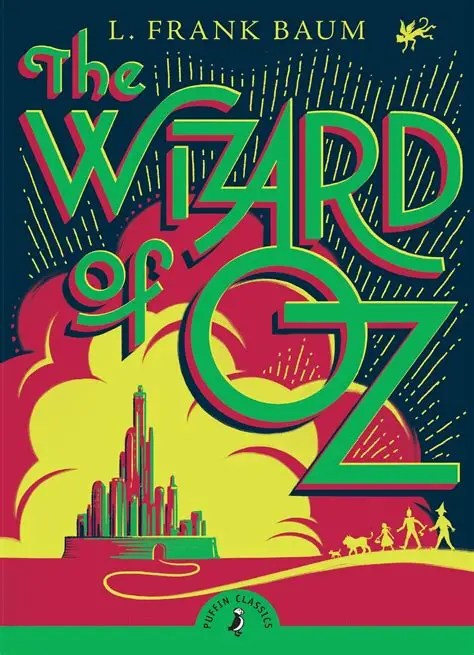
For example, if the overall theme of the Wizard of Oz is ‘there is no place like home” then each scene – Dorothy running away from Miss Gulch, the witch of a neighbor who wants to put Toto to sleep; Dorothy with her friends in the dark, ominous forest; even Dorothy being dazzled by the eye candy of the new world she’s fallen into, the place that suggests to her ‘we are not in Kansas anymore’ – is also about the very same idea. There is no place like home.
The Wizard of Oz: There Is No Place Like Home
Dorothy Gale lives on a quiet Kansas farm with her Aunt Em and Uncle Henry. Life is simple, sometimes harsh, and Dorothy dreams of a place “over the rainbow” where problems fade away, and happiness is easy to find. One day, a sudden twister whirls through the prairie, lifting Dorothy’s house into the sky—with her and her loyal dog, Toto, inside.
When the house lands, Dorothy finds herself in the magical land of Oz. The world is bursting with color and wonder, unlike anything she’s ever seen.
Here, Dorothy is celebrated for accidentally defeating the Wicked Witch of the East. But she’s lost and desperate to return home. The kindly but mysterious Glinda, the Good Witch, tells Dorothy that only the powerful Wizard of Oz in Emerald City can send her back.
Following a road paved with yellow bricks, Dorothy begins a journey filled with new friends: the Scarecrow, who yearns for a brain; the Tin Man, who longs for a heart; and the Cowardly Lion, seeking courage. Each companion believes that only the Wizard can grant their deepest wishes, and together they brave dangers and temptations, learning about themselves and each other.
At last, they reach Emerald City, and the Wizard promises to grant their requests—but only if they defeat the Wicked Witch of the West. After perilous struggles and acts of bravery, Dorothy and her friends succeed. Yet when they return, they learn that the Wizard is just a man—ordinary and fallible. Still, he helps them realize that what they sought was within them all along: the Scarecrow is clever, the Tin Man is compassionate, and the Lion is brave.
Dorothy, heartbroken, realizes the magic to return home was with her, too: Glinda reveals that the slippers she’s worn since her arrival can take her anywhere she wants. With a tearful farewell to her friends, Dorothy whispers, “There’s no place like home.” She closes her eyes—and wakes to the grey Kansas sky, her house, her family, and Toto. The adventure, real or dreamed, has changed her. She sees her home as both ordinary and precious, filled with love and possibility.
The Wizard of Oz’s journey revolves around the longing for a place—a home not defined by excitement or magic, but by comfort, belonging, and love. Dorothy’s adventures show her how extraordinary and valuable her ordinary world and relationships are. The friends she makes long for qualities they already possess, just as Dorothy’s heart was always drawn towards home. In the end, “There is no place like home” resonates not just as physical space but as a recognition of self, roots, and the love that sustains us.
No matter where we roam in search of happiness, The Wizard of Oz reminds us that true contentment often lies in appreciating where—and with whom—we already belong.
In many ways, it is this echoing or ‘alignment’ between the overarching theme of a great story and all the scenes, characters and moments that make up that story – be it Madame Bovary or High Noon or Moby Dick or the Harry Potter books or the New Testament or countless others – that make these stories stay with us forever.

Gustave Flaubert’s Madame Bovary is renowned not just for its portrayal of Emma Bovary’s doomed quest for love and fulfillment but for the remarkable “alignment” between the novel’s overarching theme and all the scenes, characters, and moments that compose it. The story, at every level, explores the turmoil between fantasy and reality, the dangers of chasing impossible ideals, and the tragic consequences of disillusionment.
Emma Bovary, raised on sentimental novels and romantic dreams, marries Charles Bovary, a simple, well-meaning provincial doctor. Charles, content in his mediocrity, adores Emma, yet his adoration is unable to fulfill her restless spirit. The story’s setting—dreary small towns like Tostes and Yonville—reflects Emma’s own sense of entrapment. These locations contrast with the brief splendor of the aristocratic ball and her stylish lovers’ apartments, scenes Flaubert uses to highlight Emma’s relentless yearning for something sublime, just out of reach.
The novel’s central theme—the perils of living too much in fantasy—is mirrored in Emma’s every thought and action. She tries to recreate the passionate lives she’s read about, idealizing love and luxury, only to find each new affair and purchase leaves her emptier than before. Her lovers, Rodolphe and Léon, are drawn into her extravagant imaginings but always disappoint her when confronted with the prosaic realities of daily life. Rodolphe, practical and jaded, treats Emma’s devotion as a passing amusement; Léon, sensitive and poetic like Emma, nonetheless lacks the resolve to break from convention for her. Flaubert’s ruthless realism ensures even passion’s height is undermined by routine banalities—a rendezvous marred by bad weather, an awkward encounter riddled with clichés—forcing the ideal and the ordinary to clash at every turn.
No character is extraneous. Charles’s limited desires and weak will embody bourgeois mediocrity, his inability to understand Emma paralleling the world’s indifference to her dreams. Monsieur Homais, the pompous pharmacist, and Lheureux, the sly moneylender, serve as satirical echoes of middle-class vanity and cunning, manipulating Emma or Charles with relentless self-interest. Even Berthe, the neglected daughter, is a victim of Emma’s relentless chase for excitement, ultimately orphaned and cast into poverty, an innocent casualty of longing gone awry.
Flaubert’s distinctive style—ironic, detached, and meticulously descriptive—ensures that every scene (from the gray, stifling interiors of Yonville to the fleeting, glittering ball) supports his thematic vision: romantic expectation contorted by harsh reality. The mundane and the sublime continuously collide, exposing the absurdity of trying to live one’s illusions while ignoring life’s hard truths.
In the end, Emma’s escape from boredom—her affairs, her spending, her manipulations—lead only to ruin. Buried under debt and rejected by her lovers, she swallows arsenic, her death agonizing and undignified. The scenes that follow—Charles’s grief, Homais’s selfish triumph, Berthe’s abandonment—confirm the novel’s alignment: every element, every character and moment, is orchestrated in service of the fundamental theme. Madame Bovary endures not simply as the story of one woman, but as a masterful composition in which every part reflects the tragic impossibility of remaking the world, or oneself, entirely out of dreams
Great stories are never made up of far-flung elements. They are never about petty concerns. They are always tight, streamlined, deceptively simple. Indeed, they are unified.
Unity – alignment – are hallmarks of persuasive stories. A good story is consistent. It has an internal logic. Every thought you share, every word you utter, every expression you make can’t help revealing some aspect of your unique story.
As with great stories the theme (Ultimate Quest) of your life story is simple – touching on ideas like family, honor, benevolence, continuity – and each subplot reiterates the theme. Without this echoing or alignment, your mission is going to fall apart somewhere. For example, if you wish to be an extraordinary father and husband, then that entails a certain level of moral integrity; you can’t at the same time be a businessperson of dubious integrity, because that runs counter to who you profess to want to be as father and husband. There is a serious misalignment in your Ultimate Quest.

Herman Melville’s Moby-Dick is a masterwork of thematic alignment—every scene, character, and moment converging on profound meditations about obsession, the limits of knowledge, and mankind’s confrontation with the unknowable. The story, narrated by Ishmael, is propelled by the monomaniacal quest of Captain Ahab, who pursues the vast white whale, Moby Dick, across the oceans, determined to exact revenge for the loss of his leg.
The overarching theme—the struggle between human will and inscrutable fate or nature—encompasses all aspects of the novel. Melville crafts this alignment with meticulous care. From the novel’s opening, where Ishmael seeks meaning and adventure, the tone is one of philosophical inquiry: who are we in a vast, indifferent universe? As the Pequod sails, it transforms into a microcosm of humanity: diverse races, beliefs, hopes, and fears all thrown together on a doomed voyage.
Characters as thematic vessels:
- Ahab: The embodiment of obsession, Ahab’s pursuit of Moby Dick is single-minded to the point of self-destruction. Melville paints him not as a cartoon villain, but as a tragic figure aware of his own doom. His moments of human warmth—such as his concern for the crew’s sleep or his fleeting nostalgia for family—are crushed beneath his compulsion, showing how obsession isolates and consumes.
- Starbuck: The first mate, serves as the moral and pragmatic foil to Ahab, questioning the madness of vengeance against a “dumb brute.” His doubts underline the theme of reason struggling against monomania and fate.
- Queequeg and Ishmael: Their friendship embodies tolerance, openness, and interdependence—qualities that contrast sharply with Ahab’s narrow vision. Queequeg’s coffin, turned into Ishmael’s lifeboat, becomes a literal symbol of survival through acceptance and adaptation.
- Other crew members (e.g., Fedallah, Pip): Each adds layers to the central questions; their fates are bound to Ahab’s decisions, reinforcing the interconnectedness of human destiny and the consequences of following unchecked leadership.
Scenes and moments in alignment:
- The “Quarter-Deck” scene, where Ahab’s true mission is revealed and the crew is drawn into an oath to hunt the whale, crystallizes the fatal momentum around a single will.
- Ishmael’s philosophical asides about the “whiteness of the whale” and the nature of reality deepen the central motif: the limitations of human understanding as we confront life’s mysteries.
- The recurring motif of prophecy and omens (e.g., Elijah’s warning, Fedallah’s prophecies, the corpse lashed to the whale) binds events into a sense of inexorable fate.
The alignment reaches its peak in the novel’s catastrophic ending: after days of pursuing Moby Dick, the whale destroys the Pequod; Ahab and nearly all the crew perish, leaving only Ishmael alive, floating on Queequeg’s coffin in the vast sea—a survivor not of heroism, but of philosophical reckoning.
Every aspect of Moby-Dick—the plot, the diverse crew, the philosophical digressions, the stormy seas—serves its overarching theme: man’s yearning to impose order and meaning on a chaotic universe, and the tragic consequences when obsession overrides humility. The novel’s genius lies in its unity. Each scene, character, and decision resonates with Melville’s haunting question: Can humanity ever truly master—or even understand—the forces that govern its fate?
If one of the goals in your Ultimate Quest is to ‘empower as many people as you can over the longest time possible – yet you are yourself closed to new learning, incapable of improving and further empowering yourself – then there is something askew in your Ultimate Quest. Or if one of your ultimate goals is to be a person who treats people with compassion and dignity – true enough of the way you treat your superiors and colleagues, say, but not intermittently true of the way you treat those beneath you on the corporate ladder – then there’s misalignment. Without alignment, you can’t achieve what you set down in your ultimate Quest. Thi is true in other aspects of life, too.
J.K. Rowling’s Harry Potter series achieves rare narrative alignment, as every scene, character, and magical detail serves the grand themes of love, mortality, courage, and the complexity of good and evil.
From the very first novel to the last, every moment—Harry’s childhood under the stairs, his friendships, rivalries, magical lessons, and climactic battles—reinforces the core themes of sacrificial love, the acceptance of death, the power of choice, and moral courage. Characters like Harry, Voldemort, Dumbledore, and Snape embody and test these motifs in their personal journeys: Harry’s survival springs from his mother’s love; Voldemort’s downfall is his denial of mortality and human connection; Dumbledore personifies embracing wisdom through humility; Snape’s arc wrestles with the battle between selfishness and selflessness. Every subplot—Neville finding his bravery, Hermione’s application of logic, the interplay of school rules and rebellion, the lure of the Mirror of Erised—serves the overarching structure, as young wizards confront fears, temptations, losses, and the necessity of choosing between what is right and what is easy. Even the rich worldbuilding, balancing magical wonder with mundane detail, reflects the series’ central conflict: the extraordinary arising out of the ordinary, and the value of human choices in shaping destiny. In all, Rowling’s narrative crafts a seamless alignment between the overarching themes and every scene, character, and magical moment, making the Harry Potter series a touchstone of modern narrative unity and emotional resonance.
Your story can’t work without all the important elements being aligned. It is no accident, I think, that a colloquial way to describe being aligned with someone is ‘to be on the same page’. If Francis Ford Coppola and Mario Puzo, co-authors of The Godfather movies, had added a scene or two showing Michael Corleone genuinely feeling as if h e had been absolved of all his sins by God, his family, and the ‘legitimate’ outside community, even as he continued to preside over his crime operation, the story would fall apart; such a scene, in being at complete odds with the overall theme of the story, would make a mockery of it. We would not be drawn nearly as much to watch these movies and revel in their human truths, because now they would strike us as false. Simply put, the story would not work.
If your Ultimate Quest is to inspire you – truly inspire you, the way a great, consistent, seamless story moves and inspires you – then everything in it needs to be aligned. The values it professes need to dovetail with each part of your mission. If something in your life is not aligned with your Ultimate Quest – some behavior, some habit, some relationship – then you need to examine it and change it or eliminate it until things are aligned.
 What is Your Story?